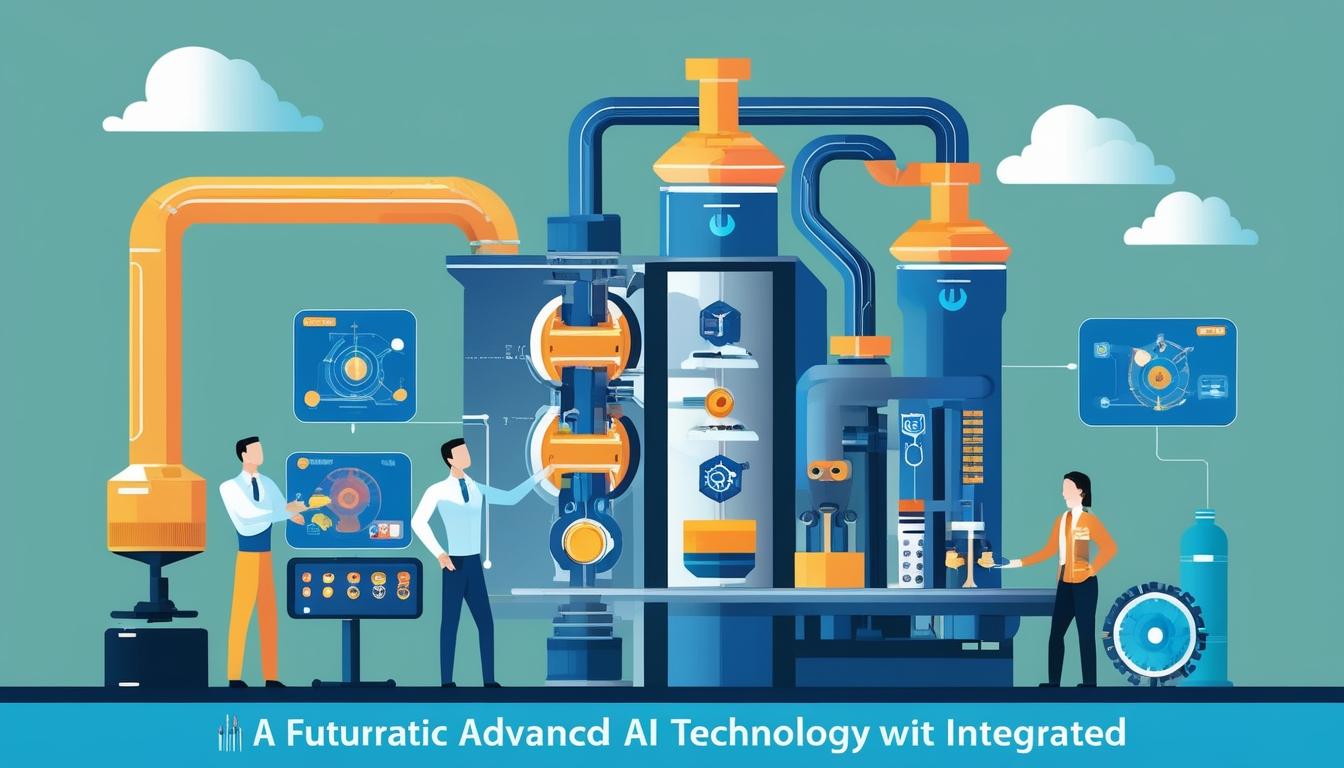
Implementing Industrial Artificial Intelligence: Opportunities and Challenges
Industrial artificial intelligence (AI) stands poised to revolutionise sectors by enhancing operational efficiency, achieving significant cost savings, and opening avenues for environmental benefits. Nonetheless, the path to successful integration of AI into industrial frameworks is fraught with challenges. A structured approach incorporating best practices is essential for organisations aiming to harness the potential of industrial AI effectively.
Focusing on Customer Needs
Central to industrial AI adoption is maintaining a customer-centric approach. Innovations should be rooted in addressing direct customer needs, rather than developing technology without a strategic end goal. This perspective requires a deep understanding of customer challenges—predictive maintenance, for instance, becomes particularly valuable in asset-heavy industries. By forecasting equipment failures well in advance, AI can significantly cut down unplanned downtimes, thereby providing tangible benefits to customers.
Utilising the Innovation Funnel
Adopting a diversified approach to innovation is crucial to mitigating risk. The concept of an "innovation funnel" allows organisations to concurrently evaluate multiple AI initiatives at varied developmental stages. This methodology ensures that resources are not over-invested in a single high-risk project. Organisations are therefore better equipped to remain agile, pivot when necessary, and make informed decisions about advancing or halting projects based on their sustained value.
Navigating the "Valley of Death"
Commonly referred to as the "valley of death," the transition period between research and commercialisation presents a formidable challenge. To successfully bridge this gap, it is imperative to involve all relevant stakeholders from the onset, ensuring clear ownership and alignment across departments like Research and Development (R&D), cybersecurity, and product management. Disparate priorities can lead to innovation stagnation, making cross-stakeholder collaboration essential for project advancement.
Establishing Clear Ownership
Each phase of an AI project demands clear leadership to maintain momentum and coherence. Stakeholder groups must have designated leaders who not only focus on their specific responsibilities but also champion the project’s overall success within their teams. Such ownership emboldens project management and supports the alignment of strategic objectives.
Balancing Innovation with Practical Application
While the allure of cutting-edge AI technology is compelling, importance must be placed on practicality. Organisations should critically evaluate complex models, considering simpler ones that might better serve their needs. Simple solutions are often more scalable, efficient, and less prone to issues like overfitting, especially when linear relationships are involved. Thus, it is not always necessary to adopt the latest, most complex AI models.
Leveraging Human Expertise
While AI offers powerful data processing capabilities, the interpretation and strategic application of AI-derived insights remain heavily reliant on human expertise. The confluence of AI technology with the judgment of seasoned professionals is crucial for achieving outcomes aligned with business goals. Employing a blend of technical and industry experts ensures that AI initiatives are not only technically sound but also practically viable. Consulting external experts with a track record in industrial AI can provide valuable insights, assisting organisations in scaling their AI ventures effectively.
Conclusion
The path towards effective industrial AI implementation is layered with opportunities and adversities. By prioritising customer requirements, deploying a diverse innovation funnel, involving stakeholders, clearly delineating ownership, and synthesising AI capabilities with human expertise, organisations can successfully navigate the complexities of industrial AI integration. Embedding these best practices offers a robust framework for companies striving to leverage industrial AI for long-term operational and strategic success.
Source: Noah Wire Services