Tech Exports to Russia: India's Shreya Life Sciences in Focus
In northern Mumbai, nestled within the unassuming commercial district of Andheri, Shreya Life Sciences, an otherwise nondescript pharmaceutical firm, has emerged as a focal point in the trade of advanced technology to Russia. This development has sparked concern among the United States and its European allies due to India's growing intermediary role in such transactions.
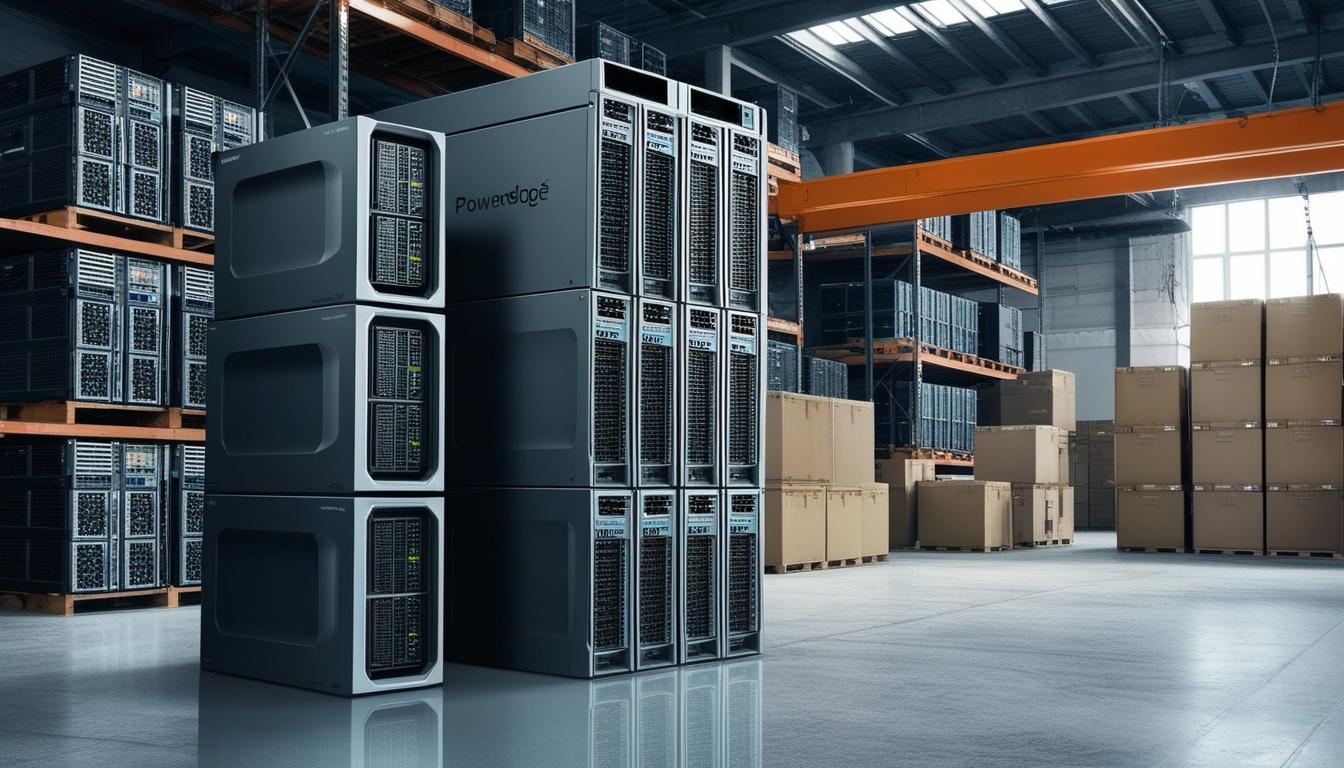
An analysis conducted by Bloomberg News, utilizing data from trade-tracking firms ImportGenius and NBD, revealed that between April and August 2023, Shreya Life Sciences exported 1,111 units of Dell Technologies Inc.’s most-advanced servers to Russia. These servers, the PowerEdge XE9680, are equipped with high-end processors designed for artificial intelligence applications and contain Nvidia Corp.'s H100 chips. This makes them part of a roster of items restricted by the US and EU to deter augmentation of Russia's military industrial complex.
The estimated $300 million shipment was received by two Russian companies, Main Chain Ltd. and I.S LLC, and follows a continuous export pattern established by Shreya since September 2022. Despite repeated requests for comment, Shreya Life Sciences has remained silent.
The revelations highlight significant gaps in the efforts by Western governments to restrict Moscow's access to technology with potential military applications. India now ranks as the second-largest supplier, just behind China, of restricted technology to Russia.
Further complicating matters, trade data suggest Malaysia as the original source of these servers, with their transshipment via India. During a visit to Russia in September, Malaysian Prime Minister Anwar Ibrahim emphasized strengthening regional trade relations, including advanced technologies.
Shipping documentation confirmed at least 834 PowerEdge servers marked as Malaysian origin, with Indian records indicating 1,407 units imported from Malaysia between March and August 2024. Neither Malaysia's Ministry of Investment, Trade and Industry, nor the Prime Minister's Office, responded to inquiries about these transactions.
Despite sanctions, doing business with Russia remains legal in India, whose government under Prime Minister Narendra Modi has maintained strategic ties with Moscow, a long-time supplier of military equipment. The geopolitical dynamics are further complicated by India's increasing purchases of Russian crude amid Western embargoes.
The situation has placed India under scrutiny from Western officials, including visits by US and EU delegates urging cessation of such technology shipments to Russia. US Deputy Treasury Secretary Wally Adeyemo cautioned Indian industry leaders about the risks associated with trading with entities linked to Russia’s military sector.
David O’Sullivan, the EU's chief sanctions official, noted increased transshipment through India sparked by Russia's oil sales revenue rather than a change in Indian policy. While some entities in India faced EU sanctions, Shreya was not among them, concluding investigations from US allegations.
Indian officials affirm that its exports comply with national and international non-proliferation laws. The practice of re-exporting restricted goods is pervasive and often involves intricate networks of intermediaries and subsidiaries worldwide, making verification challenging.
Shreya Life Sciences, established in Moscow in 1995 by Sujit Kumar Singh, originally focused on pharmaceuticals. Over the years, it developed a significant market presence in Russia, becoming heavily reliant on Russian transactions. However, geopolitical tensions and sanctions against Russia have historically impacted Shreya's financial stability, such as during the annexation of Crimea in 2014.
In a strategic pivot marked in September 2022, Shreya expanded into non-pharmaceutical exports, including high-tech computer hardware. The move comes amidst ongoing financial interactions with institutions like Promsvyazbank PJSC, which play a critical role in Russia's defense sector finance.
Shreya's dealings have increasingly come under the microscope as part of a larger pattern of Indian technology exports to Russia, spotlighting a complex geopolitical trade landscape. The situation underscores how entities like Shreya are instrumental in bypassing sanctions, setting the stage for ongoing international discourse on trade ethics and compliance.
Source: Noah Wire Services