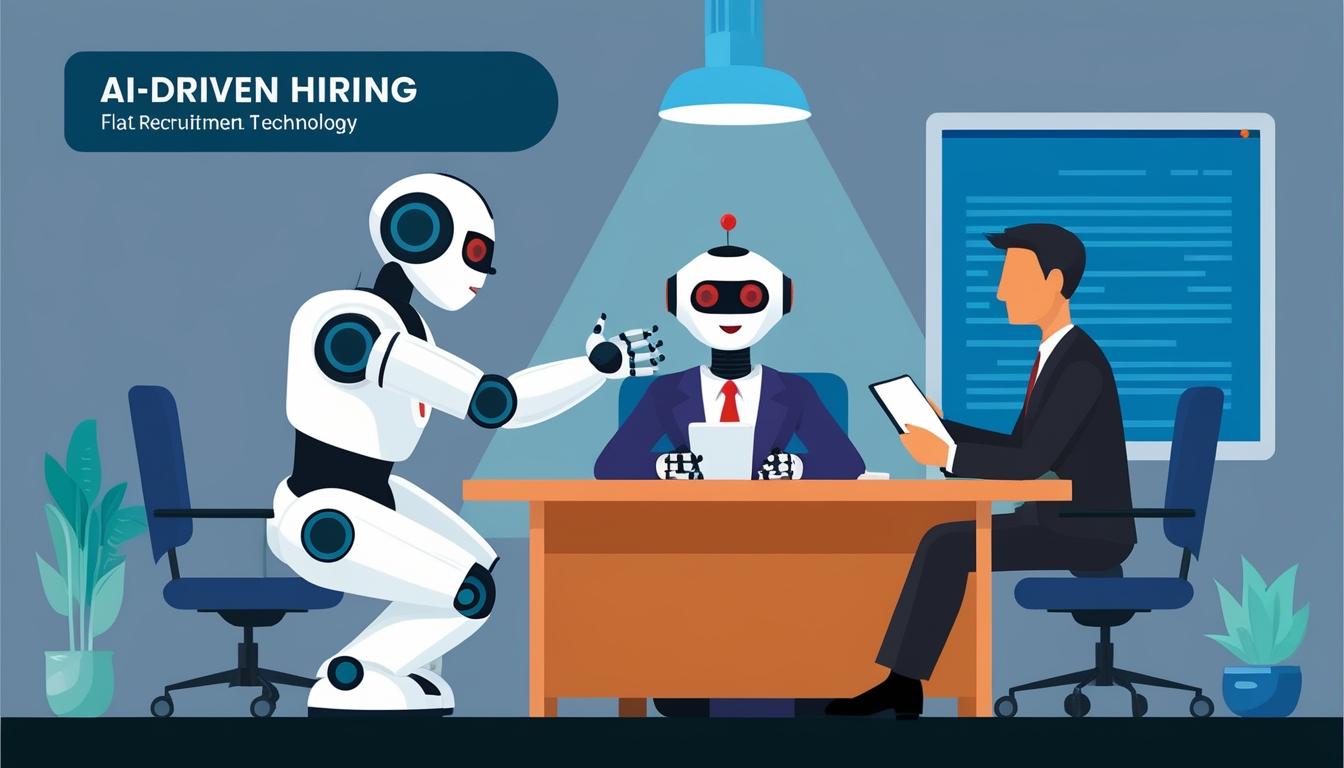
A recent study by Resume Builder unveils the growing reliance on artificial intelligence (AI) in the hiring process across numerous firms. The research, which surveyed close to 1,000 companies, indicates that more than half (51%) of businesses are currently employing AI technology to enhance their hiring practices. This percentage is anticipated to surge to 68% by the end of the next year.
The integration of AI in recruitment has seen widespread adoption, with an overwhelming 82% of companies utilising AI to review resumes. Additionally, 40% of firms have incorporated AI chatbots to improve communication with job candidates. Notably, 23% of businesses have taken a step further by deploying AI to conduct interviews, and 64% are employing AI tools to scrutinise candidate assessments. AI's involvement extends beyond initial selections, with 28% of companies using it to facilitate the onboarding process and 42% scanning candidates' social media profiles or personal websites as part of their evaluations.
Currently, a minuscule 0.2% of companies report not integrating AI into their recruitment strategies. Among organisations employing AI in their interview processes, a significant portion—81%—uses AI to pose interview questions. Additionally, 65% of companies leverage AI to analyse candidates' language, and 60% use AI to transcribe interviews and assess tone, language, or body language. Furthermore, 52% admitted to utilising facial recognition technology during interviews to collect data.
The trend of AI conducting entire interviews autonomously is surprisingly prominent, with nearly a quarter of companies depending entirely on AI for this purpose. This figure is projected to climb to 29% by 2025. Most firms plan to increase their AI utilisation over the next year, with 76% intending to use AI for posing interview questions, 63% planning to gather facial recognition data, and 62% seeking to analyse candidates' language through AI tools.
AI is also increasingly used to make rejection decisions during the recruitment process. Currently, 21% of companies allow AI to automatically reject candidates at various stages without human intervention, while 50% use AI for rejections primarily at the initial resume screening phase. Conversely, 29% of firms maintain human oversight throughout the rejection process. Interestingly, the future might see a shift as these practices evolve, with a forecasted reduction to 16% for complete AI-driven rejection processes, and an increase to 35% of companies ensuring human oversight at all rejection stages.
Concerns about the inherent biases in AI systems have been raised by companies using these technologies. Almost 10% of firms reported that AI tools consistently yield biassed recommendations, with 24% noting frequent bias and 34% acknowledging occasional bias. Only a small fraction, 4%, confidently asserted that AI never introduces bias. The types of biases identified include age bias (47%), socioeconomic bias (44%), gender bias (30%), and racial or ethnic bias (26%). These concerns have resulted in over half (56%) of the companies expressing apprehension that AI might inadvertently exclude qualified candidates.
As AI technology becomes more ingrained in recruitment processes, companies continue to assess its implications and seek ways to mitigate potential biases while harnessing its efficiencies. This evolving landscape signifies a notable shift towards technological adoption in business practices that may redefine traditional hiring paradigms.
Source: Noah Wire Services