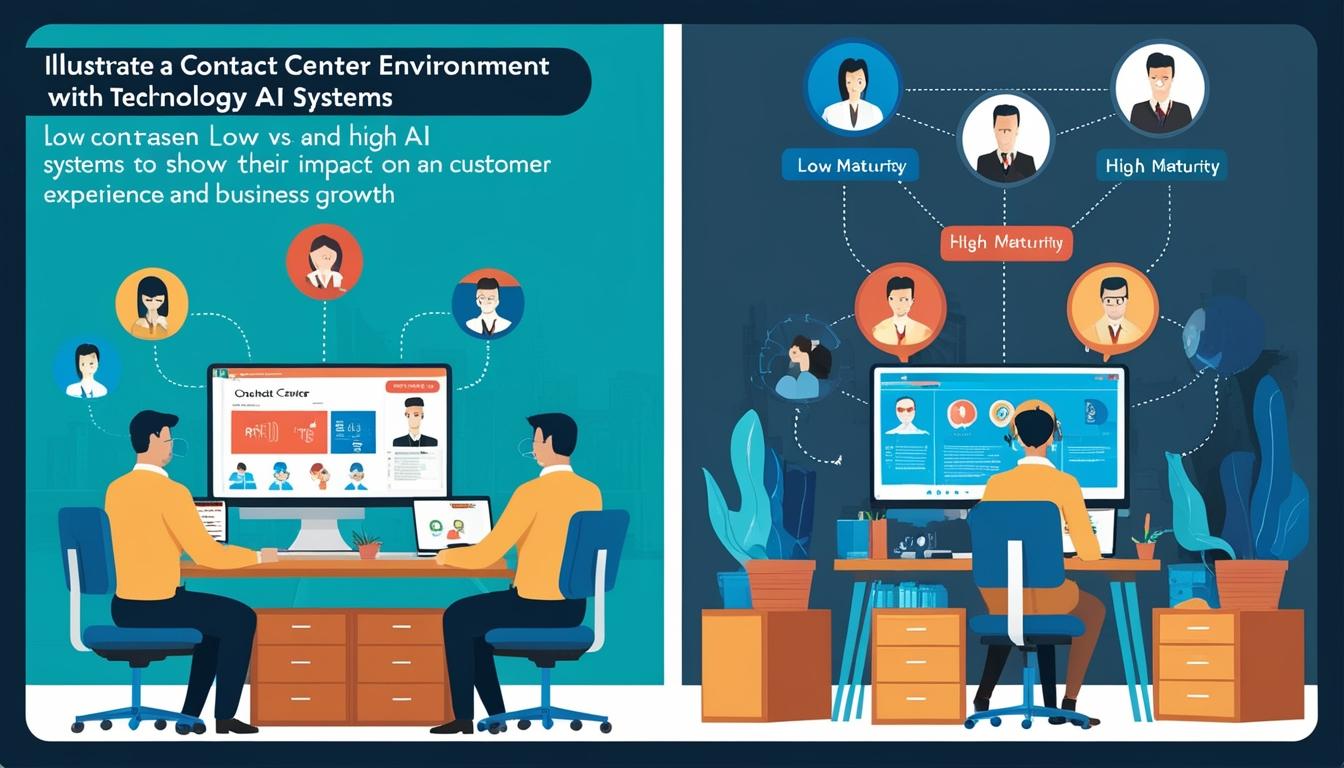
A recent survey conducted by UJET has revealed significant insights into the current state of artificial intelligence (AI) implementation within contact centres. The study found that a substantial 60% of contact centre AI deployments are classified as "low maturity." These deployments are primarily oriented towards cost control and efficiency, rather than extensively integrating AI to enhance customer experiences and drive business growth. This limited approach appears to be a contributing factor to persistent challenges faced by contact centres, including prolonged wait times, high rates of agent turnover, and employee burnout.
Vasili Triant, Co-CEO of UJET, highlighted the findings, noting, "This new data shows that more mature AI deployments emphasising customer experience, revenue growth, and business insights correlate directly to better business outcomes." UJET's AI Maturity Benchmark Report seeks to assist leaders in evaluating their AI maturity and provides strategic guidance for phased AI implementations aimed at optimising contact centre performance.
Despite the fact that approximately 75% of contact centres intend to increase their AI investments in the coming year, a mere 10% have succeeded in attaining high maturity in their AI programmes. The issue is further compounded by the prevalent reliance on basic AI technologies; nearly half of the centres use AI for self-service chat (47%), call performance analytics (39%), and inquiry routing (38%). These statistics highlight a significant gap, as 45% of contact centres have insufficient insights into whether customer issues are resolved during the initial interaction, adversely affecting customer satisfaction.
In contrast, centres with high-maturity AI deployments report significant improvements across critical key performance indicators (KPIs). Enhanced metrics include increased upsell and cross-sell rates (68%), reduced customer acquisition costs (66%), and heightened revenue per interaction (64%). Additionally, 59% of these high-maturity institutions note improved outcomes from AI-driven customer interactions, compared to only 44% of low-maturity centres.
Amidst ongoing workforce challenges, the survey indicates that 58% of contact centres experience high rates of agent turnover, with more than half retaining less than half of their staff over the past year. The evolution towards higher AI maturity could present a viable strategy to mitigate these workforce challenges by streamlining processes and enhancing agent effectiveness.
The findings of UJET's survey underscore the significant potential for AI to transform contact centre operations, urging centres to reassess and develop their AI strategies to fully harness its capabilities.
Source: Noah Wire Services