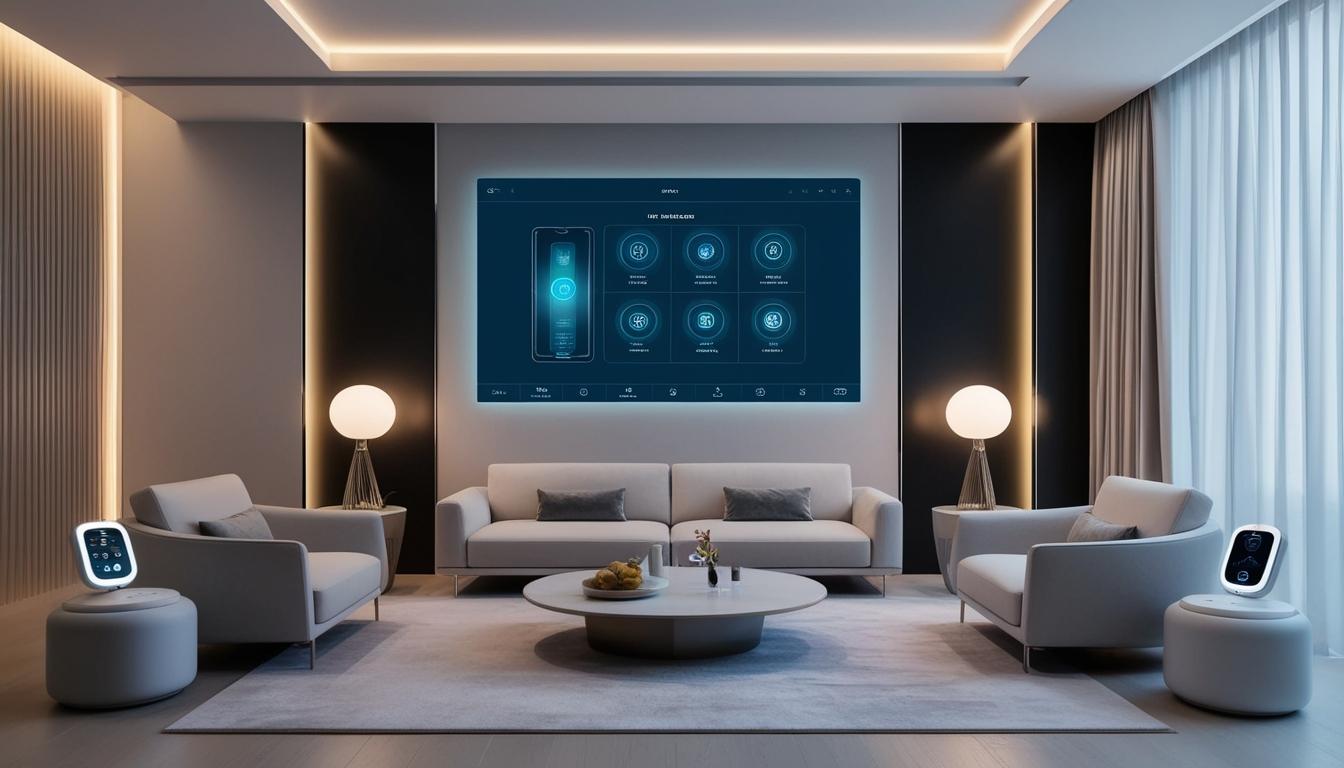
The notion of a fully automated home is quickly transitioning from fiction to reality as technological advancements accelerate the incorporation of artificial intelligence (AI) into everyday domestic environments. Across the globe, homes are becoming increasingly sophisticated, with technology that intuitively responds to human presence, such as smart mattresses that configure themselves for better sleep, and robotic mowers that silently maintain lawns.
Chris Beucler, president of Blue Heron Nexus, a West Coast luxury design firm, suggests that home technology advancements are outpacing those seen in the smartphone industry. The rise of 'integrators' is pivotal in this technological transformation, affecting home design as significantly or perhaps more than traditional interior decorators. These professionals are responsible for embedding technology seamlessly into homes, enabling conveniences like AI-driven facial recognition security and adaptive climate controls based on occupants' skin temperature.
Innovations are not limited to security and climate control. Russ Snyder, who owns Snyder Diamond kitchen and bath showrooms, notes the emergence of fully robotic kitchens in Europe and toilets in Japan capable of conducting health diagnostics such as blood pressure checks. In the US, there is a significant movement towards integrating personal wellness technology in homes, including cryotherapy beds and floating relaxation units. These health-centric devices, once available only in commercial settings, are increasingly being adapted for personal use.
Santiago Arana, a prominent Los Angeles real estate agent, highlights the burgeoning demand for wellness technology in high-end homes. Arana, a biohacker himself, has overseen the development of luxury properties for celebrity clients like LeBron James, incorporating biohacking rooms equipped with red light therapy beds and hyperbaric oxygen chambers. This approach to real estate blends health benefits with convenience and luxury.
However, the enthusiasm for home automation comes with caveats. Notably, renowned designer Jeff Andrews points out that while homeowners desire advanced technology, they prefer it to enhance rather than complicate their lives. The focus is on functionality that is chic and user-friendly. Andrews stresses the importance of choosing technologies that meet the aesthetic and practical needs of clients. He cites Lutron's Alisse lighting system as an example that combines technological sophistication with elegant design.
There are also health considerations with the surge in wireless technologies. Arana discusses the potential health impacts of increased electromagnetic fields (EMFs) from such technologies and advocates for hardwired systems in homes to minimise these effects. As the demand for cutting-edge gadgets continues, balancing technological integration with health and environmental concerns remains a top priority for homeowners and developers alike.
The progression towards smart homes signals a transformation in domestic life, promising convenience and efficiency. Yet, as this technological tide sweeps through, the dialogue between enhancing home environments and preserving wellbeing becomes ever more pertinent.
Source: Noah Wire Services