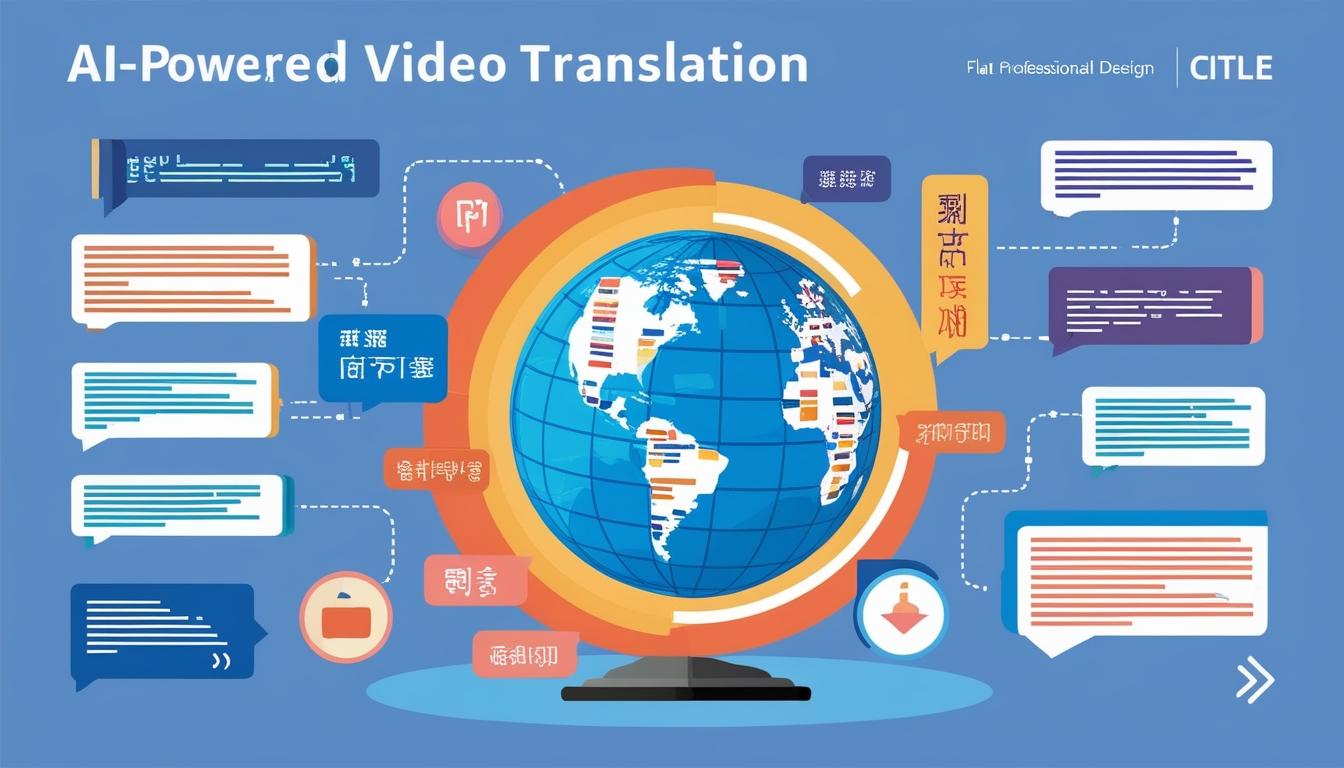
In an era where digital content dissemination transcends geographical boundaries, the role of artificial intelligence (AI) in language translation has become increasingly imperative. The emergence of AI technologies is dramatically transforming the landscape of eLearning video content, offering swift and economical methods for translation across a myriad of languages. This development not only enhances accessibility but also fuels global connectivity.
Understanding AI in Video Content Translation
AI-powered translation harnesses sophisticated algorithms to convert spoken or written material from one language into another. This capability is crucial for entities aiming to engage a diverse international audience, enhancing inclusivity for varied viewers. One of the notable features of AI is its ability to replicate a speaker's voice in multiple languages, providing a more natural and immersive experience, even if this technology is currently in its nascent stage and far from flawless.
The rise in global eLearning initiatives, coupled with multinational corporations requiring cross-border employee training, underscores the necessity of seamless language translation in video content. Compared to traditional solutions like professional dubbing studios, AI offers a significantly more cost-effective alternative, capable of processing translations in real time.
Operational Mechanics of AI in Video Translation
AI technology functions by initially transcribing spoken words into text. Subsequently, this text is translated into various languages, with AI systems efficiently generating subtitles or dubbing. This rapid transcription process improves progressively as the AI learns from previous outputs, underscoring its potential to support a vast array of languages and thus widening its accessibility.
Subtitles and Dubbing Integration
The integration of subtitles and dubbing via AI is a straightforward process. AI algorithms transform spoken language into text, which is then displayed as subtitles. Moreover, AI selects voiceover options that harmonise with the original video, providing a consistent viewer experience across different languages. It methodically assesses the placement of subtitles to ensure they are readable without obstructing essential visual elements. For dubbing, synchronisation is optimised to match the original speaker's lip movements as closely as possible.
Advantages for eLearning Platforms
AI translation affords eLearning platforms the dual benefits of speed and precision. This technological advancement delivers translations at a fraction of the time historically required, empowering educators and corporations to distribute content swiftly on a global scale. AI's understanding of linguistic contexts and cultural nuances enables it to address idiomatic expressions accurately, enhancing the authenticity of translations.
Moreover, AI streamlines translation operations, reducing dependency on human translators, thereby curbing associated costs. The automation of this process negates the need for extensive reshooting or adaptation, further enticing businesses to adopt AI solutions.
Illustrative Case Studies
AI's efficacy in translation has been validated through various case studies, particularly within the eLearning domain. One example is data from Ambient Insight, revealing that the global market for self-paced eLearning amounted to £37 billion in 2021. By leveraging AI, eLearning platforms achieve wider reach and multilingual support without incurring extensive manual labour or costs.
Prospects for AI in Video Translation
The trajectory of AI development in video translation appears promising, driven by continual advancements in Machine Learning (ML). State-of-the-art Neural Machine Translation (NMT) models are set to redefine accuracy, facilitating superior comprehension of contextual nuances in video content. Furthermore, the potential for real-time translation presents transformative prospects, enabling instantaneous language interpretation during live broadcasts and interactive sessions.
Real-time AI translation is expected to revolutionise live subtitling capabilities, supporting seamless communication across international forums and virtual conferences. As demonstrated by Google's near-instantaneous translation capabilities reported in 2020, the potential for live interaction without language constraints is on the horizon. Moreover, Microsoft’s advancements in NMT have bolstered the effectiveness of real-time translations, marking a significant leap forward for cross-cultural communication.
In summary, AI continues to evolve as a crucial tool in breaking language barriers, fostering a more interconnected and inclusive world through effective video content translation.
Source: Noah Wire Services