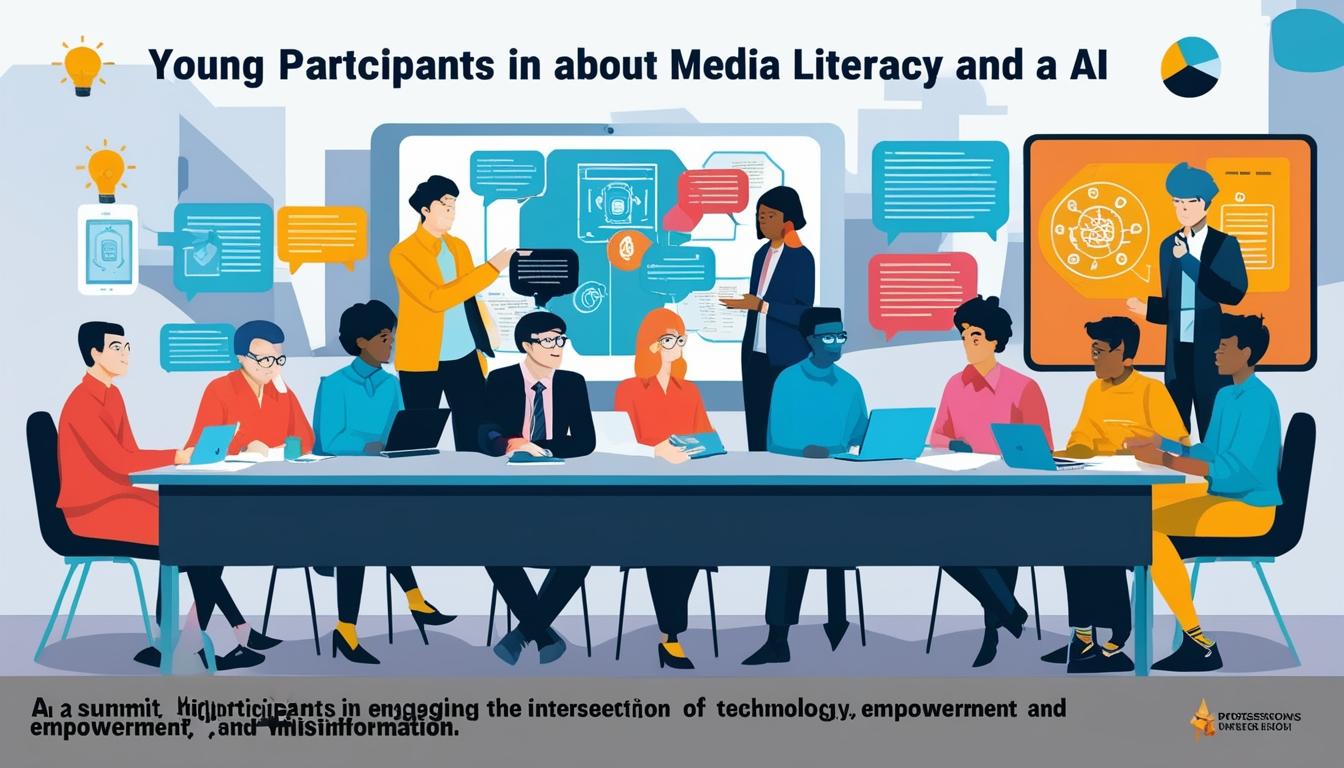
The United Nations Educational, Scientific and Cultural Organization (UNESCO) in collaboration with the MICA Centre for Development Management and Communication (CDMC) hosted the Media Literacy Summit on the 17th and 18th of October, 2024. This summit took place as part of a broader observance of International Media and Information Literacy (MIL) Week, which runs from October 24th to 31st. The summit aimed to provide insights into media literacy, particularly in the context of the rapidly evolving digital landscape, and was attended by 18 participants aged between 16 and 25.
The event marked a significant first, with participants engaging directly with experts including academics and journalists. They explored a series of critical themes centred on media literacy and artificial intelligence (AI), highlighting both the empowering potential and the risks associated with AI technologies. A key focus was on understanding how AI tools can enhance communication, while also recognising the challenges they pose, particularly in terms of misinformation and the privatization of information.
Hezekiel Dlamini, a communication and information advisor at UNESCO's New Delhi office, addressed the necessity of integrating AI literacy into existing media literacy frameworks. He suggested that this integration could help mitigate the challenges posed by AI, such as the spread of misinformation and the emergence of deep fakes.
During the summit, delegates were organised into smaller groups to explore the intersections between media and AI literacy. These groups developed practical recommendations to address complex issues pertinent to journalism and policymaking. The discussions often revolved around the urgent need for media literacy as a countermeasure to the proliferation of misinformation driven by AI technologies.
The keynote address was delivered by Shakoor Rather, Editor-in-Chief of INDIAai, who highlighted the crucial role of media literacy in today's digital era. He described media literacy as "an essential survival tool" amidst the fast-paced changes occurring in the digital world, noting that AI can act as both an ally and a threat.
The summit culminated in a competition that recognised innovative projects dealing with AI in media literacy and education. The top prize was awarded to Anaya Tewari, Dhruv Pandey from Team Mediacore, and Suryansha Rawat for their project titled “AI in Media Literacy & Education”. Second and third prizes were secured by teams Human Intelligence and mAlya, respectively.
Professors Manisha Pathak-Shelat and Ruchi Tewari from MICA-CDMC summarised the achievements of the event, which brought together diverse stakeholders including students, policymakers, journalists, and corporate leaders. The summit served as an inclusive platform for engaging in discussions about the ethical and practical implications of AI in society.
Overall, UNESCO continues its efforts to promote media and information literacy globally, emphasising the importance of equipping individuals to become critical and discerning users of digital media. This event demonstrated how media literacy, coupled with AI awareness, can form a foundational skill set for individuals navigating the complexities of the digital age.
Source: Noah Wire Services