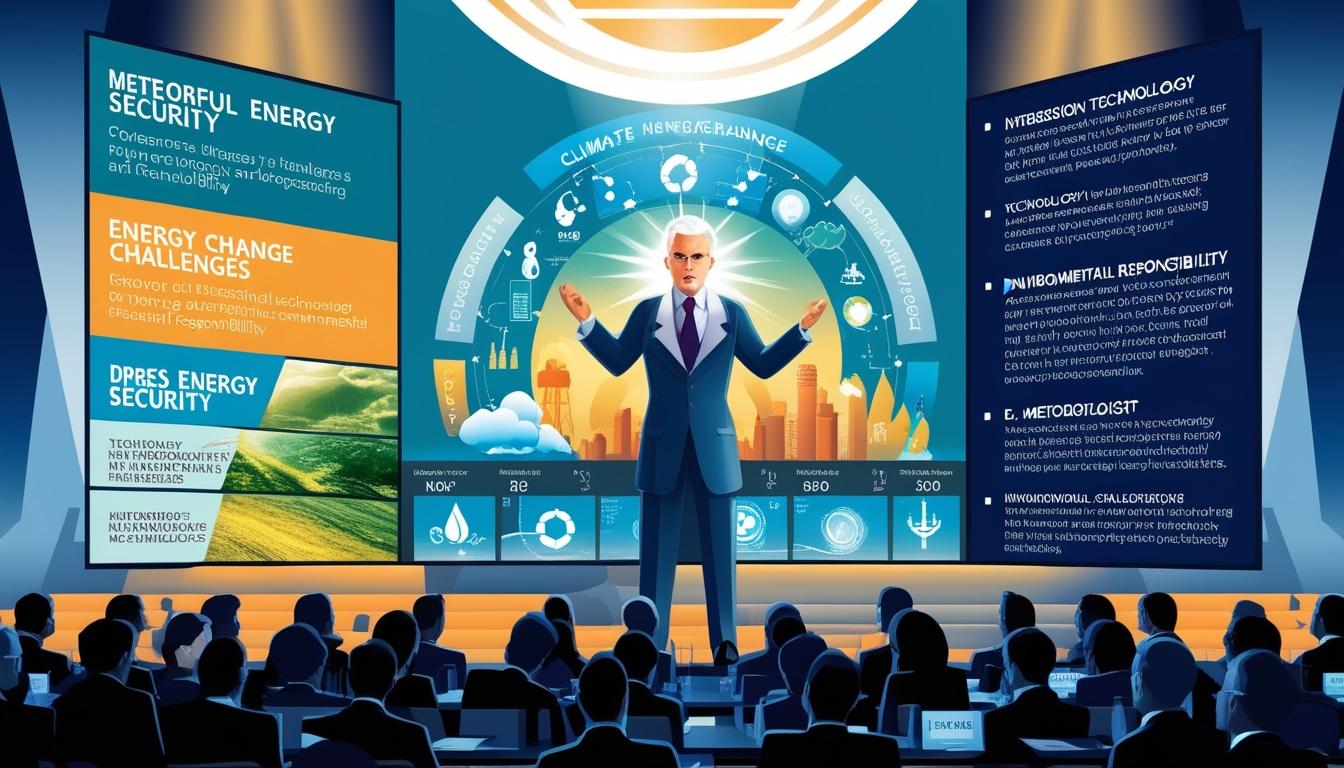
Minneapolis recently played host to the 2024 Grid Security Conference (GridSecCon), a major annual event focused on the cyber and physical security of the North American power grid. Sponsored by the North American Electric Reliability Corporation (NERC) and the Electricity Information Sharing and Analysis Center (E-ISAC), this year's event continued its tradition of bringing together key players and experts from across the industry to discuss and strategize on pressing security issues.
A standout moment of the conference was the opening presentation delivered by Sunny Wescott, Chief Meteorologist at the Cybersecurity and Infrastructure Security Agency (CISA). Her talk was widely regarded as a highlight of the event. Known for her engaging delivery and insightful content, Wescott addressed the increasing challenges posed by climate change, describing them as unprecedented in scale and complexity. Her presentation, characterized by many as powerful, emphasised that while these challenges cannot be completely eradicated, significant preventive measures can be taken at the local level to mitigate potential disasters.
Another noteworthy presentation was given by Andy Bochman from Idaho National Laboratory, though it attracted a smaller audience due to its breakout session format. Bochman's discussion focused on the potential risks associated with integrating generative Artificial Intelligence (AI) into control systems of the power grid. He raised concerns about AI systems prone to "hallucinations" and other unintended behaviours, cautioning against their unchecked deployment. His talk extended to the threat posed by highly realistic AI-driven disinformation, like deepfakes, and the potential for these to deceive operators into making harmful decisions. Bochman advocated for careful scrutiny and deployment of AI technologies within critical grid systems.
A complex issue linking the conference's themes was highlighted through an example involving the Coal Creek Station in North Dakota. This coal-fired power plant was acquired by a data centre provider in 2022, ensuring its continued operation to supply energy for data centre expansion. This deal highlights a growing trend where data centres, with their ballooning energy needs due to AI advancements, rely increasingly on traditional power sources, sparking a broader debate about energy sustainability.
The conference shed light on the tension between the rising demands for power driven by AI applications and the fight against climate change. This predicament is similarly underscored by Microsoft's recent 20-year power purchase agreement for a nuclear plant in Pennsylvania, showing a pattern of tech companies securing extensive energy contracts to manage their AI operations' power needs.
The event underscored a critical point: while technological advancement and economic interests drive energy consumption, they must be balanced against the urgent need to address climate change. The conference served as a platform for influential voices within the energy and cybersecurity sectors to share insights and strategies, highlighting the complex interplay between technological innovation and environmental responsibility without prescribing solutions or assigning blame.
Source: Noah Wire Services