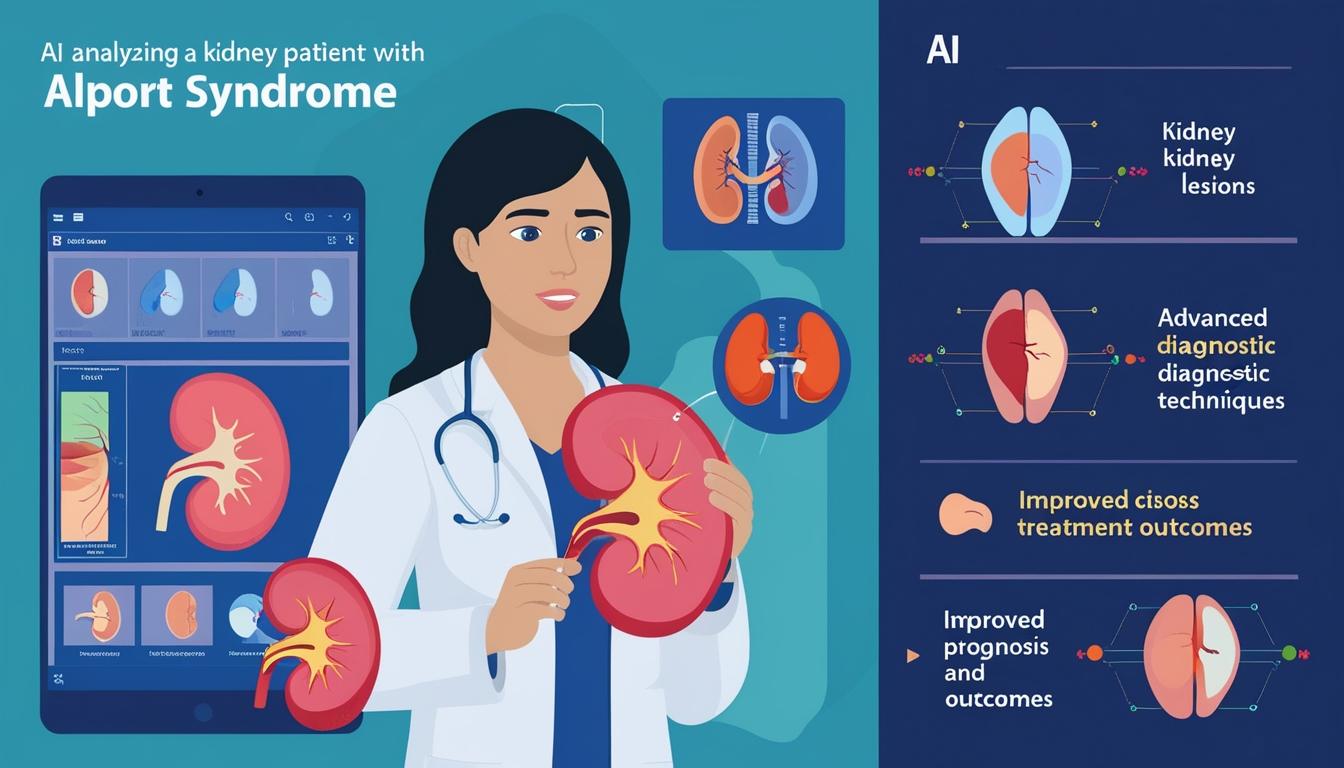
New Study Enhances Understanding of Alport Syndrome Using Advanced AI Techniques
A novel study has provided additional insights into Alport syndrome, a genetic disorder known for its significant impact on kidney function, hearing, and vision. The study, published in The American Journal of Pathology, utilises advanced AI techniques to examine the progression of the disease in female patients, a group historically noted for having a less severe form of the syndrome compared to their male counterparts.
Alport syndrome principally affects kidneys, leading to a progression from early hematuria to eventual proteinuria and often culminating in end-stage renal failure. This severe kidney dysfunction generally necessitates interventions such as dialysis or kidney transplantation. Although its precise prevalence is undetermined, the disorder is most commonly found in its X-linked form, which disproportionately impacts males (who have one X chromosome) more than females (with two X chromosomes).
Despite being considered less severely affected, around 15% of female patients with X-linked Alport syndrome in the United States and Japan progress to end-stage renal failure by the age of 40. As such, the study aimed to better predict renal prognosis in these female patients, an aspect that remains challenging due to the complexity of the disease.
The groundbreaking research used a mouse model simulating Alport syndrome to perform a detailed analysis of kidney lesions in female patients. The research team developed an adaptation of the periodic acid methenamine silver stain to observe basement membrane lesions. These lesions are identifiable by the preservation or deficiency of type IV collagen α5, a trait common in female patients. This innovative approach allowed precise detection and observation of lesions using deep learning AI software.
Significantly, the study revealed a strong correlation between the AI-quantified kidney lesions and proteinuria concentration in female mice. This finding suggests the potential of this method to predict kidney function prognosis in women suffering from Alport syndrome. This development could improve patient outcomes by facilitating earlier and more accurate interventions, specifically the use of renal protective treatments such as antihypertensive medications.
The utilisation of AI to enhance diagnostic precision marks a progressive step in nephrology, particularly concerning conditions like Alport syndrome where early intervention can significantly alter the disease trajectory. The study represents a promising advance in the ongoing effort to refine treatment strategies and improve the quality of life for those affected by this complex genetic condition.
Source: Noah Wire Services