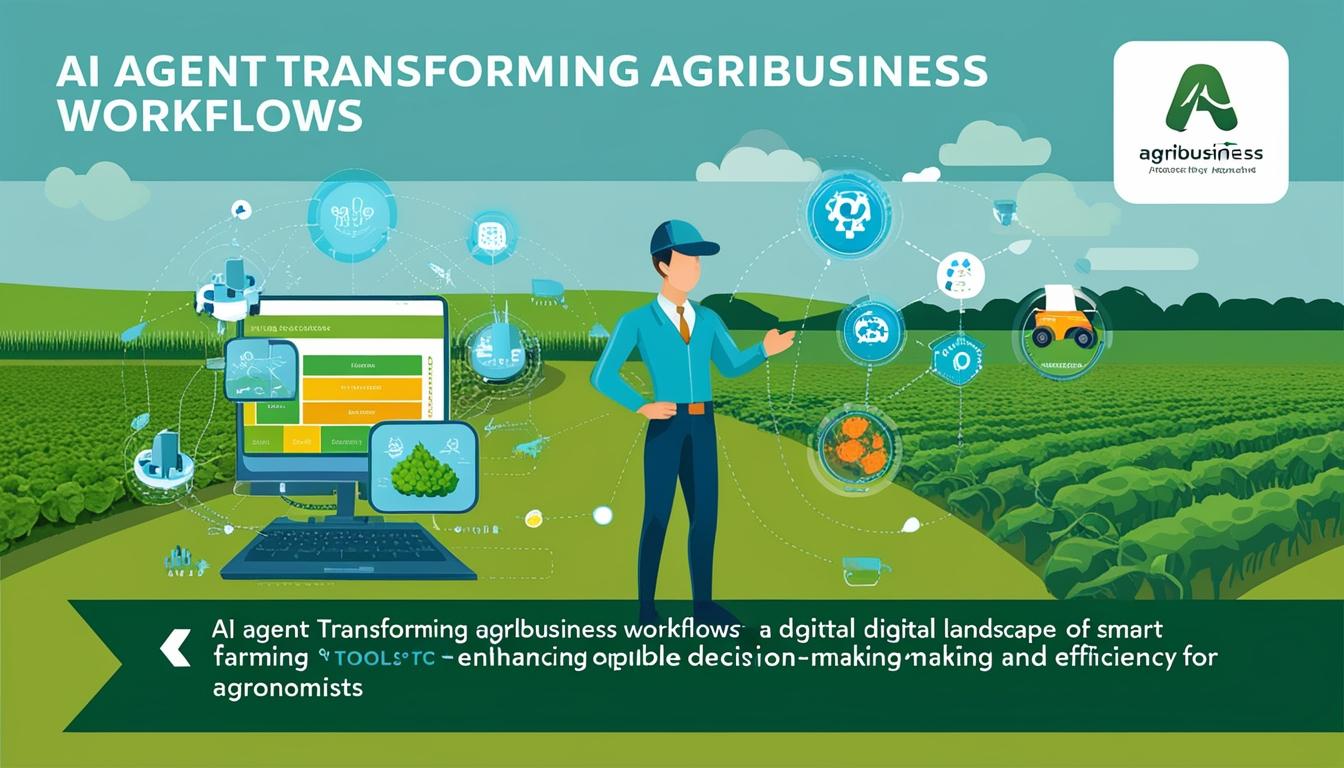
Promising AI Advancements Poised to Transform Agribusiness Workflows
In a realm where technological advancements continually seek to redefine industry practices, the application of Large Language Model (LLM) agents holds significant potential for the agribusiness sector. This transformative leap in artificial intelligence could fundamentally reshape workflows and enhance decision-making processes for professionals within the field, offering solutions to pressing challenges.
LLM agents, sophisticated AI systems built to autonomously execute tasks, extend beyond their original scope of text generation. They are capable of managing interactions, reasoning through complex scenarios, and performing independent actions, with applications specifically tailored for sectors such as agriculture. These specialised applications, often termed “vertical agents,” are engineered to address the specific language, unique challenges, and datasets inherent to the agriculture sector.
A strategic concept known as the “OODA loop” (Observe, Orient, Decide, Act) illustrates the potential of these agents. Originally designed for military applications, this framework demonstrates how AI can continuously process incoming information to support goal-driven tasks in highly dynamic environments. When applied to agriculture, vertical LLM agents could significantly streamline processes such as marketing and customer relationship management (CRM), as well as enhance product research. For example, these agents may assist agronomists in identifying farmers with specific soil needs, drafting personalised marketing messages, and automating the data collection processes for CRM systems. Such capabilities have the potential to reduce the time spent on repetitive tasks and manual data entry, thereby increasing efficiency for agronomists and sales professionals.
Central to this technological integration are “control points,” which refer to the critical junctures within software systems where essential business activities occur. In the context of agribusiness, these control points are commonly found within transactional and financial software rather than traditional agronomic platforms. The integration of LLM agents into these control systems could transform them from mere record maintenance utilities into dynamic systems of intelligence, facilitating real-time decision-making and enhanced workflow efficiency.
Although a complete transition to AI-driven processes in agriculture may not be imminent, the growing sophistication and integration of LLM agents present a promising avenue for addressing labour shortages in rural areas. As these AI agents become more advanced, they are expected to establish themselves as indispensable tools within the industry, significantly boosting productivity and refining decision-making processes across agribusinesses.
Such innovations point towards an impending evolution in the way agribusiness professionals operate, potentially paving the way for a future where AI not only simplifies routine tasks but also augments strategic operations within the industry.
Source: Noah Wire Services