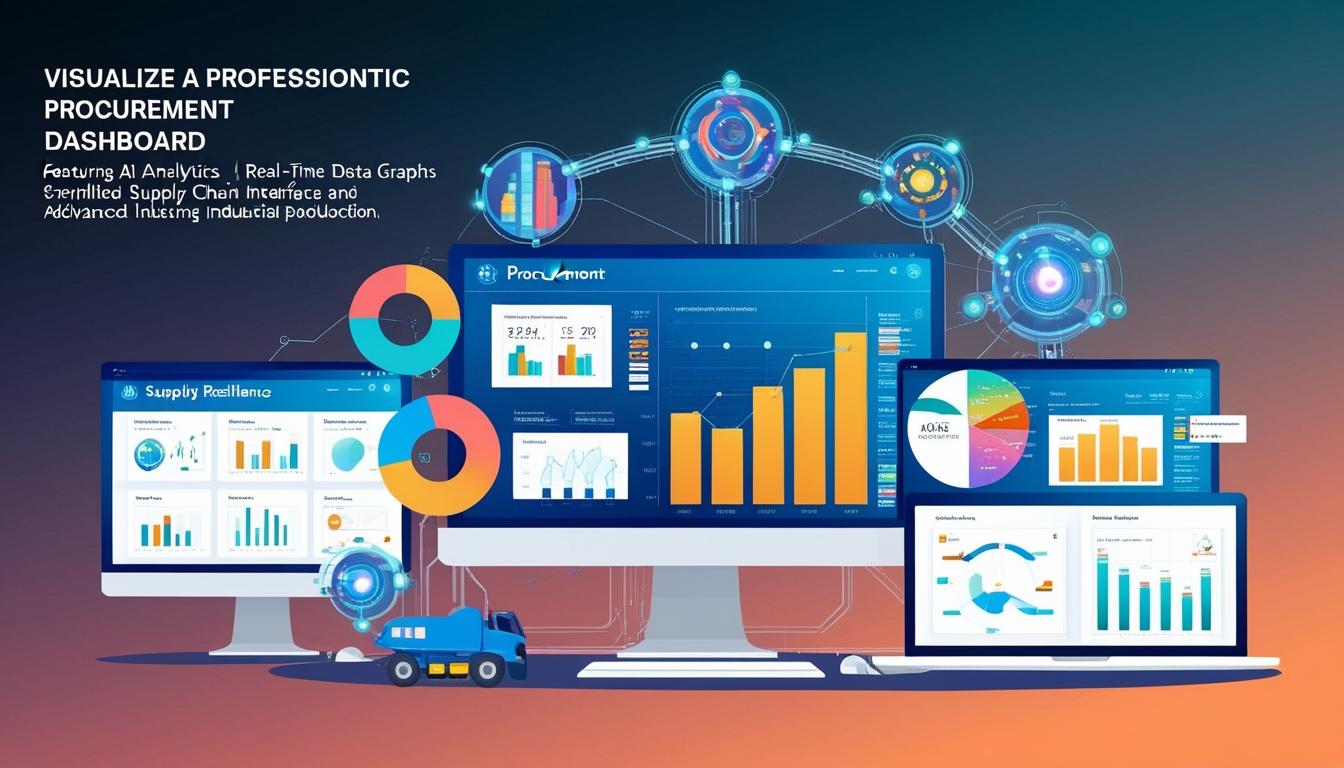
Strengthening Supply Chain Resilience through Technological Advancements: AI and Digitalisation in Procurement
In the fast-evolving world of industrial production, the efficiency of a company's supply chain is crucial to maintaining competitiveness and profitability. Traditional supply chain management, albeit foundational, has become increasingly complex and prone to human error. As industries face disruptions—from natural disasters to geopolitical tensions—enhancing supply chain resilience takes centre stage. Technological advancements, particularly in procurement processes through digitalisation and Artificial Intelligence (AI), are becoming indispensable tools in this endeavour.
The Role of Procurement Software
The integration of procurement software is reshaping how companies manage their supply chains. By automating various stages of the procurement processes—from soliciting tenders to invoice matching—these programmes consolidate and streamline tasks that were once manual. Real-time data analysis becomes more feasible with these tools, allowing companies to proactively identify potential issues in the supply chain and address them efficiently.
AI Sourcing Software Transformations
AI sourcing software further elevates the efficiency of the supply chain by leveraging machine learning to predict disruptions and adapt accordingly. AI systems are capable of identifying patterns within procurement operations, ensuring that anomalies due to potential shortages or excess supply are quickly flagged. This anticipatory capability prevents significant disruptions and enhances the overall reliability of the production process.
Critical Advantages of Digital and AI-Based Systems
Real-Time Data Analysis: By utilising real-time data, businesses can track large volumes of information seamlessly. This immediate analysis is vital for identifying long-term supply chain vulnerabilities.
Supplier Profile Analysis: Through AI and digital systems, companies can better evaluate supplier performance. Insights into a supplier's ability to quickly replenish stock are crucial for determining reliability and ensuring that dependency on any one source does not compromise supply chain integrity.
Enhanced Collaboration Opportunities: The digitisation of supply chains fosters improved collaboration and coordination. This unified approach allows companies to respond swiftly to any supply inconsistencies by adjusting other parts of the chain, thereby maintaining production balance.
Predictive Failure Analysis: AI’s predictive capabilities allow companies to foresee potential supply chain failures and mitigate risks in advance. Pattern recognition helps in aligning strategies with potential future scenarios.
Automated Decision Making: The speed at which AI makes decisions is beneficial for time-sensitive procurement needs. Auto-approvals via AI can prevent the bottlenecks associated with manual oversight, thus keeping procurement processes agile.
Optimised Decision Accuracy: AI tools don’t merely accelerate decision-making; they enhance it by considering multiple variables such as lead time, cost, and quality of supplies. An AI tool can quickly assess supplier efficiency, making nuanced choices beyond basic cost-saving, factoring in quality and delivery speed.
Industry Implications
These technologies have been critical in protecting companies against loss-induced by supply chain disruptions. As the technological landscape evolves, businesses must adapt to these innovations to safeguard against shocks. Companies with fully digitised procurement processes have reported increased resilience and have been better equipped to navigate unforeseen disturbances in global supply lines.
The transition to digital and AI-based procurement is not merely a trend but increasingly a necessity in sustaining competitive advantage in the ever-changing market landscape. Understanding and utilising these tools offers a significant leap towards robustness and adaptability, ensuring that supply chains remain resistant against future uncertainties. As industries continue to embrace this digital transformation, the traditional boundaries of supply chain management are being redefined, promising a future where industrial procurement is as predictive as it is efficient.
Source: Noah Wire Services