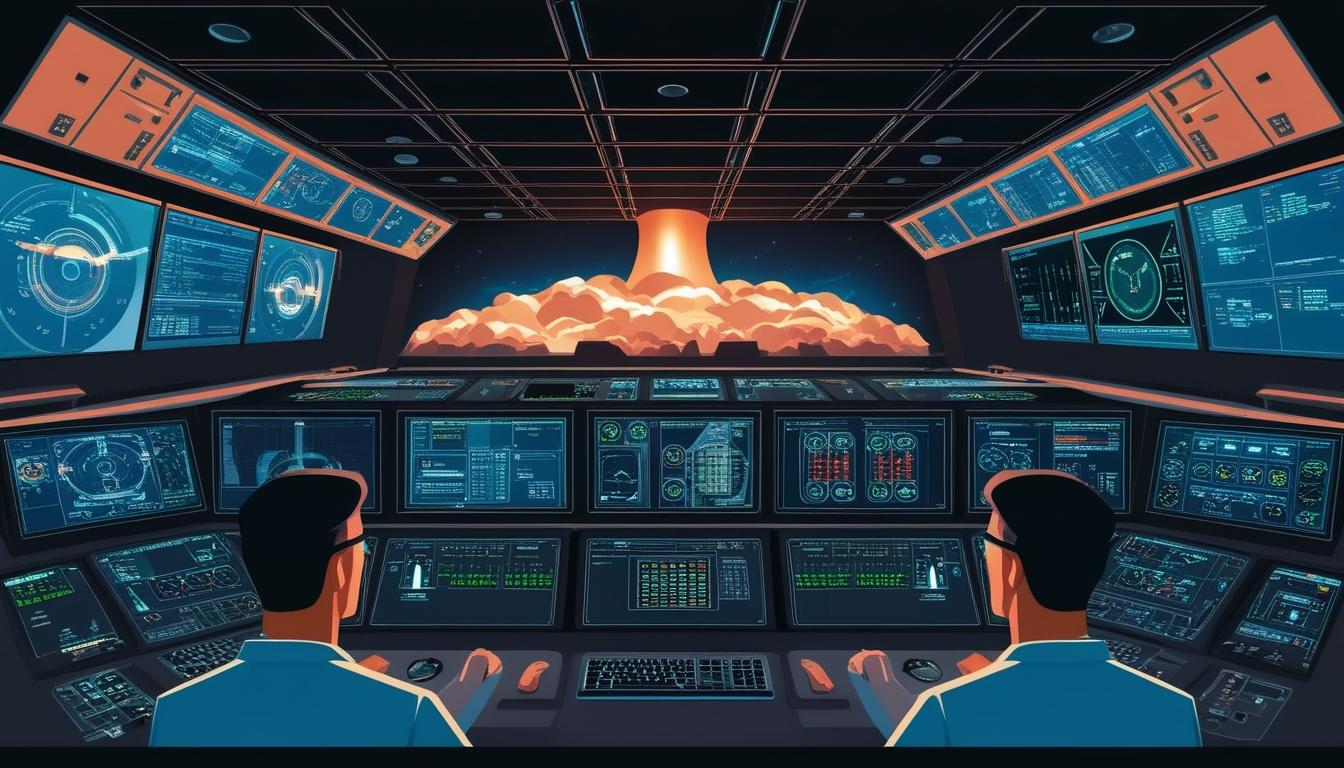
The United States is poised to enhance its nuclear command, control, and communications (NC3) systems, reflecting the urgent need for modernisation in a security landscape riddled with growing threats and technological complexity. The U.S. Strategic Command (STRATCOM), under the leadership of Air Force General Anthony J. Cotton since December 2022, is actively exploring the application of artificial intelligence (AI) to bolster these pivotal systems. This move comes as the Pentagon faces pressure to maintain its strategic advantage amidst evolving cybersecurity challenges and an overwhelming influx of data from sensor networks.
Speaking at the 2024 Department of Defense Intelligence Information System Conference, General Cotton emphasised AI's potential to enhance decision-making capabilities without replacing human judgement. He highlighted the critical nature of maintaining human oversight in decision-making processes, stating that AI must never be allowed to make these decisions independently. Cotton emphasised that AI can offer improved "decision space," an essential element to secure the entire nuclear enterprise. He articulated a clear message to potential adversaries, reaffirming the robustness and constant readiness of U.S. nuclear command and control systems.
The challenge of modernising NC3 systems—a complex web of underground cables, communications links, specialised aircraft, and satellites—is underscored by the concurrent efforts to upgrade strategic assets like the B-21 Raider bomber, Sentinel missile systems, and Columbia-class submarines. Despite these critical initiatives, NC3 often remains less visible and receives limited attention compared to more tangible military assets.
Admiral Charles Richard and General John E. Hyten, Cotton's predecessors at STRATCOM, have similarly advocated for NC3 modernisation. However, as noted by Peter L. Hays and Sarah Mineiro in a recent blog post for the Atlantic Council, improvements to these systems have been inconsistent and fragmented over time. Heather Penney from the Mitchell Institute for Aerospace Studies also pointed out the often overlooked nature of NC3 infrastructure, stressing its foundational role despite lacking public recognition.
Chris Adams, who serves as the General Manager of Northrop Grumman’s Strategic Space Systems Division, shed light on the complexity of NC3, describing it as a "system of systems." With hundreds of interlinked components, NC3 requires continuous updates and maintenance in order to respond effectively to new threats. AI offers a pathway to accelerate data processing and integration, allowing for more agile responses but also presents challenges such as the risk of biased data or flawed algorithms.
General Cotton acknowledged these potential pitfalls but expressed overall optimism about AI's ability to fortify the United States' deterrence posture. He suggested that AI could automate data collection and enhance cooperation with allied forces, though he cautioned that research is necessary to understand the full spectrum of AI-related risks, including unexpected behaviours and potential integration issues.
Implementing new NC3 capabilities, whether through AI or traditional means, is expected to be a careful, incremental process to avoid introducing vulnerabilities. As Chris Adams remarked, modernisation will require meticulous planning akin to ensuring a firm grip on successive steps in a procedurally complex task.
The strategic path forward for NC3 modernisation reflects a broader recognition of the need to sustain the effectiveness and security of the United States' nuclear deterrence in an era marked by rapid technological change and increasingly sophisticated global threats.
Source: Noah Wire Services