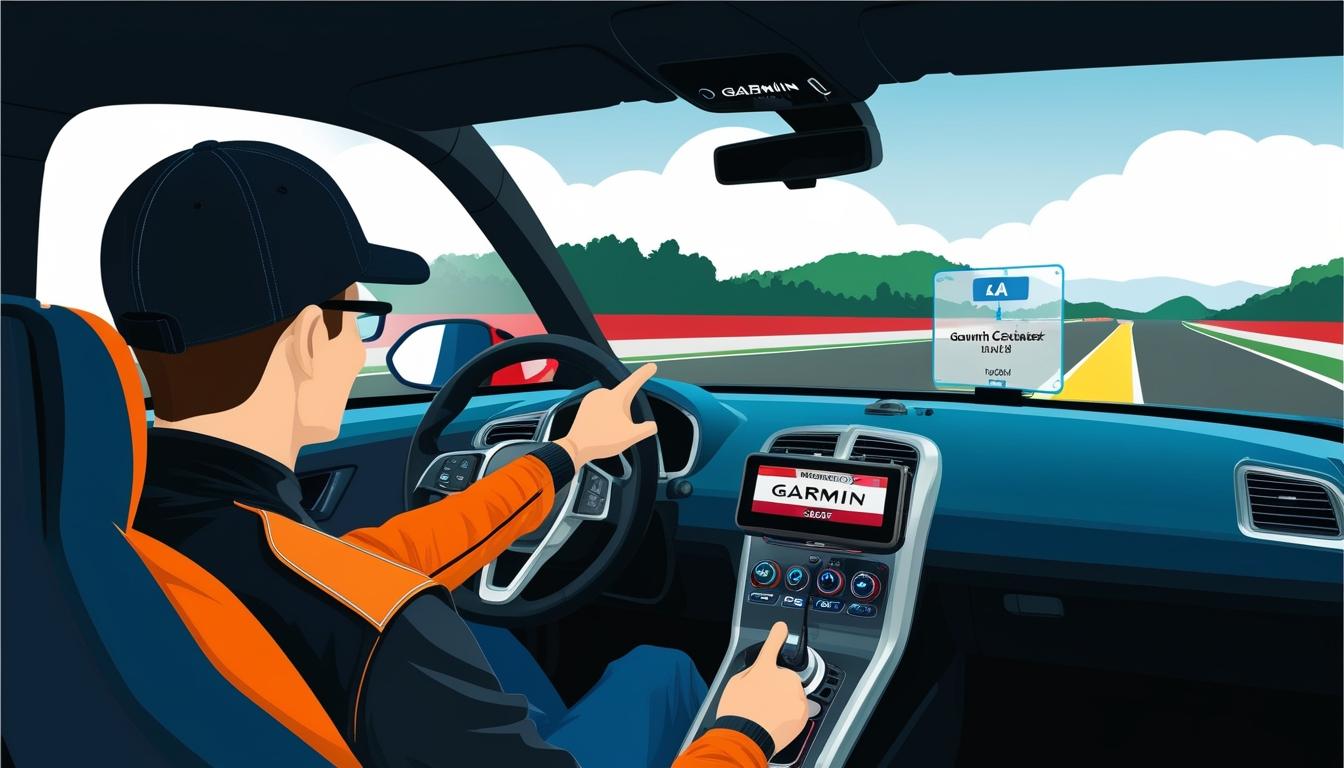
Florida International Rally & Motorsport Park recently served as the venue for a unique comparison between traditional human coaching and modern AI-based guidance in driving. Two novice drivers from the Grassroots Motorsports (GRM) team participated in an experiment aimed at understanding whether artificial intelligence could effectively replace human instruction on the racetrack, particularly for drivers with minimal experience.
The experiment unfolded at the expansive Florida track, where the two recruited "test subjects," both GRM staff members, were equipped for their venture into performance driving. Colin Wood, GRM's digital editor, had limited exposure to real-world racing scenarios, primarily honing his skills in virtual environments through racing games and simulators. Conversely, Chris Tropea, responsible for the GRM video department, possessed some observational familiarity with the track but limited practical driving experience. Their individual familiarity with the track and motorsport provided a varying baseline for the experiment.
Wood received direct coaching from an experienced instructor, while Tropea was paired with the Garmin Catalyst, a technology-driven device that uses AI to provide actionable data to the driver. The Catalyst utilises a combination of GPS data and accelerometriс inputs to offer feedback aimed at improving lap times through suggestions like "brake later" or "apex earlier."
Ahead of their track day, the two participants engaged in a virtual classroom session, which introduced them to foundational racing concepts such as approach and exit strategies, while encouraging smooth and deliberate driving inputs. Enthusiasm notwithstanding, both expressed initial apprehension—likely due to the translation of theoretical concepts into practical application.
As the event kicked off on the track, both participants began by completing taxi laps to familiarise themselves with the circuit. Tropea's first marked attempt resulted in a spin at the second corner, a miscue that had similarly challenged his guide during a prior track outing. The Garmin Catalyst then assumed its role, providing immediate feedback on his racing line and techniques.
Meanwhile, Wood's initial exploratory laps not only surpassed those of Tropea but were also steadier, adhering to the deliberate strategy imparted by his coach. His approach focused on building confidence through muscle memory and finesse, with pointed discussions on effective braking and exploiting car dynamics following each track session.
As the day progressed, measurable improvements from both drivers emerged. Wood managed to shave off close to 13 seconds from his initial timings, while demonstrating increased precision in steering and braking patterns. Tropea's lap improvements mirrored this, gaining significant cornering speeds through the persistent digital nudges of the Garmin Catalyst, which encouraged a more aggressive driving style. Notably, both drivers achieved progress primarily through cornering speed refinement rather than straights, showcasing the real-world impact of effective training techniques.
Reflecting on the day's experiment, the human coaching approach appeared to excel in contextualizing advice and providing reassurance in high-pressure scenarios. In contrast, the Garmin Catalyst displayed strengths as a tool for refining technique, particularly when operated by an individual already equipped with foundational knowledge of driving dynamics.
Although both modalities successfully contributed to decreased lap times and improved driving confidence, the exercise highlighted the intrinsic differences between AI-driven and human-guided instruction. Where the Catalyst offered specific corrective advice, it lacked the human touch of psychological support and contextual explanation offered by a coach—elements crucial for novices.
As the day concluded, both Wood and Tropea expressed a strong desire to continue developing their skills, illustrating that both methods significantly impacted their newfound enthusiasm and competence in driving. The results of this comparative endeavour underscore the nuanced viability of integrating AI in driver training, while affirming the enduring value of human insight and adaptability in motorsport coaching.
Source: Noah Wire Services