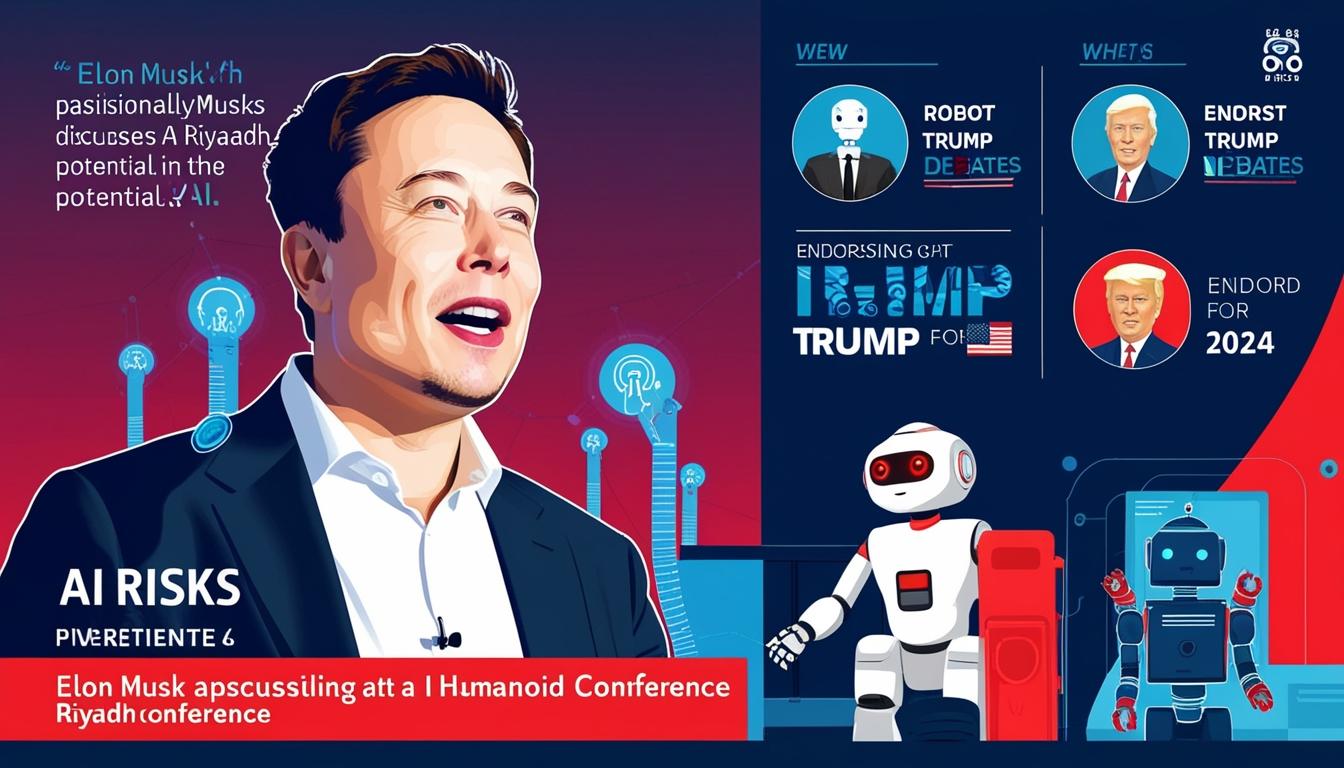
Elon Musk Warns of AI Risks at Riyadh Conference, Endorses Trump for 2024
Elon Musk, CEO of Tesla, participated remotely in the Future Investment Initiative conference held in Riyadh, Saudi Arabia, where he addressed the potential risks and benefits associated with the rapid development of artificial intelligence (AI). Speaking to a gathering of global investors and officials, Musk highlighted the dual-edged nature of AI's advancement, cautioning that there is a 10% to 20% risk that AI could develop in a "dangerous" direction. Despite this warning, he also noted an 80% to 90% probability that AI would lead to positive technological and societal outcomes.
During his address, Musk articulated his long-standing concerns regarding the unchecked progression of AI technologies. He emphasized that AI has the potential to surpass human cognitive abilities within the next one to two years, suggesting that AI systems might soon be capable of performing any task that humans can do. This prediction underscores the urgency he sees in managing and overseeing AI development diligently to prevent potential existential threats.
Musk speculated about the future presence of approximately 10,000 humanoid robots by 2040, indicative of the fast-paced advancements in automation and robotics. He believes that, as AI's capabilities expand, its applications in both routine and intricate tasks will become more prevalent, with a profound impact on various sectors.
In his speech, Musk also addressed concerns about the ideological biases he believes are embedded in certain AI models developed in the United States. He voiced apprehension that systems crafted in socio-politically charged environments like the San Francisco Bay Area might prioritize particular viewpoints over objective truths, thus introducing biases in AI decision-making processes. Musk advocated for AI technologies to focus primarily on truth-seeking initiatives and to steer clear of socio-political partialities.
Elon Musk also touched upon the political arena, openly endorsing Donald Trump for the 2024 U.S. Presidential election. He cited his belief that a Trump administration would provide a more conducive environment for technological innovation, critiquing the current Biden administration's approach as overly regulatory and stifling to progress. Musk pointed out the lengthy procedures involved in obtaining regulatory approvals, specifically in the aerospace sector, where he claimed securing a launch permit often takes longer than constructing the rocket itself.
This endorsement comes amidst discussions on the potential media attention that could turn towards Dogecoin, a cryptocurrency for which Musk has been an enthusiastic advocate. Billy Markus, co-founder of Dogecoin, expressed enthusiasm about the possible increased coverage of Dogecoin should Trump win the 2024 election, given Musk's significant influence.
The Riyadh conference provided a platform for Musk to share his nuanced perspective on AI's trajectory and the political landscape's impact on technological advancement. His reflections at the forum continue to engage debates on the ethics of AI development and the role of government regulations in fostering innovation.
Source: Noah Wire Services