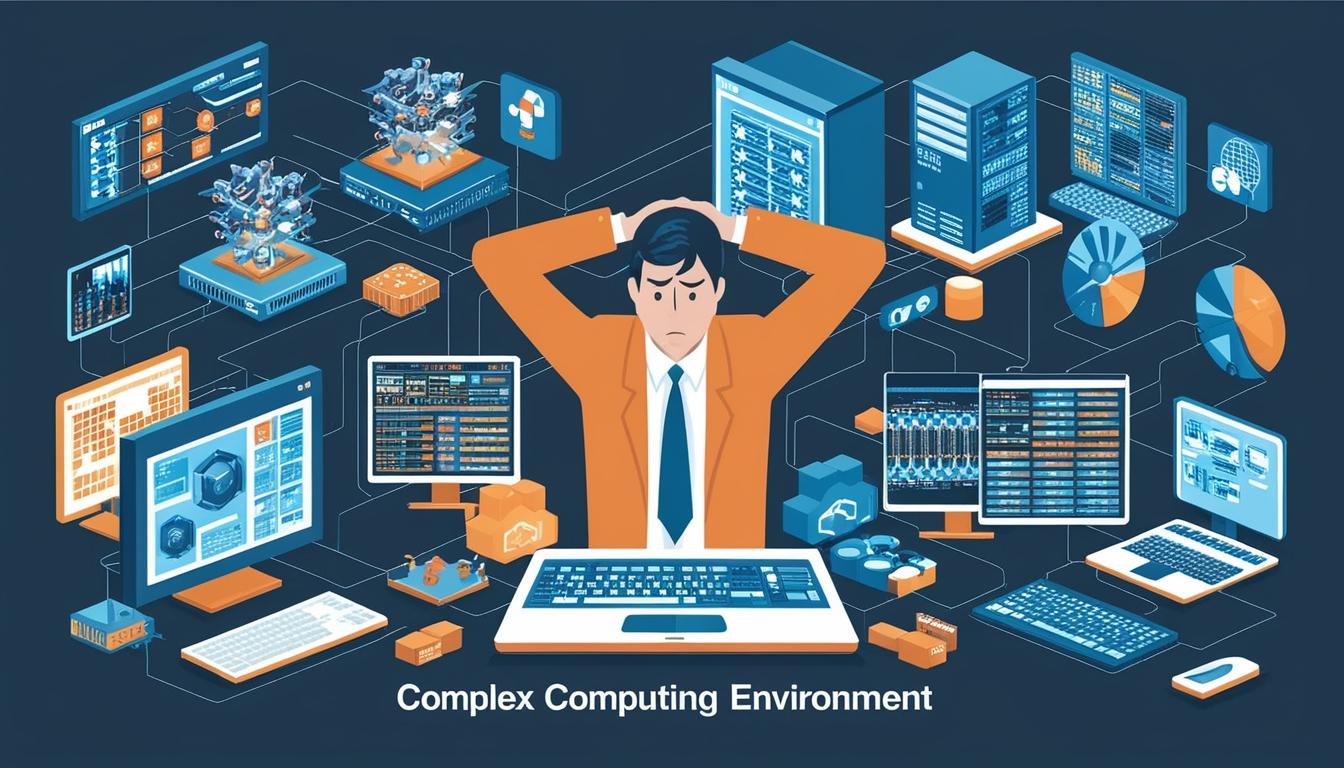
The high-performance computing (HPC) and artificial intelligence (AI) industry is facing notable challenges, as detailed in a recent report by Intersect360 Research. The comprehensive document, titled “Issues Facing the HPC-AI Industry: Insights from the Advisory Committees of the HPC-AI Leadership Organization (HALO),” derives its findings from extensive interviews with members of the HALO Advisory Committee. It sheds light on the current hurdles and future directions for HPC and AI technologies.
A significant issue identified in the report is the shortage of skilled professionals capable of managing new HPC-AI environments. The findings reveal that many industry leaders are concerned about the lack of personnel, particularly those trained in computational sciences. This shortage is attributed to educational programmes not adequately emphasising computational sciences and the operation of large-scale computational infrastructures.
Another core challenge is the limitations of hardware in supporting traditional HPC applications. While GPU-heavy deployments are prevalent in AI applications due to their theoretical peak performance capabilities, many conventional HPC applications struggle in scaling efficiently across numerous GPUs. Intersect360 Research data supports this, showing that 12% of HPC-AI users experience "moderate" to "major" performance issues, while only 47% report seamless functioning without problems.
The variety of chip technologies presents further complications for the industry. With an array of CPUs, GPUs, NPUs, FPGAs, and custom chips available, these diverse technologies introduce complexities in achieving consistent performance and results across different architectures. The report highlights that such diversity challenges independent verification of research, necessitating significant investment to replicate results reliably across varied HPC-AI environments.
Legal restrictions on data sharing compound these technological challenges. The report notes strict regulations, particularly in the EU and China, with the U.S. also implementing HIPAA requirements that limit patient data exchange. These regulations hinder global collaboration efforts due to disparate national rules.
The concept of "HPC nationalism" emerges as countries seek technological independence by developing domestic HPC systems and software stacks. This movement towards self-sufficiency impacts international cooperation, as nations strive to establish and maintain control over their HPC capabilities and expertise.
Environmental sustainability is becoming increasingly crucial for HPC-AI facilities due to their substantial power consumption, especially within GPU-heavy architectures. This factor not only influences environmental impacts but also increases energy costs. Organisations may need to consider outsourcing to external facilities such as cloud providers to mitigate these costs, potentially leading to significant changes in how global HPC-AI infrastructure is managed.
The 22-page report, complete with detailed figures and graphs, offers these insights among many others and is available online for Intersect360 Research Clients and HALO members. A webinar discussing the report, along with an update to the Intersect360 Research HPC-AI market forecast, is scheduled for November 4-5, 2024, and will be accessible for clients and HALO members in multiple time zones.
In summary, the report provides a critical examination of the various challenges facing the HPC-AI industry, reflecting concerns regarding expertise, technology, legal contexts, national interests, and sustainability. These insights offer a foundational understanding for stakeholders navigating the evolving landscape of HPC and AI technologies.
Source: Noah Wire Services