Innovative Technology Promises to Transform Offshore Wind Farm Maintenance
A pioneering project at Heriot-Watt University, in collaboration with Imperial College London, geo-data specialist Fugro, and underwater software firm Frontier Robotics, is setting new standards in the maintenance of offshore wind farms. The initiative, called the UNITE project, aims to radically alter the approach to wind turbine maintenance with advanced robotic technologies and the subsequent reduction of reliance on large maintenance vessels.
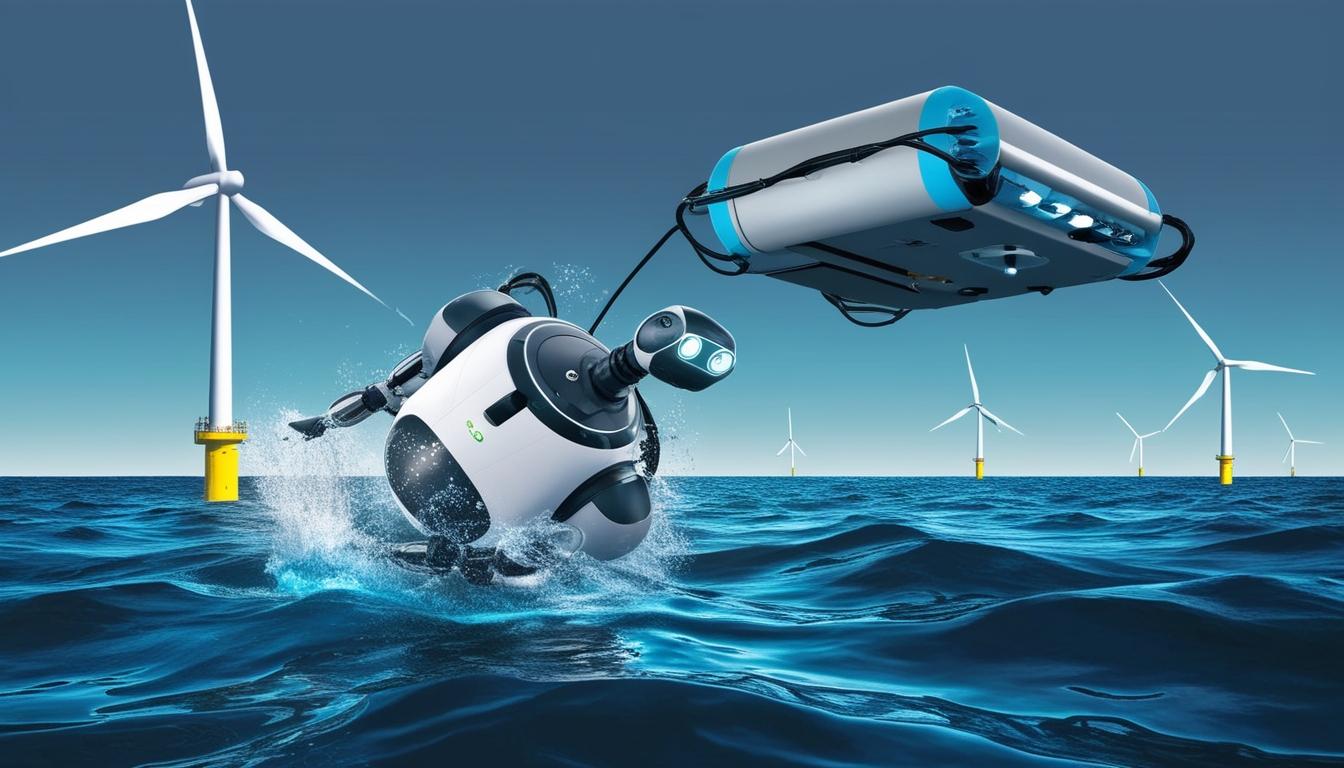
The UNITE project's advancements centre around the use of autonomous underwater robots equipped with sophisticated AI and control systems. Currently undergoing trials, these robots are designed to operate in the challenging environments of offshore wind farms, maintaining stable contact with structures despite turbulent sea conditions. This could lead to a dramatic 97% cut in fuel consumption for maintenance missions, reducing the daily requirement from 7,000 litres to just 200 litres. This potential reduction not only decreases operational costs but also significantly lessens the carbon footprint associated with wind farm maintenance.
David Morrison, Project Manager at the National Robotarium, highlights the promising results seen so far. The robots are engineered to undertake a comprehensive range of tasks, from conducting visual inspections and taking accurate measurements to cleaning and repairing wind turbines. To accomplish these tasks autonomously, the project tackles the complex "chicken head problem," which involves maintaining a steady tool position despite the dynamic movement caused by waves and currents.
Professor Yvan Petillot at Heriot-Watt University remarks that the collaboration with Fugro was crucial in developing these next-generation autonomous robotic solutions. The focus on subsea inspection and manipulation addresses scenarios that current technologies fail to manage effectively.
The initiative also involves the integration of 3D semantic mapping capabilities, enhancing the robot's ability to navigate the offshore environment and identify components requiring maintenance. Additionally, advancements are being made in coordinating Remotely Operated Vehicles (ROVs) and Electric ROVs (eROVs) launched from Uncrewed Surface Vessels (USVs), pushing towards completely autonomous inspections and less dependence on human divers and support vessels.
The UK's extensive offshore wind energy sector, with over 2,600 turbines and plans to increase capacity fourfold by 2030, heavily relies on regular maintenance. Generally, each turbine needs maintenance checks up to three times annually, with frequency increasing as the infrastructure ages. The project could revolutionise these operations, providing rapid data insights within three hours—enhancing efficiency compared to the current standard of up to three weeks.
Mark Bruce from Fugro acknowledges the strides made with the partnership, noting their USVs and eROVs' efficiency and reduced environmental impact. The remote operation centres, active for ten years, demonstrate how collected data can quickly improve solutions.
Frontier Robotics contributes state-of-the-art perception, mapping, and autonomy technologies to the project. Integrating advanced stereo camera systems and edge computing, they support AI systems that could see faster development and commercialisation due to resources at the National Robotarium.
Underpinning this initiative is the £1.4 million funding provided through an EPSRC Prosperity Partnership, a UK Research and Innovation scheme. The collaborative efforts between Heriot-Watt University, the National Robotarium, and industry partners are crucial in the transition to renewable energy, addressing the increasing global demand sustainably.
The potential success of this project marks a significant advancement in offshore wind farm technology, enhancing safety by minimising human involvement in hazardous conditions and promising a sustainable future for renewable energy maintenance operations.
Source: Noah Wire Services