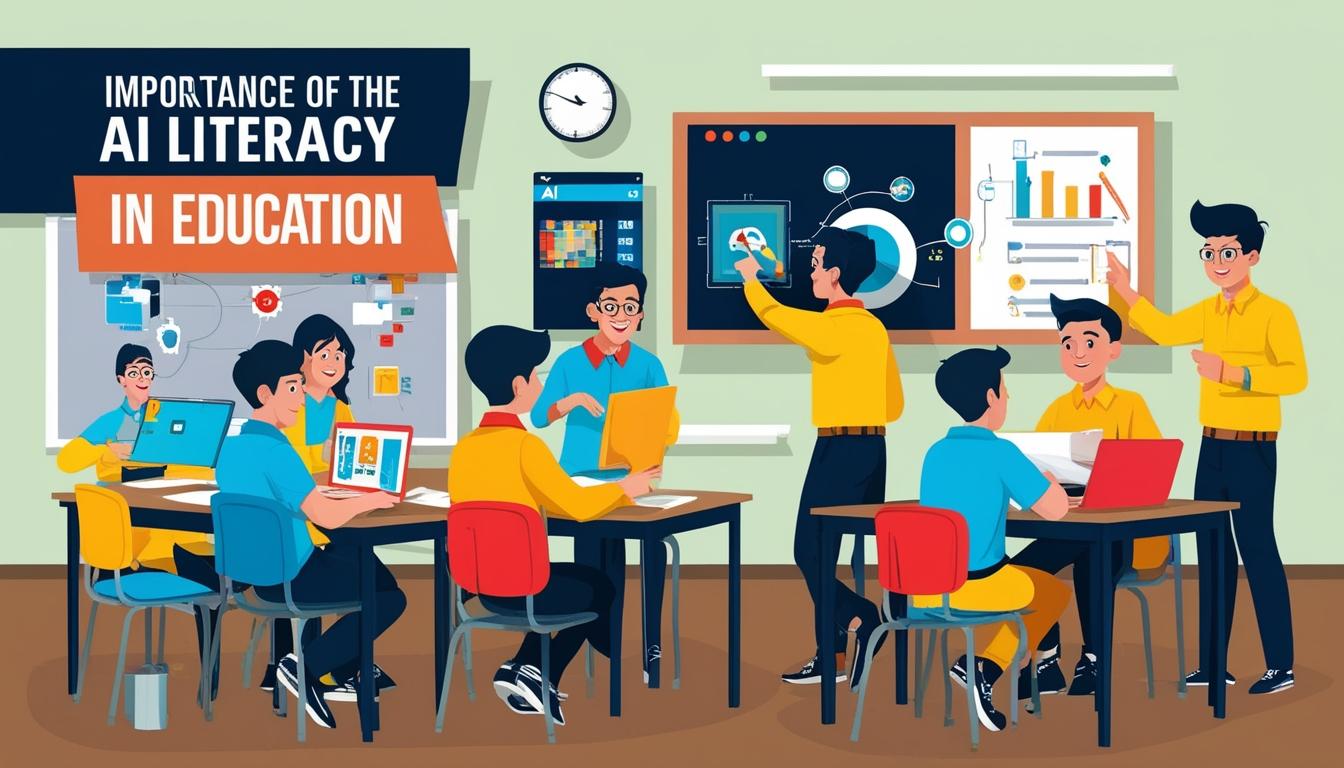
In a rapidly evolving technological landscape, the integration of artificial intelligence (AI) into various sectors has become a focal point, particularly in education. The pace of innovation in AI tools has been rapid and expansive, prompting discussions about the need for AI literacy among students, educators, and institutions. Delia DeCourcy, the Lenovo Worldwide Education Portfolio Manager, has highlighted the critical importance of AI literacy in her recent guest column, drawing insights from Ethan Mollick’s book, "Co-Intelligence: Living and Working with AI".
The concept of AI literacy encompasses an understanding of AI’s capabilities, limitations, and potential impacts. It involves being able to interact with AI tools responsibly and effectively, without necessarily requiring deep technical expertise. This literacy becomes increasingly vital as AI, particularly generative AI, is woven into everyday technology and education. Research from the National Artificial Intelligence Advisory Committee in 2023 indicates that a significant portion of jobs are or will be affected by AI, with about 20% of jobs predicted to have half of their tasks influenced by AI capabilities.
Recent studies, including one conducted by Impact Research for the Walton Family Foundation, reveal that by June 2024, approximately half of K-12 students and teachers are using AI tools like ChatGPT weekly. In higher education, a report from Pearson showed that 56% of students found that generative AI tools enhanced their efficiency, although only a minority of faculty expressed confidence in their use for teaching purposes.
The integration of AI in educational settings is already underway, with tools like Google’s Gemini chatbot and Microsoft’s Copilot being incorporated into educational platforms. Institutions are urged to assess their readiness for AI integration and develop strategic plans not only for curriculum enhancement but also for administrative operations and cost efficiency. Such initiatives require a foundational level of AI literacy among stakeholders to ensure responsible implementation.
For K-12 education leaders, resources such as the Gen AI Readiness Checklist developed by bodies like The Council of the Great City Schools and CoSN assist in planning for AI integration. Leading examples, like Gwinnett County Schools in Georgia, provide insight into successful implementation strategies.
Similarly, higher education institutions are encouraged to follow frameworks provided by organisations like Educause, which offer guidance on AI governance, operations, and pedagogy. Yale’s Task Force on Artificial Intelligence, for example, has published a comprehensive report that outlines the institution’s current AI usage and future strategies.
Educators, whether at K-12 or university levels, need to embrace AI tools to enhance their teaching methods, collaborate effectively, and foster innovation. Virtual professional development courses offered by tech giants like Google and Microsoft can be instrumental in building these skills. Pilot programmes, like those in Hillsborough Township Public Schools in New Jersey, demonstrate ways to explore and scale AI integration in education.
The issue also extends to students, who must be taught AI literacy to prepare for a future work environment that increasingly relies on AI technologies. Twenty-first-century skills encompass not only using AI responsibly but understanding its workings and potential ethical challenges. Organisations such as ISTE provide resources for age-appropriate AI education, while institutions like MIT and Stanford, along with Common Sense Education, offer curriculum materials to seamlessly integrate AI literacy into educational programmes.
Delia DeCourcy, a former educator and now a leader in the field of educational technology, stresses that understanding and leveraging this innovation is crucial for adapting to the accelerating changes in the workplace and beyond. Her experience in education and her current role at Lenovo underscore the pressing need for AI literacy to be a fundamental component of modern educational strategies.
Source: Noah Wire Services