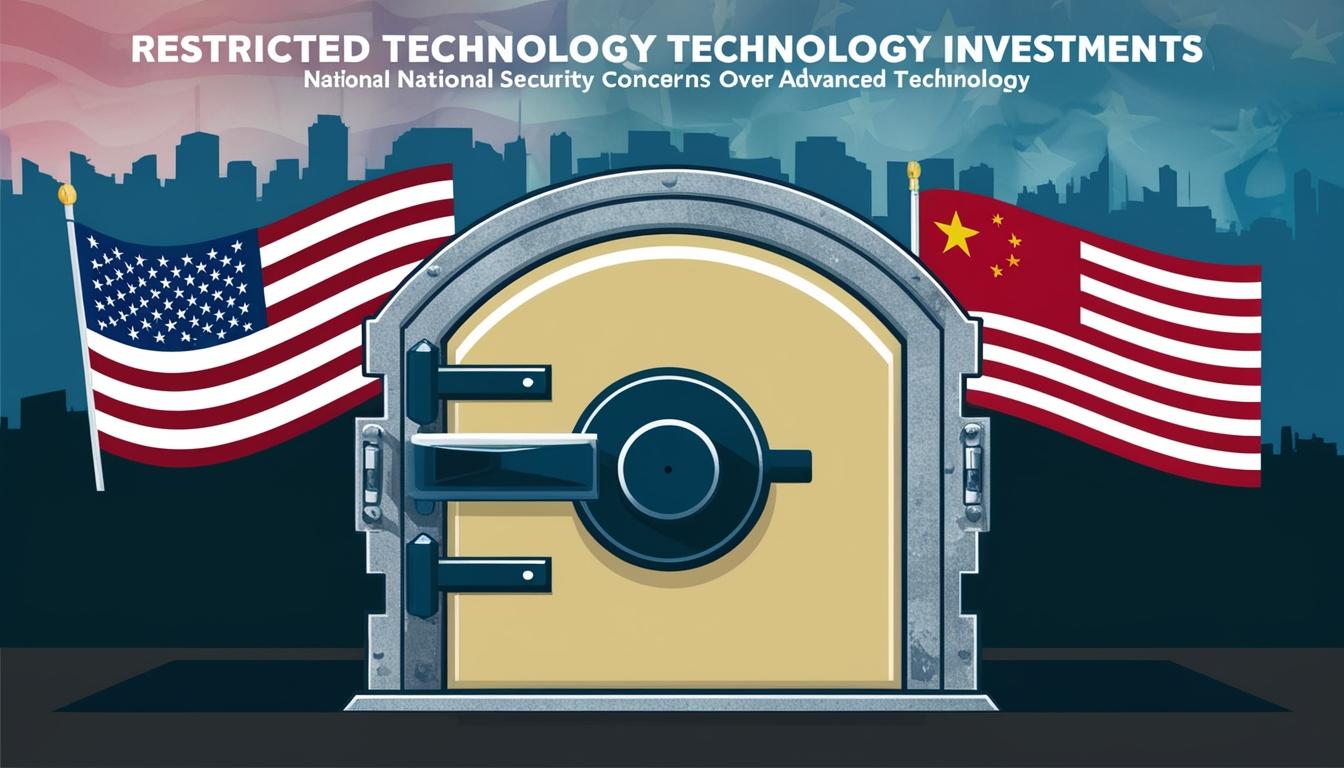
United States Finalises Regulations to Curb Advanced Technology Investments in China
The Biden administration has announced plans to finalise regulations designed to restrict any investments by American entities in key technological sectors in China believed to pose national security risks. These sectors include semiconductors, quantum computing, and artificial intelligence (AI), according to a recent statement issued by the US Treasury Department.
The foundational guidelines for these restrictions were suggested by the Treasury Department in June, based on an executive order signed by President Joe Biden in August 2023. The targeted sectors focus on three crucial areas: semiconductors and microelectronics, quantum information technologies, and certain AI systems.
This move comes after more than a year of careful deliberation, culminating in the creation of new regulations set to prevent US companies from investing in particular aspects of these industries. The rules also stipulate that companies are required to report their interests in other sectors to the US government. The overarching aim is to prevent American technology and capital from aiding China in developing technologies that could potentially enhance its military capabilities. These new guidelines, largely aligned with the proposals made in June, will take effect on 2nd January next year and will be monitored by the newly established Office of Global Transactions within the Treasury Department.
The Treasury Department has identified narrowly-defined technologies as pivotal for the future of military, cybersecurity, surveillance, and intelligence applications. Paul Rosen, an assistant secretary responsible for investment security, made a statement asserting that US investments, encompassing not only financial flows but also associated managerial assistance, investment, and talent networks, must not be utilised to bolster any country's military, intelligence, or cyber capabilities.
A senior government official clarified that the new regulations would prohibit American investments in Chinese companies focused on advanced semiconductor technologies. However, investments in Chinese companies concentrating on traditional chip technologies would only necessitate a reporting requirement. This strategy aligns with current restrictions barring the export of advanced chips to China and aims to complement existing trade limitations.
Additionally, the regulations concerning AI investments hinge on the computational power used to train relevant AI systems and their anticipated applications. The rules explicitly forbid US individuals and enterprises from acquiring shares in Chinese AI companies focused on military applications. Furthermore, investments related to AI models and other applications may potentially be encompassed by these prohibitions.
These regulations underscore the US government's continued efforts to safeguard its national security by meticulously regulating the flow of critical technological knowledge and investment into what it perceives to be sensitive areas.
Source: Noah Wire Services