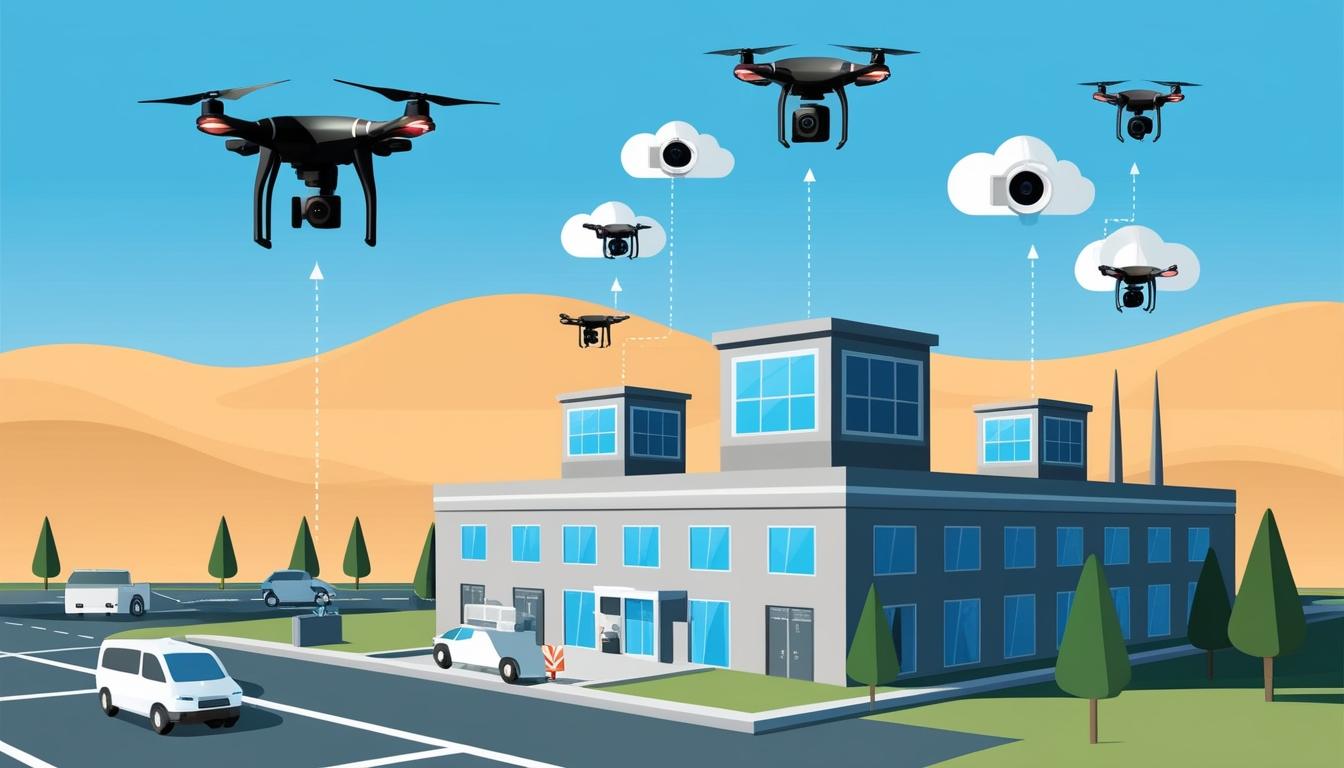
The US Army is conducting tests on a new artificial intelligence product named Scylla, designed to identify potential threats from significant distances, specifically up to a mile away, without requiring additional hardware. This advanced AI system is currently undergoing evaluation at the Blue Grass Army Depot (BGAD) in eastern Kentucky. The site, known for munitions storage and as a former chemical weapons stockpiling facility, serves as an ideal location for assessing the capabilities of Scylla in enhancing physical security.
Since its deployment over the past eight months, Scylla has demonstrated high precision in threat detection, achieving over 96% accuracy while reducing false alarms caused by environmental factors. Chris Willoughby, BGAD’s electronic security systems manager, noted the substantial drop in false alarms due to Scylla’s sophisticated detection algorithm.
The Physical Security Enterprise and Analysis Group (PSEAG) leads these evaluations. The group has trained Scylla to assess and classify various human features and behaviours, including real-time identification of individuals who are armed, which helps prevent unnecessary security responses to benign situations.
Scylla's system utilises any available video feeds to perform real-time monitoring, learning, and alerting, thereby reducing the operational load on security personnel. This capability was highlighted by Drew Walter, the US Deputy Assistant Secretary of Defense for Nuclear Matters, who emphasised Scylla's potential to support the security of strategic nuclear capabilities.
The AI-driven system employs drones and wide-area cameras to monitor large facilities, efficiently detecting and notifying personnel about potential threats. For instance, the system successfully identified an "intruder" with a firearm atop a water tower from a mile away, enabling security personnel to take appropriate action. In another scenario, Scylla rapidly recognised two armed individuals as BGAD staff using facial recognition technology, and tracked individuals breaching a facility's perimeter using drones.
Currently, BGAD is the only facility testing Scylla. However, the Department of Defense has announced plans for similar tests with the Navy and Marine Corps at Joint Base Charleston in South Carolina in the coming months. The future of the Scylla system, post-testing, remains unclear.
Scylla is praised for its cost-efficiency as it operates without the need for new hardware, although proprietary hardware can be added if required. Developed by the eponymous company, Scylla claims its AI system is devoid of ethnic bias due to balanced datasets used in its facial recognition technology. Furthermore, it purportedly does not retain any personal data or recorded footage as it functions as an extension to existing security configurations.
Despite its efforts to position itself as an ethical enterprise, Scylla's involvement in countries with questionable human rights records, such as Oman, raises concerns. In Oman, Scylla has been deployed for COVID-19 screenings at airports. However, its partnership with the Bin Omeir Group of Companies could potentially lead to applications contrary to its ethical commitments, especially given the nation’s track record on human rights and suppression of free expression.
Questions about Scylla's operations and commitments have been left unanswered by both the US military and the company itself. This new development in security technology illustrates the growing role of AI in enhancing security measures, while simultaneously highlighting the broader implications and responsibilities that accompany its use.
Source: Noah Wire Services