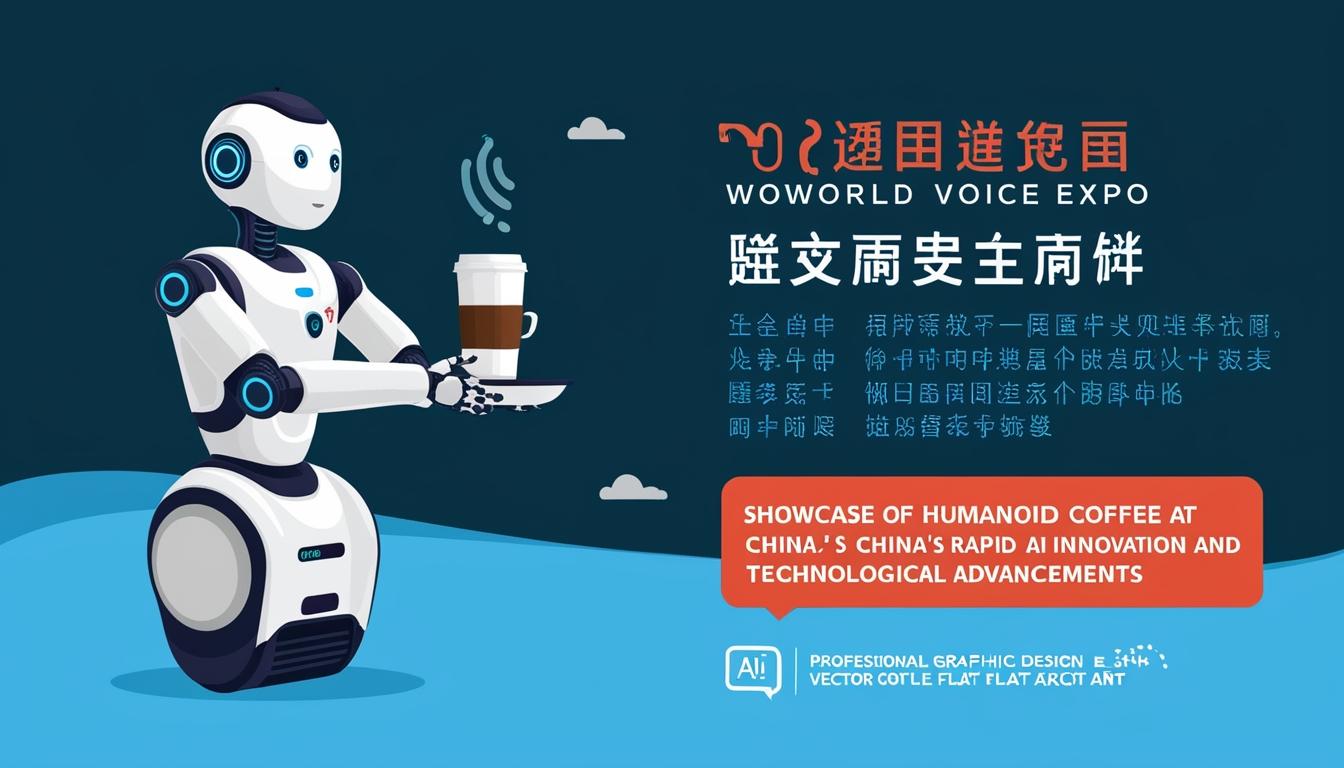
AI Boom Fuels Innovation Surge at China’s World Voice Expo
Hefei, Anhui Province—The 7th World Voice Expo, held in Hefei, Eastern China, concluded this past Sunday, leaving a significant mark on the artificial intelligence landscape. The event drew attention to the rapid advancement of AI technologies within China, showcasing over 200 innovative products spanning humanoid robots, human-machine interaction systems, and enhanced large language models.
One of the main attractions of the expo was a 1.7-meter tall humanoid robot from iFLYTEK, a prominent AI company. Weighing 65 kilograms, the robot exhibited the ability to understand and execute complex tasks demonstrated by its seamless retrieval and delivery of a coffee bottle upon a visitor's request. Ji Chao, iFLYTEK’s chief robotics scientist, elaborated on the sophistication of their second-generation robots, powered by a comprehensive large language model. This platform, Ji noted, empowers 450 robotics companies and 15,000 developers across China, fostering a collaborative and expansive AI ecosystem.
Unitree, a robotics firm based in Hangzhou, took the spotlight by unveiling their Unitree H1 humanoid robot. Capable of reaching speeds up to 3.3 meters per second, the H1 is already seeing robust sales, with over 100 units sold at the price point of $90,000 each, signalling a viable path toward commercialisation in humanoid robotics, shared Li Jun, the head of technical services at Unitree.
A notable advancement presented at the expo was a voice-interaction testing system specifically designed for new energy vehicles (NEVs). This innovative system simulates human interaction, performing tests with remarkable speed and accuracy. Wu Jiangzhao of the National Intelligent Voice Innovation Center highlighted that this technology significantly reduces development time, cutting testing durations from weeks to a mere two to three days.
AI’s impact is markedly evident in China’s automotive industry, with companies like Chery, a significant player in the market, integrating sophisticated AI systems into their vehicles. Chery’s chairman, Yin Tongyue, discussed their pursuit of intelligent features—from multi-lingual communication systems to advanced cockpit technologies.
The reach of AI extends beyond transportation, seeping into everyday consumer products. MiMouse, another tech company from Anhui, debuted their AI-powered smart keyboard at the expo. This device is designed to perform complex tasks such as document creation and translations, complementing their already popular smart mouse, noted by MiMouse’s general manager, Feng Haihong, whose innovations have reportedly led to the sale of 10,000 mice in a single month.
China's AI sector is thriving, with an expanding ecosystem now comprising over 4,500 companies. The core industry was valued at approximately 578 billion yuan ($81.3 billion) in 2023, reflecting a 13.9 percent increase from the previous year, as per official figures.
Liu Qingfeng, chairman of iFLYTEK, emphasised the transformative potential of AI at the expo, foreseeing a future where artificial intelligence redefines industrial landscapes, scientific research methodologies, and daily life aspirations.
The World Voice Expo has underscored China's burgeoning role in the global AI arena, offering insights into how technology is set to redefine industries and improve life quality on a grand scale.
Source: Noah Wire Services