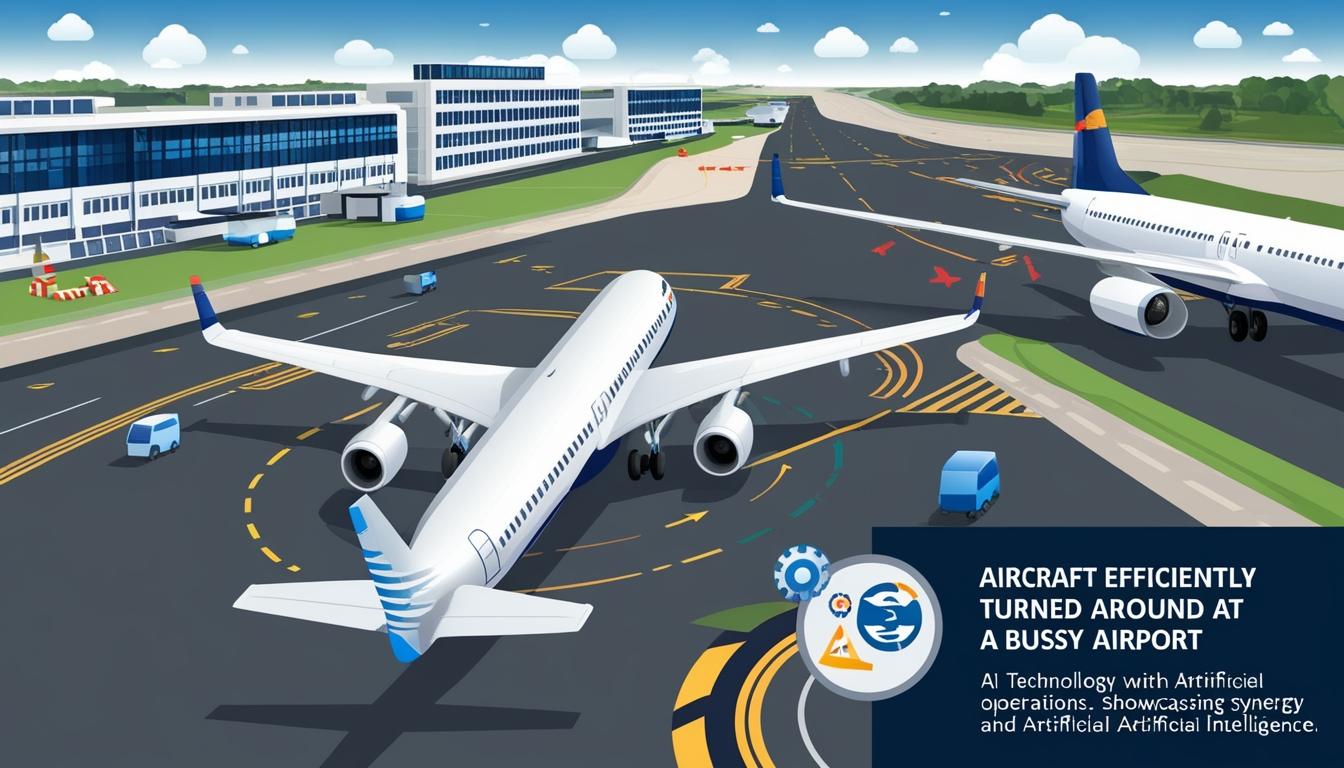
AI Technology Enhances Airport Turnaround Efficiency: A Global Perspective
In a significant leap for the aviation industry, the integration of Artificial Intelligence (AI) technology during the critical aircraft turnaround period has demonstrated substantial benefits in decreasing operational delays and enhancing efficiency. These developments have been comprehensively detailed in the 2024 Turnaround Benchmark Report by Assaia, spotlighting the advantages gleaned from implementing Assaia’s ApronAI technology at airports worldwide throughout 2023 and 2024.
Aircraft turnaround, the vital period between landing and the next departure, plays a crucial role in maintaining airline and airport profitability. The report delineates how AI technology contributes to reducing ground delays by 6% and turnaround times by 4%—even amidst a noted increase in airport traffic within the observed timeframe. Such efficiency is pivotal, translating into fewer costly delays, improved passenger satisfaction, and optimized aircraft and airport capacity utilisation.
Data analysed in the report reveal that the median number of aircraft 'turns'—or arrivals and departures at each gate—rose from four to five per day. This enhancement allows airports to increase their operational flights without necessitating additional gate infrastructure, thus boosting potential revenue streams and improving overall efficiency.
Assaia’s CEO, Christiaan Hen, underscores the urgency for efficiency in the face of burgeoning challenges within the aviation sector, such as delayed aircraft deliveries, rising travel demand, elevated fuel prices, and the growing imperative for sustainable operations. "The perfect turnaround drives down costs, reduces environmental impacts, and improves passenger experience," Hen asserts, emphasising the complex interplay of variables required to achieve optimal turnaround efficiency. He lauds the pivotal role AI plays in this equation, highlighting its capacity to significantly enhance the profitability of both airlines and airports.
The report, however, also points out regional disparities in gate utilisation efficiency, noting particularly a divergence between European and North American airports. European airports demonstrate more efficient gate capacity management, achieving a higher number of daily turns per gate. Nevertheless, this is coupled with a higher incidence of delays compared to their North American counterparts. This juxtaposition sparks debate over the sustainability of current North American operations, as they experience capacity inefficiencies primarily due to the constraints of airline-controlled gate usage.
Hen questions the viability of the North American model moving forward: “As demand for air travel increases, we must consider the sustainability of wasting capacity owing to the structure of present gate operations.” The findings suggest a potential reevaluation of gate operation models to tackle these capacity constraints.
The implications of the 2024 Turnaround Benchmark Report are profound, providing a nuanced understanding of how AI can be leveraged to balance gate capacity, reduce delays, and enhance operational efficacy in an industry grappling with multifaceted pressures on its sustainability and service delivery standards. As the aviation sector continues to evolve, such insights will likely guide future innovations and operational strategies.
Source: Noah Wire Services