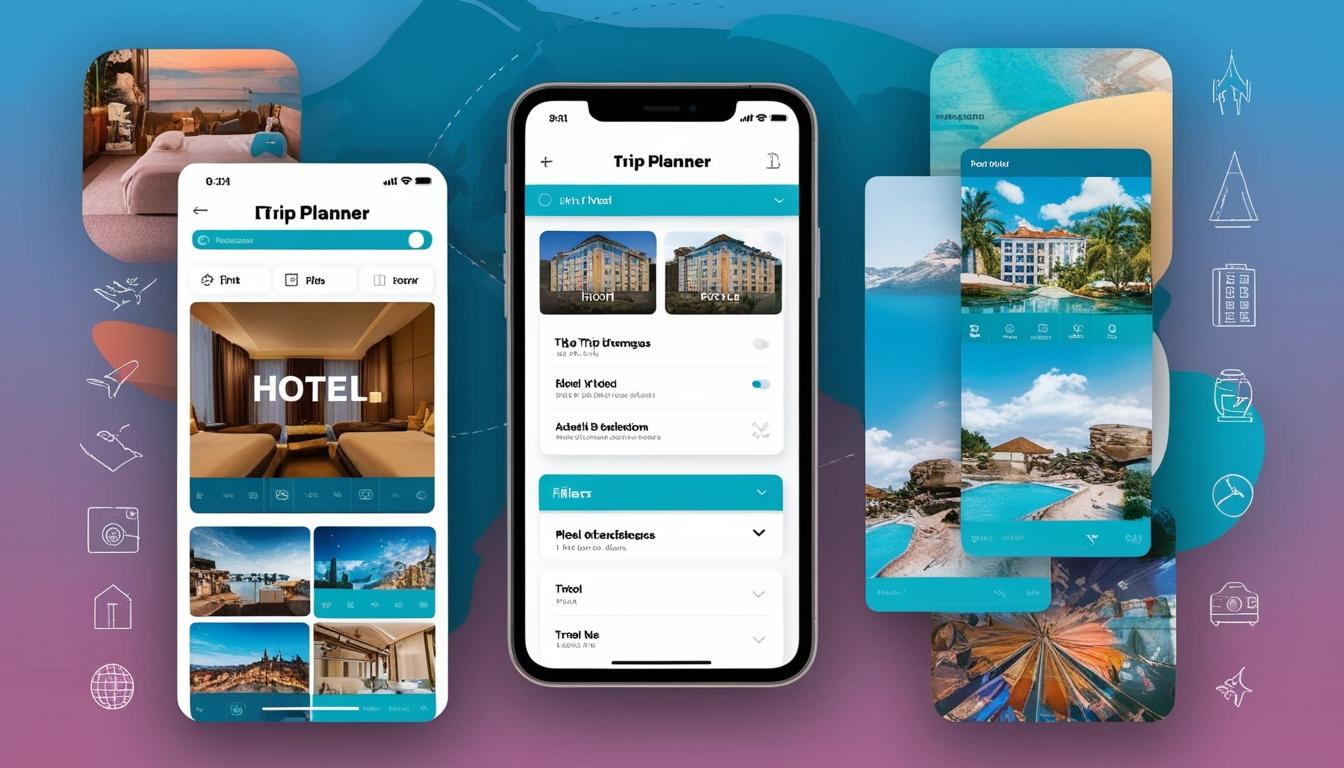
Booking.com Enhances AI Trip Planner on Mobile App Amid Mixed Performance
Building upon its initial rollout in June 2023, Booking.com has unveiled significant enhancements to its AI trip planner, a key feature in its mobile app, aimed at providing users with more personalised and efficient travel experiences. This recent update seeks to empower users by enabling them to search for accommodations based on specific criteria and to inquire about particular property details. However, despite these advancements, the platform still faces challenges in accurately addressing complex queries—a common issue across the industry.
The upgraded AI trip planner is now capable of processing user prompts to filter searches effectively, offering examples such as, "Hotels in Amsterdam with a great gym, a rooftop bar, and canal views from the room," or checking specific policies like, "Does the hotel’s pet policy accept large dogs?" This functionality attempts to streamline the booking process by utilising AI to search through Booking.com’s extensive inventory and apply appropriate filters, thereby reducing the need for manual input.
In addition to general accommodation searches, users can interact with the AI via a general chatbot to pose specific questions about individual properties. To facilitate this, the AI scans through property listings, customer reviews, and available photos. The company announced plans for a more integrated version of this feature, allowing inquiries directly on individual property pages, which is set to be released shortly.
An innovative upcoming feature includes AI-generated review summaries, designed to deliver crucial insights into a property without requiring users to sift through numerous reviews. Furthermore, Booking.com has plans to expand the role of AI in trip management, potentially offering assistance in navigating flight-related disruptions, as noted by Joe Futty, Vice President of Product Marketplace at Booking.com.
Currently, the AI trip planner is accessible to users in the United States, United Kingdom, Australia, New Zealand, and Singapore, with plans to introduce it in local languages across several European countries including Spain, Italy, Germany, France, Poland, and the Netherlands. A desktop version is also in development, broadening the tool's accessibility.
Despite these advancements, Booking.com's progress in enhancing its AI solutions has lagged behind competitors such as Expedia, which has already introduced multiple AI tools and summarised property reviews. HomeToGo, another contender in the travel industry, has also been actively developing its AI trip planning capabilities. Nevertheless, user tests reflect that these AI tools remain somewhat cumbersome, indicating that traditional booking methods may still be favourable in certain instances.
For instance, when evaluated with a prompt like "Hotels in Amsterdam with a great gym, a rooftop bar, and canal views from the room," the AI planner initially requests travel dates and then presents several hotel options, an indication that it performs adequately at a basic level. However, its limitations become apparent when posed with more intricate requests. The AI, for example, failed to confirm if the Urban Lodge Hotel offered canal views—a detail not explicitly mentioned in the listing, thus highlighting gaps in data interpretation.
Further complications arose when attempting to modify a search with additional parameters, such as finding a hotel that also permits pets. In one test, the tool erroneously suggested Via Amsterdam, a hotel which neither allows pets nor features a rooftop bar, revealing the AI's struggle with integrating layered search criteria.
As Booking.com continues refining its AI capabilities, its latest update marks a progressive, albeit challenging, step towards enhancing user experience in travel planning through innovative technology. With industry-wide issues persistently manifesting, the quest for a seamless AI-driven travel experience remains on the horizon.
Source: Noah Wire Services