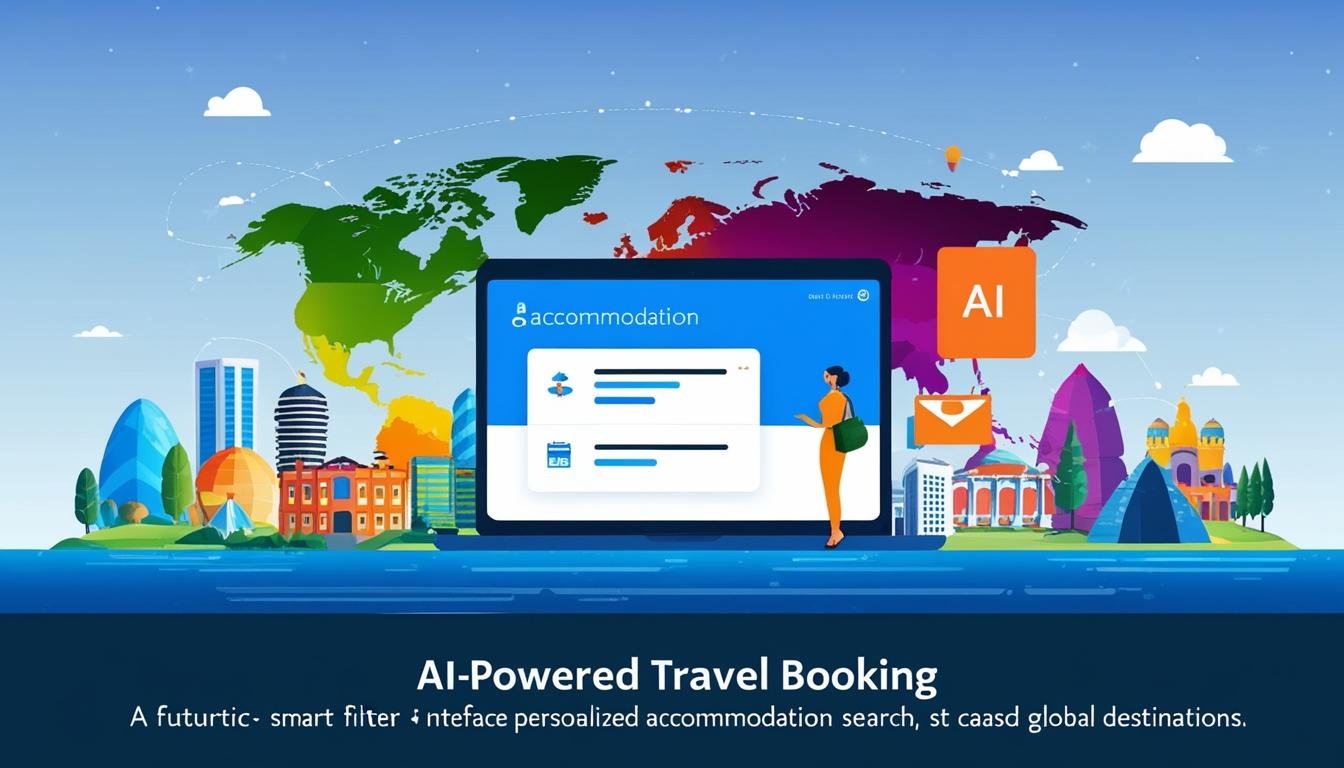
Booking.com Expands AI-Driven Features to Enhance User Experience in Travel Booking
Booking.com, a globally renowned digital travel platform, has announced the expansion of its artificial intelligence-powered features. This announcement was made from the company’s headquarters in Amsterdam on Wednesday, October 30. The platform, already a major player in the travel sector, is now leveraging AI technologies to further streamline and personalise the user experience in travel planning and bookings.
Among the newly introduced features is the "Smart Filter". This innovative tool allows users to describe their ideal accommodation using natural language input. The AI then scans Booking.com's vast inventory of properties, tailoring the search results to match the user’s specified criteria. This eliminates the often cumbersome task of manual filtering, allowing users to find their perfect stay with greater ease and efficiency.
Additionally, the platform has launched a "Property Q&A" feature. This tool enables users to pose specific questions regarding potential accommodations. Leveraging AI, the system provides instant answers derived from an array of property details, traveller reviews, and available photographs. This immediate access to comprehensive information helps users make more informed decisions about their bookings.
Joe Futty, Vice President of Product Marketplace at Booking.com, highlighted the transformative impact of AI on the travel planning process. He noted that the new features are designed to offer more personalised and responsive travel experiences, adapting quickly to the nuances of each traveller's needs.
The travel sector is seeing an increasing integration of AI across various platforms. For example, Google recently showcased its AI system, Gemini, at the Malaysian Association of Tour and Travel Agents (MATTA) Fair. Gemini's capabilities include generating travel destination visuals and crafting bespoke travel itineraries. Similarly, United Airlines has implemented AI technology aimed at improving passenger communication during flight delays caused by adverse weather conditions.
As AI becomes more entrenched in diverse industries, cybersecurity concerns have also heightened. The sophistication of cyber scams is increasing with the use of AI technologies by malicious actors. To mitigate such risks, users are encouraged to remain vigilant and informed about cybersecurity best practices. A simple internet search query can reveal how to detect signs of unauthorised access to devices, such as compromised cameras.
The continuous evolution of AI presents both opportunities and challenges across sectors, including travel, where the promise of enhanced personalisation and efficiency must be balanced against the ever-present need for robust cybersecurity. As Booking.com and other industry leaders innovate with AI, the onus remains on deploying these technologies responsibly and securely.
Source: Noah Wire Services