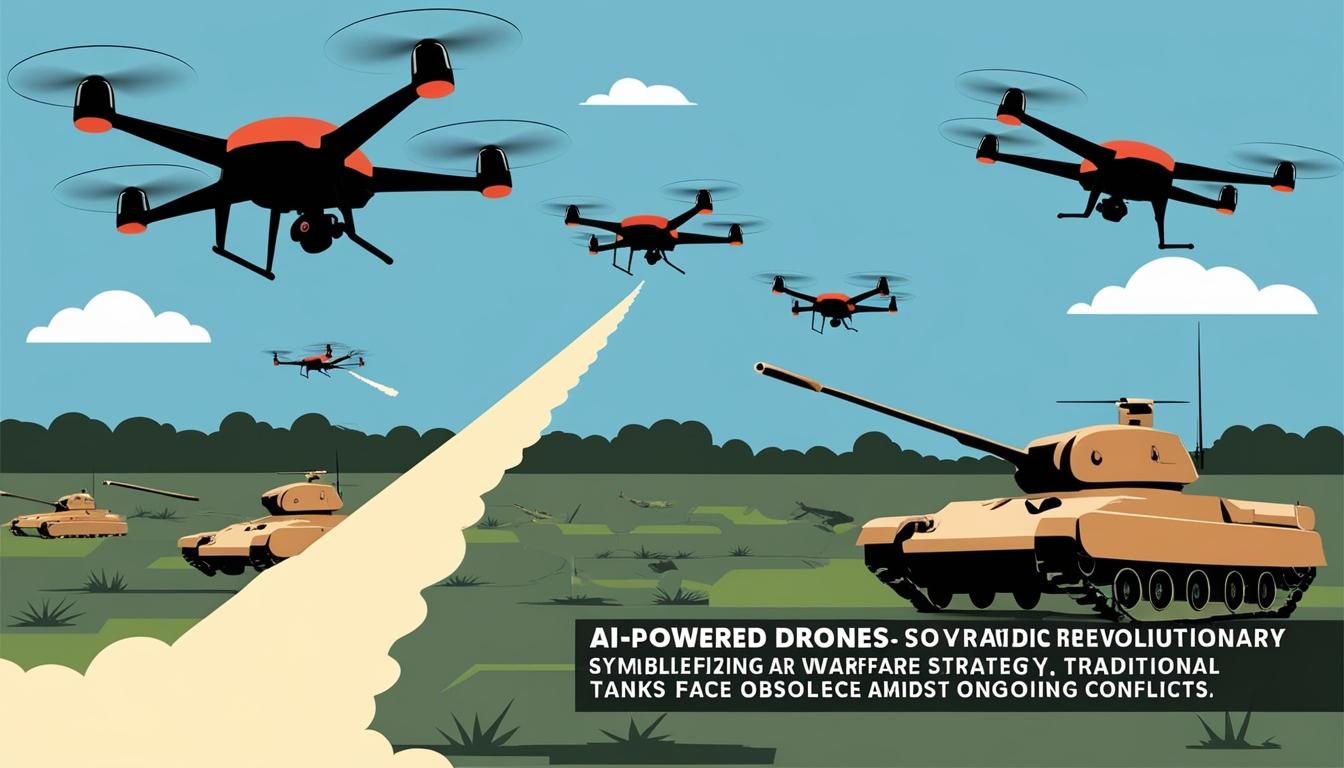
In recent comments made during the Future Investment Initiative in Saudi Arabia, Eric Schmidt, former Google CEO and chair of the US government's National Security Commission on Artificial Intelligence (NSCAI), proposed a significant shift in military strategy, suggesting that the US Army replace traditional battle tanks with AI-powered drones. Schmidt argues that recent conflicts, specifically referencing the ongoing war in Ukraine, have highlighted the vulnerabilities of tanks to much cheaper drone technology. He cited reports of $5,000 drones being used to effectively disable $5 million tanks as evidence of the obsolescence of traditional armoured warfare vehicles.
Schmidt, who now runs White Stork, a startup aiming to produce AI-driven attack drones, underscored the transformative potential of drones in modern warfare. His company is working on developing drones capable of operating autonomously, even in environments subjected to GPS jamming, which could potentially revolutionise military engagements by reducing reliance on human operators.
The backdrop to Schmidt's argument is the extensive losses of armoured vehicles seen in Ukraine, where reports suggest thousands of tanks have been neutralised since the beginning of the conflict. Nonetheless, both Russian and Ukrainian forces continue to rely on tanks, and Ukraine consistently requests Western military support, particularly in the form of advanced armoured units.
The United Kingdom has been actively contributing to this need. It was the first nation to supply Ukraine with main battle tanks, specifically donating 14 Challenger 2 tanks in 2023. Ukraine's Ministry of Defence recently showcased an image of one of these tanks deployed on the front lines by the 82nd Air Assault Brigade. This demonstration of support has been reinforced by ongoing commitments from the UK government, with Chancellor Rachel Reeves pledging £3 billion annually in military aid to Ukraine.
Notwithstanding the arguments against the continued use of tanks, some nations are opting to upgrade their existing fleets. The UK is investing approximately £800 million to enhance its Challenger 2 tanks to Challenger 3 standards, integrating advanced technologies such as a new turret and gun, alongside Active Protection Systems (APS) to counter threats like drones.
Meanwhile, the conflict in Ukraine continues to see widespread drone usage on both sides. Recent exchanges saw Russia launching a significant number of drone attacks across several Ukrainian regions, leading to casualties and infrastructure damage, including a residential building and nursery in Kyiv. Ukrainian air forces reported successfully intercepting many of these drones. Russian forces remain active, advancing in certain eastern Ukrainian territories, while Ukraine strives to maintain its defences with the support of international allies.
As militaries around the world evaluate the role of traditional tanks in modern warfare, Schmidt’s remarks add to the ongoing debate over how best to integrate emerging technologies such as AI and drones into existing military frameworks. The full implications of these shifts are yet to be realised, as defence departments balance innovation with established battlefield strategies.
Source: Noah Wire Services