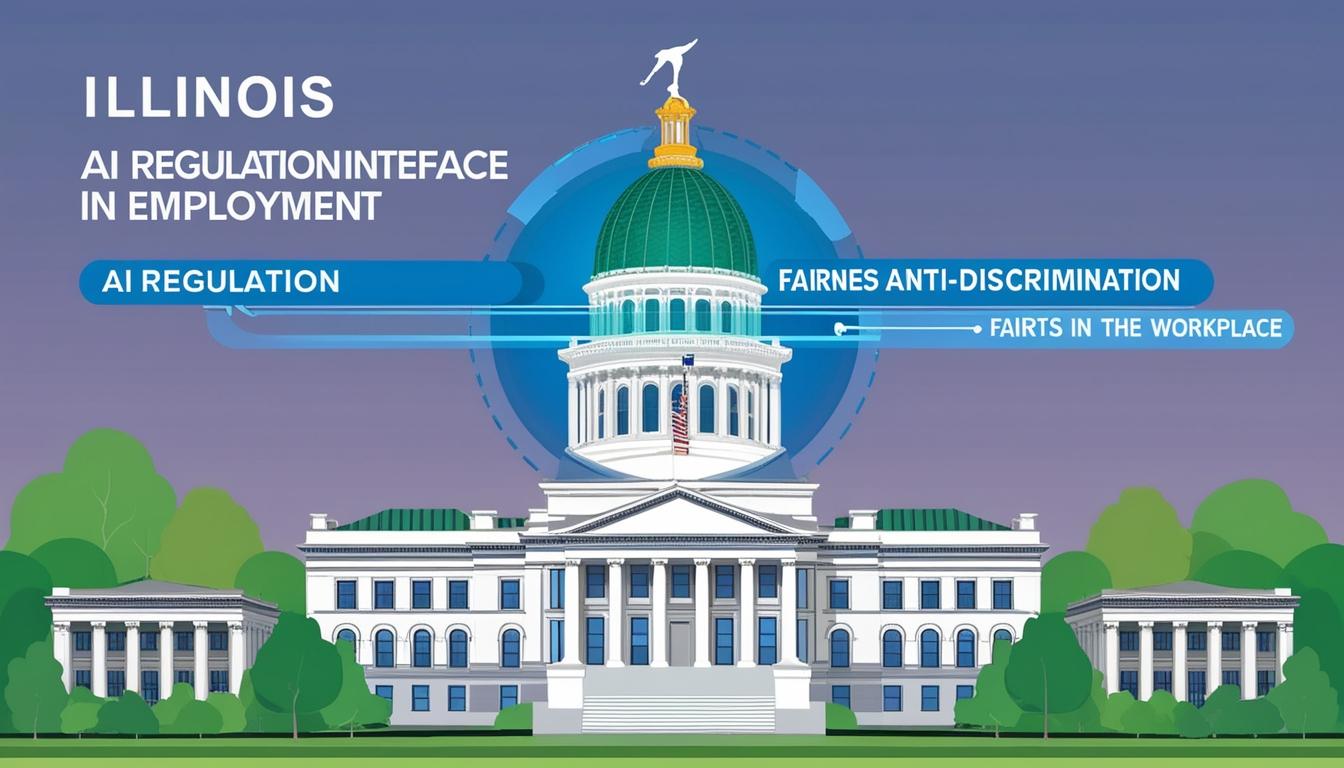
Illinois Governor J.B. Pritzker signed into law House Bill 3773 on August 9, 2024, positioning Illinois as a frontrunner in the realm of state-led regulation of artificial intelligence (AI) in employment. This landmark legislation marks Illinois as the second U.S. state to enact broad measures intended to tackle potential biases and discrimination engendered by AI technologies in the workplace. The legislation comes as part of Illinois' commitment to ensuring fair employment practices and will come into effect on January 1, 2026.
The legislation amends Article 5, Section 2 of the Illinois Human Rights Act (IHRA) to explicitly prohibit the utilisation of AI systems that discriminate against individuals based on recognised protected classes. In an expansive definition, the Act describes AI as any "machine-based system" designed to generate outputs that include predictions, content, recommendations, or decisions capable of influencing both physical and virtual environments. Notably, this definition encompasses 'generative' AI—a subset of AI technologies known for creating content.
The Act's provisions extend over a range of employment activities, including recruitment, hiring, promotions, renewals of employment, training or apprenticeship selections, discharge, discipline, tenure, and various other terms and conditions of employment. A significant clause of the Act forbids employers from using geographic indicators such as zip codes as indirect indicators of a candidate’s protected class status, thereby aiming to prevent circumvention of anti-discrimination laws.
Furthermore, the legislation mandates that employers inform employees when AI systems are used for specific employment-related purposes. Although the Act does not delineate the precise nature of this notification, it entrusts the Illinois Department of Human Rights with regulatory authority to develop specific rules to ensure compliance.
This legislation builds upon Illinois' previous initiatives to address AI’s role in the employment landscape. In 2019, Illinois had enacted the Artificial Intelligence Video Interview Act, which required employers to notify and obtain applicants' consent prior to analysing video interviews using AI technology.
The Act aligns with a growing national trend wherein states are drafting and passing legislation to regulate AI technologies independently. On a parallel trajectory, the Colorado Artificial Intelligence Act, set to take effect on February 1, 2026, will impose obligations on developers and users of high-risk AI systems to exercise reasonable care to mitigate algorithmic discrimination risks. Meanwhile, other jurisdictions like New York City have introduced bias audit and notice requirements in relation to AI employment tools, with similar legislative discussions underway in states such as Massachusetts, New Jersey, New York, Rhode Island, Virginia, and Washington D.C.
At a federal level, on April 29, 2024, the U.S. Department of Labor issued cautions against the deployment of AI without human oversight, citing possible infringements of federal leave and wage/hour laws. The Department provided further guidance in August 2024, elaborating on best practices designed for AI developers and employers utilising AI, underscoring the importance of responsible AI governance.
The introduction of this new law in Illinois is a clear indication of the increasing scrutiny AI systems are under from state and federal regulators keen on curbing any discriminatory impacts. As the dialogue on AI governance continues to evolve, employers must stay abreast of developments and adjust their employment practices to align with legal requirements and avoid unintended biases.
Source: Noah Wire Services