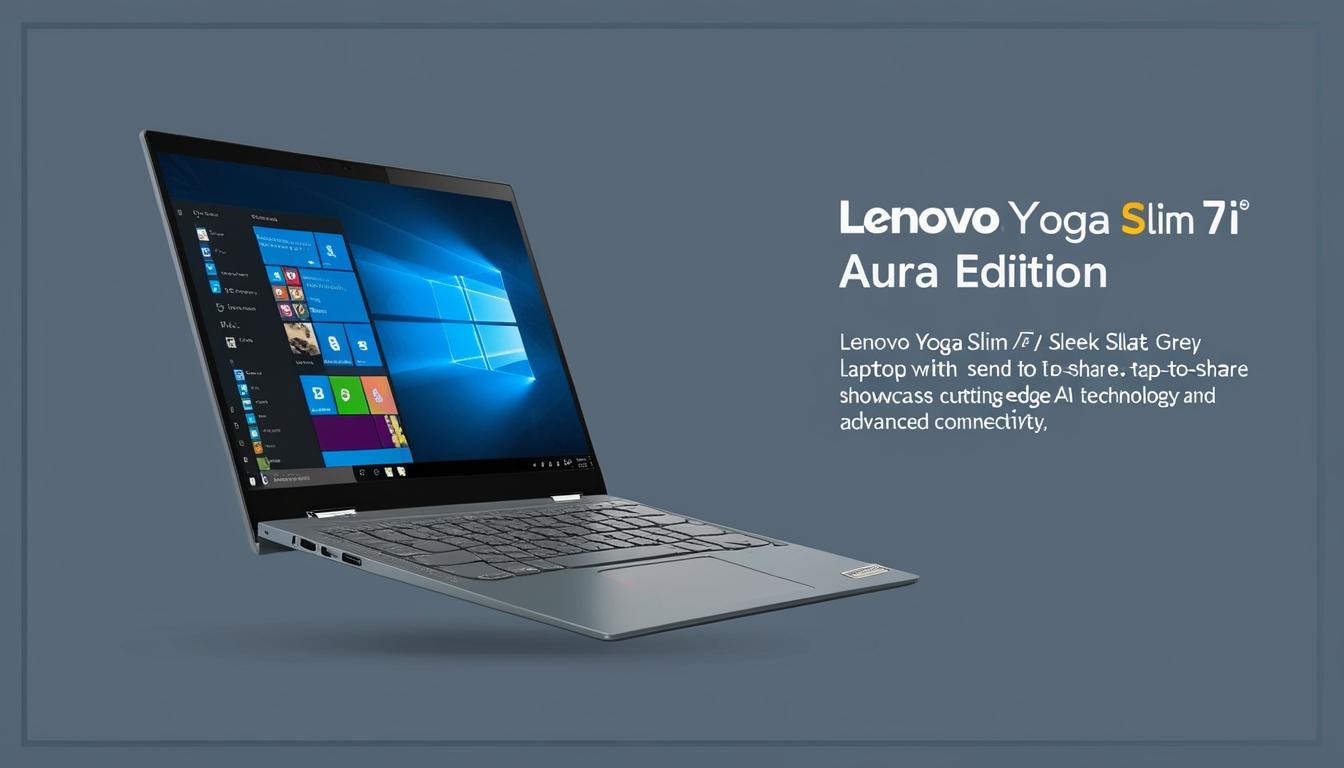
Lenovo has recently launched its latest addition to the Aura Edition laptop lineup, the Lenovo Yoga Slim 7i Aura Edition, marking a significant entry into the increasingly competitive market of AI-driven personal computers. This new offering follows its debut at the IFA tech convention in Berlin earlier this year, where it impressed attendees with its innovative features, including the headline-catching "tap-to-share" capability. This feature allows users to transfer photos directly to the laptop by tapping the side of the laptop display with their phone, facilitated by Intel's Unison app, available on both iOS and Android.
Priced starting at $1,299 for the 16GB variant, the Yoga Slim 7i Aura Edition is powered by Intel's Core Ultra 7 Series 2 "Lunar Lake" processor. It is built to rival other AI-powered devices in the market, particularly those employing Qualcomm's Snapdragon X Elite chips. Consumers in the market can consider variations with up to 32GB of RAM, an Intel Arc GPU, and a 15-inch 2.8K LCD touch display. While the technical specifications are quite standard for mid-range devices, it is the integration of Intel's Series 2 chips that enhances the laptop's performance, offering users a combination of high processing power, lightweight design, and substantial battery life.
Physically, the Yoga Slim 7i embodies Lenovo's characteristic aesthetic with a slate grey finish and a notched design to house its webcam. At 3.3 pounds, it presents itself as a reasonably portable choice, although not as light as its direct competitor, the Asus Zenbook S 14. Despite its sturdy design, some users have reported issues such as a loose backplate, suggesting potential inconsistencies in manufacturing though Lenovo assures that these are not widespread.
The Aura Edition stands out with its Smart Share feature, enabling smooth photo and file transfers, and a host of Smart Modes. Notable among these is Shield Mode, which uses the laptop's camera to detect when someone is looking over the user’s shoulder, subsequently blurring the screen or shutting it off to protect user privacy. The 15-inch display supports a 120Hz refresh rate and includes multitouch capabilities, but lacks OLED technology, a choice that has disappointed some reviewers given its price point. However, the Dolby Atmos-powered speakers are exceptionally robust and outperform many comparable laptops in terms of audio quality.
Users have highlighted the efficient battery life of the Yoga Slim 7i, reporting over 17 hours on standard tests, although more demanding tasks appear to reduce its longevity. The device also features an array of notifications from pre-installed applications like Lenovo Vantage and McAfee, which some have found intrusive. The placement of the power button on the side has also sparked complaints, as it frequently results in accidental shutdowns.
In comparison, the Asus Zenbook S 14, unveiled as the launch platform for Intel‘s Core Ultra Series 2 processors, is competing in a similar segment. This 14-inch device boasts a 2880x1800 touchscreen OLED display, delivering richer visuals than LCD panels, and it typically runs for over 21 hours on a battery charge. Advantageously, the Zenbook’s lightweight design at 2.65 pounds makes it lighter than the Yoga Slim 7i and competitors like Apple's MacBook Air.
The Zenbook S 14 is priced from $1,499, featuring enhanced graphics with the Intel Arc GPU, and includes both a robust audio system and a commendable keyboard layout, despite some criticisms regarding its key travel. The Asus device’s 32GB LPDDR5X RAM is integrated and non-upgradable, similar to Lenovo's offering, so consideration of memory configuration at purchase is essential.
The launch of these laptops highlights the growing trend of integrating advanced AI features and enhanced specs, aiming to meet the demands of today's consumers seeking high performance, portability, and extended battery life in their everyday technology. While both the Lenovo Yoga Slim 7i Aura Edition and Asus Zenbook S 14 offer distinct advantages, they also showcase the evolving landscape of the laptop industry, where the inclusion of cutting-edge silicon and intuitive design continues to define the next generation of mobile computing.
Source: Noah Wire Services