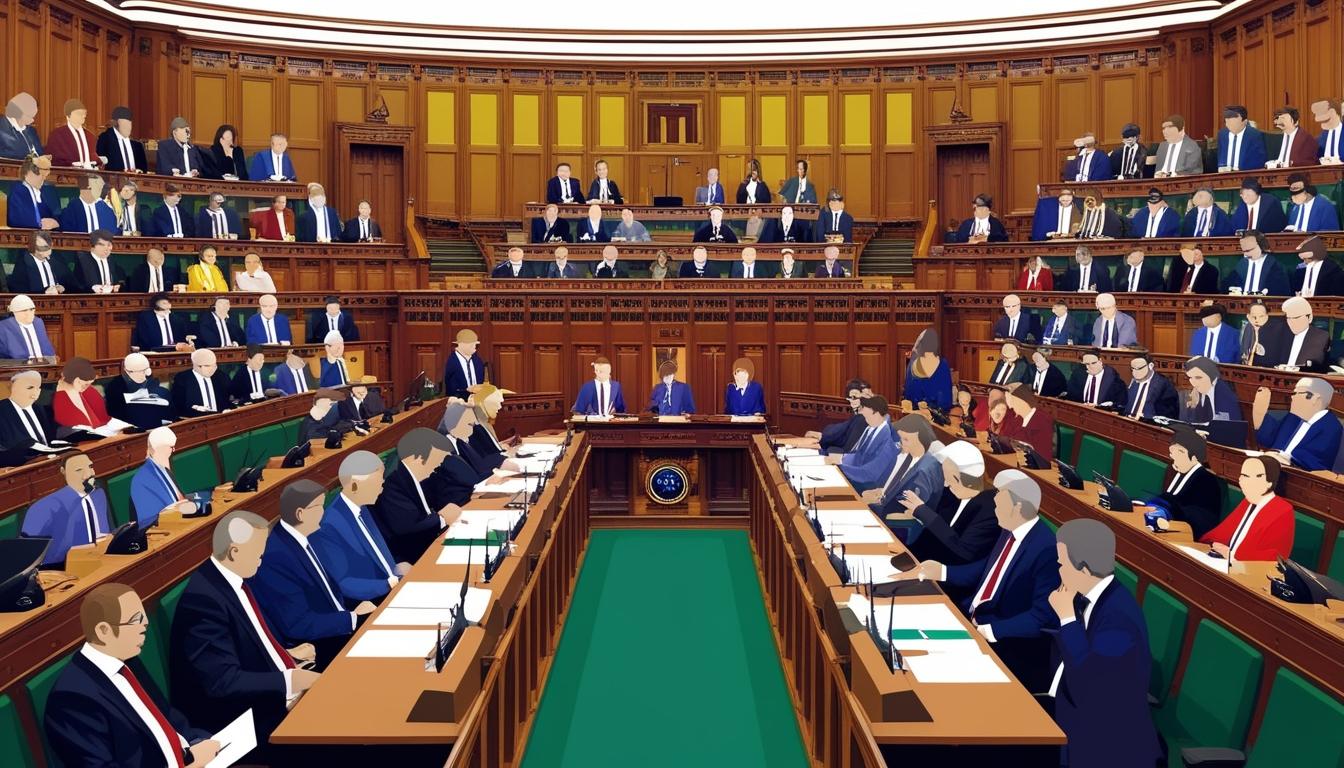
In a debate focused on the regulation of artificial intelligence (AI), and held in a sparsely populated chamber, Members of the Scottish Parliament (MSPs) from various parties converged on the urgency of establishing comprehensive AI legislation. This members’ business debate, led by Scottish National Party (SNP) MSP Emma Roddick, took place in Edinburgh and concentrated on the potential dangers and rapid developments posed by AI technology.
During this session, which saw participation from fewer than 15 MSPs, Roddick emphasised the necessity for swift action in regulating AI. She articulated concerns about the ethical and societal implications of AI, suggesting that if society harbours prejudices, these could be replicated within AI systems. Roddick called for a framework that dictates the permissible boundaries of AI utilisation across various sectors, while urging that the workforce be granted the right to influence AI-driven decisions affecting their roles.
A significant point raised by Roddick revolved around the energy consumption of AI technologies. Citing a report by Schneider Electric, she cautioned that by 2028, AI workloads could potentially outpace the energy consumption of Iceland in 2021, sparking a debate on the sustainability of the industry's growth.
Roddick also pointed out the lag in educational systems, which are struggling to keep pace with the proliferation of AI-generated content, particularly in combating online disinformation.
Concurring with Roddick on several points, Conservative MSP Brian Whittle warned against succumbing to sensationalised fears around AI. Highlighting AI’s positive implications, particularly in healthcare, Whittle argued that AI holds the promise of relieving burdens from frontline staff and enhancing cancer care, suggesting that preparedness is preferable to apprehension.
Labour’s sole participant, MSP Michael Marra, echoed the sentiment of inevitability surrounding AI advancements. He likened the resistive attitude towards AI to past technological revolutions, such as the advent of the steam engine. Marra additionally drew attention to the geopolitical risks associated with AI, such as the influence of hostile nations like Russia using AI and bots to disrupt democratic processes.
Concluding the debate, Business Minister Richard Lochhead recognised the potential for collaborative discussions between the governments of Scotland and the UK following recent electoral changes. While acknowledging that significant AI regulatory power resides with the UK Government, Lochhead noted an emerging understanding of the need for safe and transparent AI governance. He reiterated Scotland's commitment to ensuring that Scottish interests are adequately represented in any future legislative decisions, including those related to the forthcoming AI Bill referenced in the King's Speech.
The debate underscored a consensus on the importance of proactive AI governance, suggesting a need for comprehensive legislation to manage the rapid technological advances within this field. The call from MSPs highlighted a shared responsibility to balance AI’s benefits against its risks, ensuring sustainable integration within society and industry.
Source: Noah Wire Services