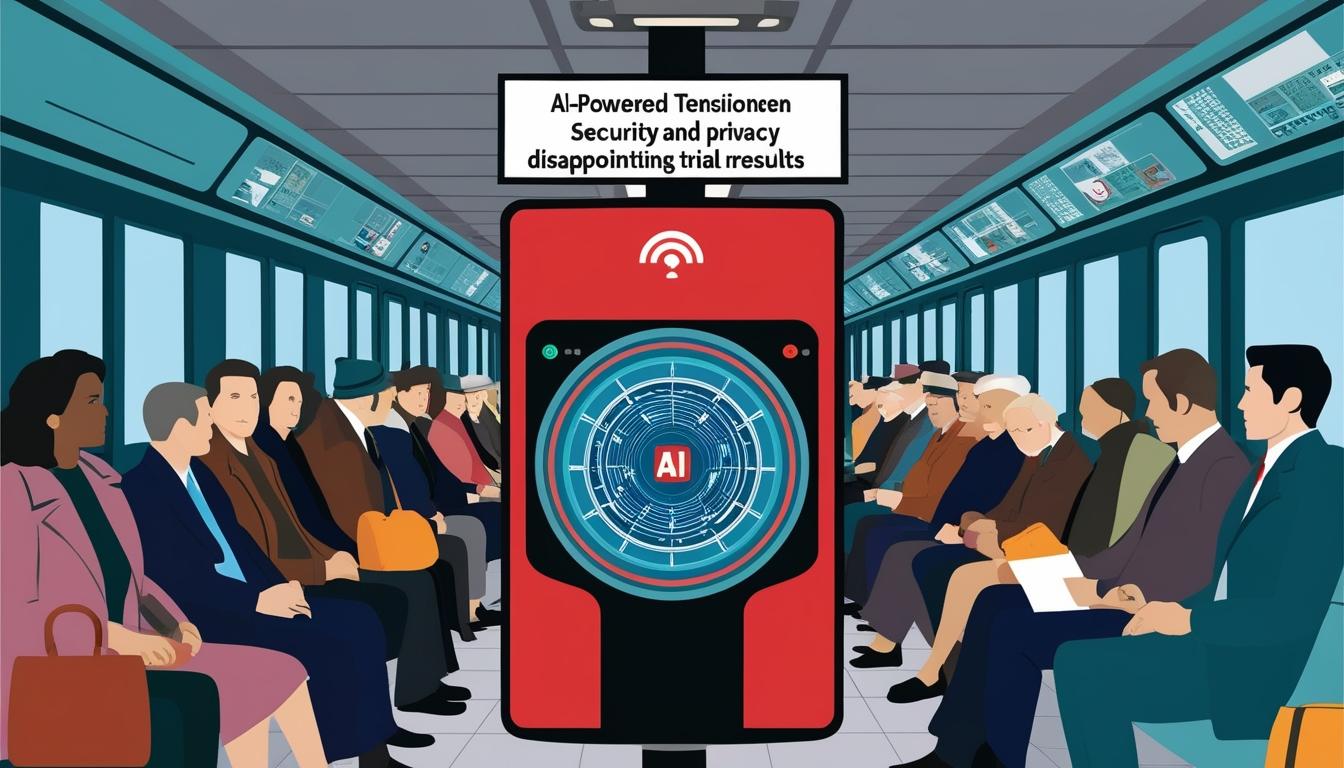
New York City's attempt to bolster subway safety using AI-powered scanning technology has come under scrutiny following the revelation that its pilot programme yielded unsatisfactory results. The technology in question, developed by the startup Evolv, was initially deployed in late July under the endorsement of Mayor Eric Adams, who has faced challenges in his tenure. The aim was to detect firearms and ultimately enhance the security of the sprawling subway system. However, the month-long trial concluded with disappointing outcomes, leading to its suspension.
During the evaluation period, the scanners detected no firearms, a primary objective of the initiative, and only managed to identify twelve knives. These statistics were overshadowed by an alarming occurrence of 118 false positives, which resulted in numerous unwarranted stops and searches of commuters, raising concerns about privacy violations. Diane Akerman, an attorney from the Legal Aid Society, pointed out the inadequacy of the findings, noting that no arrests were made in relation to the twelve knives identified, implying they were likely legal to carry.
The reliability of the scanners was further called into question by previous incidents involving a CBS reporter, who experienced false positives during tests in 2022 and again earlier this year. These repeated inaccuracies have cast doubt on the efficacy of Evolv's technology in practical, real-world applications within the city's subway environment.
Despite the disappointing results, officials from City Hall suggested that the programme had achieved a form of success by acting as a crime deterrent. They highlighted that no shootings occurred at subway stations equipped with the Evolv technology during the trial period. However, this claim has faced scepticism due to the overall rarity of violent incidents on the subway. Research by the New York Times in 2022 noted that violent acts happen only once in every one million rides, suggesting other factors could account for the absence of shootings during the trial.
Moreover, the pilot's limited scope—implemented in just 20 out of the city's 472 subway stations for one month—was insufficient to support claims of its effectiveness as a deterrent, yet adequate to underscore the technology's shortcomings.
This development marks another chapter in New York City's ongoing saga with AI technologies, reflecting broader challenges municipalities face in balancing advanced security measures with the preservation of individual rights and freedoms. While officials explore alternative safety strategies, the outcome of this initiative has prompted discussions about the future role of AI in urban security frameworks.
Source: Noah Wire Services