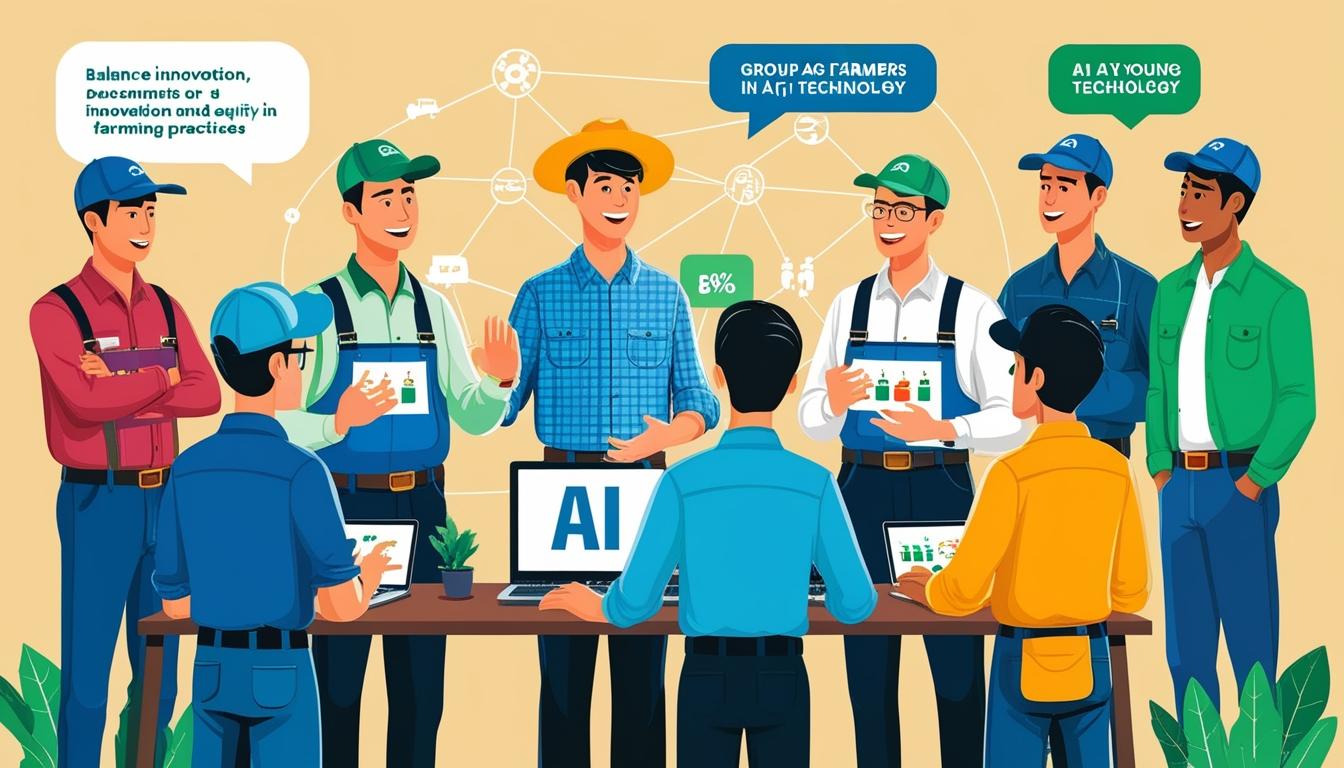
AI in Agriculture: Young Farmers Share Insights at National FFA Convention & Expo
Indianapolis, 29th October 2023 – The realm of agriculture stands at a pivotal juncture as artificial intelligence (AI) technology continues to evolve rapidly, offering both promise and challenges. At this year’s National FFA Convention & Expo, held in Indianapolis, the future of farming in an AI-driven world was a significant topic of discussion. In attendance were students and experienced attendees alike, engaging in discussions that highlighted the potential and concerns of integrating AI into agricultural practices.
Among those adding their voices to the conversation were three FFA members who shared their perspectives on the transformative impact AI could have on the agricultural landscape.
Matthew Daniels, representing the Ontario Chapter from Oregon, expressed optimism about AI's role in revolutionising agriculture. He suggested that AI could introduce innovative ideas and diverse perspectives that might not have been previously considered. Moreover, Daniels recognised the potential for improved efficiency in machinery and farming systems, which could enhance productivity. “There’s hope for the future of agriculture and AI to work together to increase both production and profits,” Daniels asserted.
From Georgia’s Etowah FFA Chapter, Maddie Mae Peters echoed similar sentiments regarding the benefits of AI. Peters noted that the integration of AI into farming could lead to advancements in farming materials, with processes being pre-calculated by AI systems. This, she explained, could reduce the need for manual mechanical work in the industry. “Having machinery with built-in calculation systems would be life-changing for farmers,” Peters remarked, emphasising the potential for significant time savings that could allow farmers to focus more on farm enhancement strategies.
However, not all attendees shared this enthusiasm without reservations. Brayden Snooker, from the Albion FFA Chapter in New York, offered a more circumspect perspective. Snooker acknowledged that while AI could greatly benefit larger farms by improving efficiency and reducing labour costs, it could pose challenges for smaller family-owned farms. The expense and scale of AI equipment, he argued, might make it difficult for these smaller operations to compete. “It will help a lot of the bigger farms, but it could hurt the smaller ones,” Snooker cautioned.
The discussions at the National FFA Convention & Expo reflect broader conversations happening across the agriculture sector. As AI technology continues to advance, its capabilities are constantly evolving. The challenge remains balancing these technological advancements with the realities of diverse farming operations, ensuring that AI integration is equitable and beneficial for all.
As the debate continues, FFA members, known for their dedication and innovative spirit, play a crucial role in shaping the future of agriculture. Their insights and proactive engagement at events like this underscore the importance of considering varied perspectives in shaping the path forward for the agricultural industry.
Source: Noah Wire Services