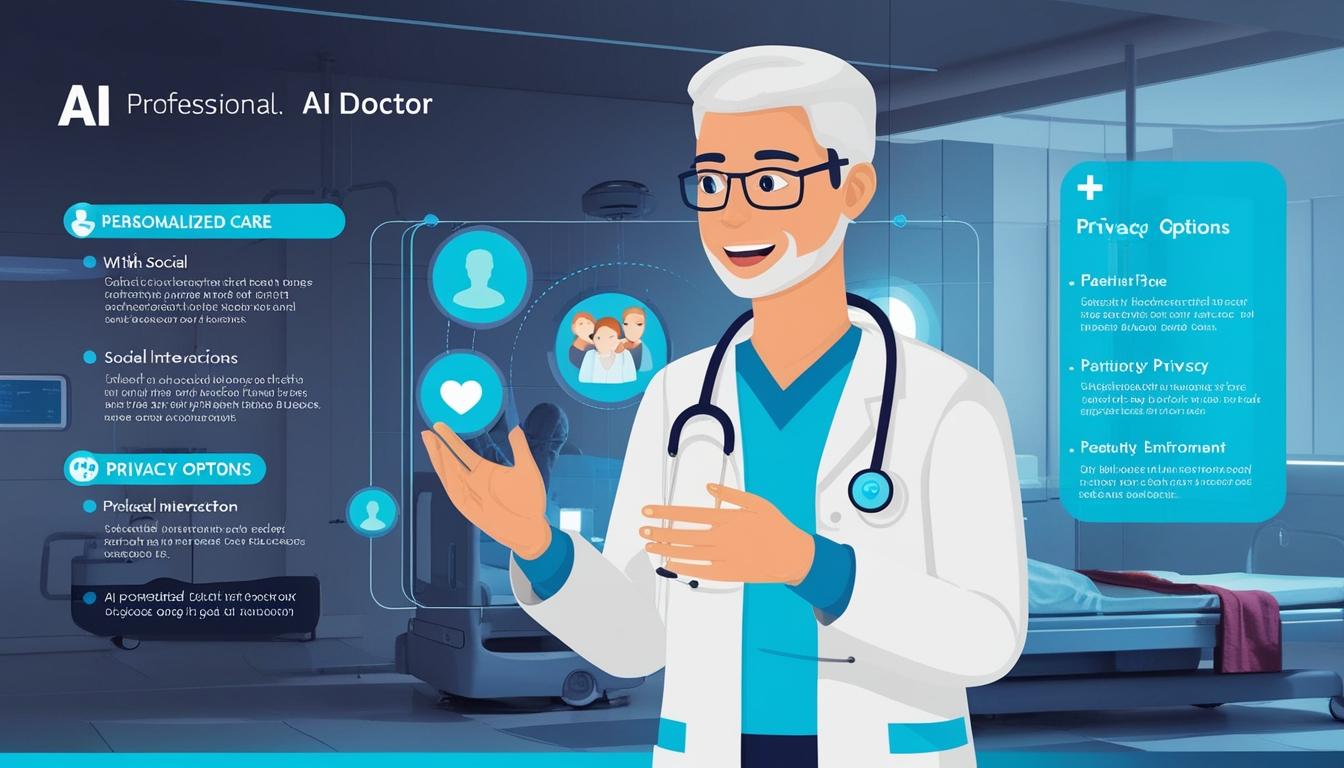
A recent study has explored the evolving role of artificial intelligence (AI) in the medical field, shedding light on how AI might deliver more personalised healthcare in the future. Conducted by a team from Penn State, the study focused on how AI doctors can improve patient satisfaction by recalling social information about patients, alongside offering privacy control.
The findings, published in the journal Communication Research, suggest that AI doctors may enhance patient relationships by remembering aspects such as occupations and hobbies, akin to the interpersonal rapport built by human doctors. The research was led by S. Shyam Sundar, a prominent figure at Penn State, who pointed out the value in AI systems moving beyond purely medical data to include personal social details during patient interactions.
Utilising a sample of 382 online participants, the researchers orchestrated a two-visit scenario wherein patients communicated with a medical chatbot. Participants perceived the entity as either a human doctor, an AI doctor, or a hybrid AI-assisted human doctor. The interactions covered a range of subjects including diet, fitness, lifestyle, sleep, and mental health, and also gathered personal data related to family, dietary habits, and leisure pursuits.
During a subsequent visit, the AI doctors either referenced back to this collected information or asked patients to reiterate it. Some participants were provided the opportunity to record and store their session data at the conclusion of the encounters, with patient satisfaction levels then measured through an online questionnaire.
Findings revealed notable distinctions in how patients perceived AI doctors compared to human doctors. For AI doctors, invoking social information led to greater satisfaction, provided patients were given options regarding the privacy of their data. Interestingly, human doctors did not require these social or medical cues to establish a perceived close relationship with patients.
Cheng "Chris" Chen, who spearheaded the published study and is now an assistant professor at Elon University, noted that the effort perceived in AI doctors recalling social details significantly boosted patient satisfaction—highlighting a divergence in how data efforts are viewed by AI versus human practitioners.
Co-author Joe Walther of the University of California, Santa Barbara, touched upon the broader context of the findings, suggesting an AI doctor's ability to 'know' a patient might shift the dynamics of doctor-patient relationships, creating a more personalised sense of care akin to recognising individual student progress in academia.
These insights could prove instrumental in the future design of AI systems integrated within medical settings, potentially leading to improved satisfaction, increased compliance, and ultimately more positive health outcomes. The study opens new avenues in understanding the complex interplay between technology, privacy, and personalised care in the setting of modern medicine.
Source: Noah Wire Services