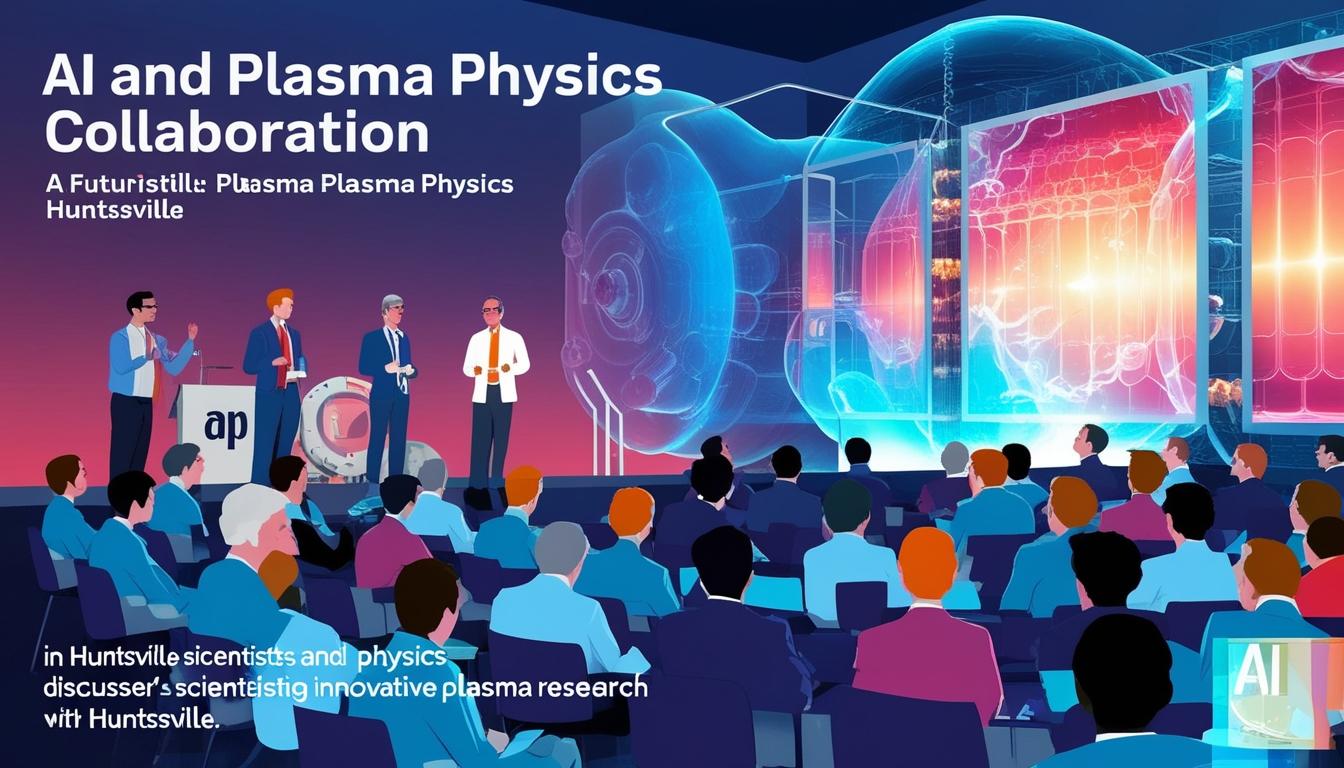
The first Annual International Alabama Plasma Physics Conference (AIAPC) recently took place in Huntsville, Alabama, from October 28 to 30. The event convened physicists, scientists, researchers, faculty, and students from across the nation. Hosted by the Future Technologies and Enabling Plasma Processes (FTPP), the conference underscores Alabama's ambitions to become a significant hub in the plasma science and engineering industry.
FTPP, supported by a five-year $20 million grant from the National Science Foundation (NSF), sits at the forefront of these efforts. Jim Steele, a representative from FTPP, highlighted the strategic objective of successfully completing the current grant, now in its second year. This achievement would position Alabama to potentially secure the NSF Regional Innovation Engines grant, worth $160 million, reinforcing its burgeoning reputation in plasma physics.
With Dr. Gary Zank, the principal investigator for the FTPP grant, chairing the conference committee, the event carried the theme, "AI-Informed Plasma Physics: the Opportunities." Zank and other experts stressed the significant role Artificial Intelligence (AI) and machine learning play in the scientific field, particularly within plasma physics. The public may be familiar with AI's broader applications, but plasma physicists have leveraged AI for nearly a decade to facilitate breakthroughs in this complex area of study.
The conference allowed experts to discuss the myriad opportunities AI can unlock within plasma physics. Dr. Paulo Alves, an assistant professor at UCLA who attended the conference, described it as a valuable platform for idea exchange and collaborative learning. He explained that the use of AI for pattern recognition across vast datasets holds great promise for advancing scientific understanding and tackling complex challenges in plasma research.
Plasma, often referred to as the fourth state of matter, is a high-energy gas that is rare on Earth but prevalent across the universe. Dr. Enrico Camporeale from the University of Colorado Boulder elucidated the importance of plasma physics in space weather studies. The solar wind, composed of plasma, can pose challenges to satellites and power grids. Camporeale and his peers aim to develop predictive models to mitigate these potential impacts and support missions by organisations like NASA and SpaceX.
The applications of plasma physics extend beyond space, offering potential advancements in medical technology, information technology, agriculture, and the automotive industry. Dr. Zank pointed out innovations such as plasma-treated stents, which are designed to prevent blood coagulation, showcasing the practical benefits of plasma engineering.
Moreover, these discussions offered a glimpse into the transformative economic impact the plasma physics industry could have on Huntsville and the regional economy. Zank and his colleagues forecast plasma physics as one of the key scientific disciplines of the 21st century, poised alongside biotechnology and information technology. With AI and machine learning as pivotal tools in this field, these advancements foreshadow opportunities for high-paying and meaningful careers.
Participants like Adam Smith, a physics Ph.D. candidate at the University of Alabama at Birmingham, embraced these prospects. Smith employs AI in his study of superconductivity, harnessing it to simulate particle behaviour. He expressed optimism about forthcoming advancements in material science, particularly fusion and sustainable energy.
Vyacheslav (Slava) Lukin, NSF's plasma physics program director, reiterated the substantial benefits of physics degrees in shaping a skilled workforce. The skill sets developed through scientific training—critical thinking and perseverance—are invaluable assets in the competitive job market.
As Huntsville continues its transformation into a nucleus for plasma physics research, the collaborative efforts witnessed at the AIAPC highlight both the potential technological advancements and economic growth anticipated to stem from this burgeoning sector.
Source: Noah Wire Services