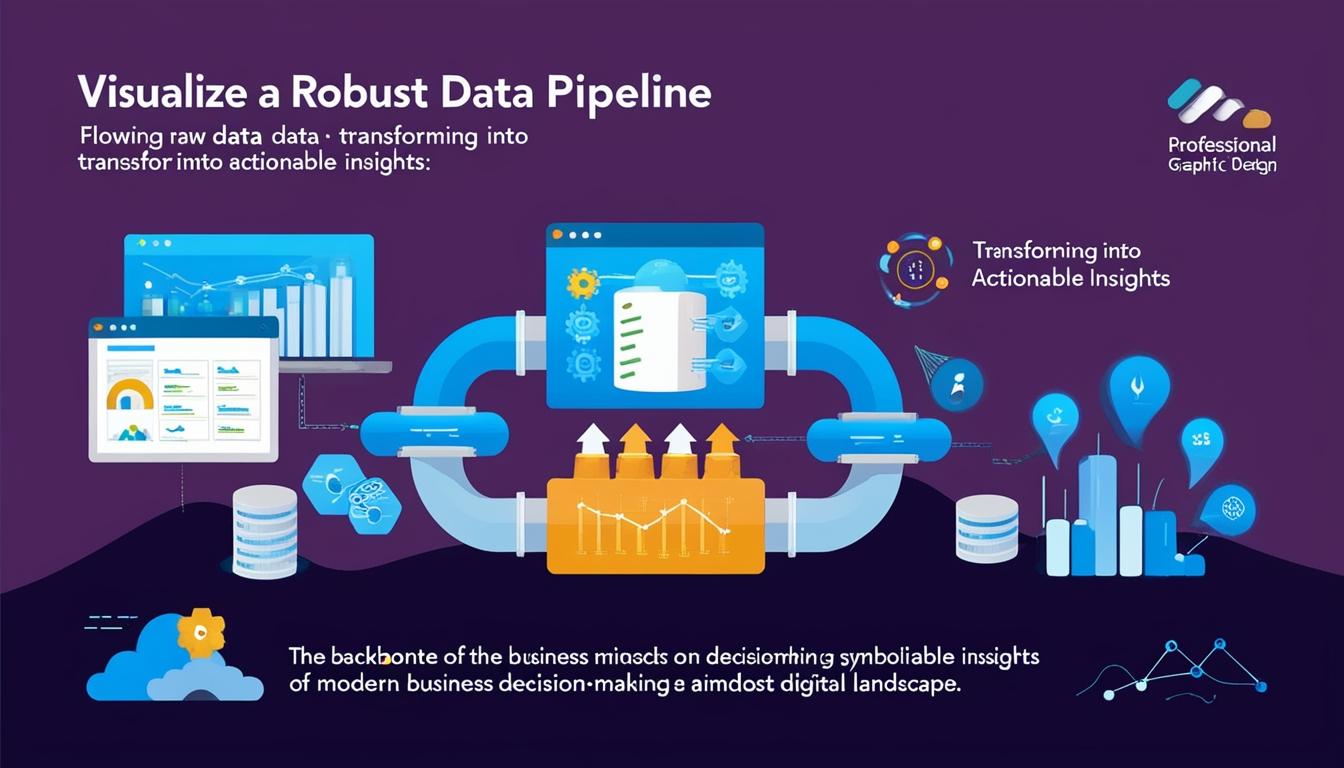
Data Engineering: The Backbone of Modern Businesses
In a rapidly evolving digital landscape, data engineering stands out as a crucial element for businesses aiming to thrive through data-driven decision-making. In an insightful discussion, Uma Uppin, a prominent figure in the field, provides an in-depth examination of data engineering's pivotal role in transforming raw data into actionable insights and powering data-driven organizations.
Understanding Data Engineering
Data engineering encompasses a variety of functions that work in concert to harness the potential of data. At its core, it involves building robust infrastructure to collect and process data, which is then analysed to inform business strategies. This multidisciplinary aspect ensures that data engineering remains indispensable for modern businesses looking to leverage insights for growth.
Components of Data Engineering
Data Infrastructure: The foundation of any data-driven initiative, this involves the setup of systems to gather data. This can include message queues for user behaviour tracking or system-generated API events. These infrastructures are designed to handle data in real-time or batch processes, with mechanisms in place for monitoring and alerting to ensure seamless operation.
Data Platform: This is where the data lake is configured to ingest necessary data, crucial for machine learning and analytics. Tools are developed to automate data ingestion and scheduling, while also providing the capability to manage data complexity through comprehensive data catalogs.
Data Quality: Ensuring data integrity, this function transforms raw inputs into refined data sets that are fit for adaptive applications, including machine learning and AI.
Data Tools: These are user-friendly interfaces designed for querying and understanding data lineage, streamlining the process from data ingestion to insight generation.
Key Metrics for Business Growth
Understanding business growth requires a comprehensive approach to tracking user interactions. Uma highlights four key metrics: new user acquisition, retention levels, user churn rates, and resurgence of users. By monitoring these metrics over specific timeframes, companies gain valuable insights into their customer journey, enabling them to identify drop-off points and areas needing attention.
Effective Data Engineering Strategies
For businesses venturing into data-driven territories, implementing a dedicated data infrastructure and analytics team at an early stage is crucial. This enables efficient data ingrafting and swift pipeline analysis. As organizations grow, establishing a data engineering unit becomes essential, creating a reliable "single source of truth" for data consumption. This approach mitigates discrepancies in data reporting and enhances overall business intelligence.
Common Pitfalls and Recommendations
A notable challenge for organizations is the initial hesitation to invest in data engineering functions, under the impression that it yields delayed ROI. However, as companies grow, makeshift data systems often meet their limitations. Uma recommends early investment in a proficient data engineering team to build scalable systems capable of supporting future expansions.
Alerting and Monitoring Systems
Comprehensive data quality monitoring systems are categorised into two types. The first ensures system uptime, with alerts for any breaches in service-level agreements. The second type identifies shifts in key performance metrics that could signal broader business trends, allowing for fast, preventive action.
Metrics that Matter for Product Development
In product development, key metrics such as app downloads, user registrations, retention rates, and churn rates provide insights into user engagement and product-market fit. Furthermore, financial metrics like average revenue per user and customer lifetime value are vital for assessing a product’s long-term success.
Future Prospects of Data Engineering
As AI technologies continue to evolve, the future of data engineering will be closely tied to developing and maintaining clean, structured, and accessible data. The extraction of data from unstructured formats is set to revolutionize the efficiency and breadth of data usage across industries. To keep pace, organizations must develop fully integrated data functions, underpinning successful AI applications.
In conclusion, data engineering serves as the backbone of today's data-driven business environment, enabling companies to derive actionable insights from raw data while preparing for a future powered by AI advancements. Understanding and implementing core data engineering practices is essential for any organisation aiming to excel in the digital age.
Source: Noah Wire Services