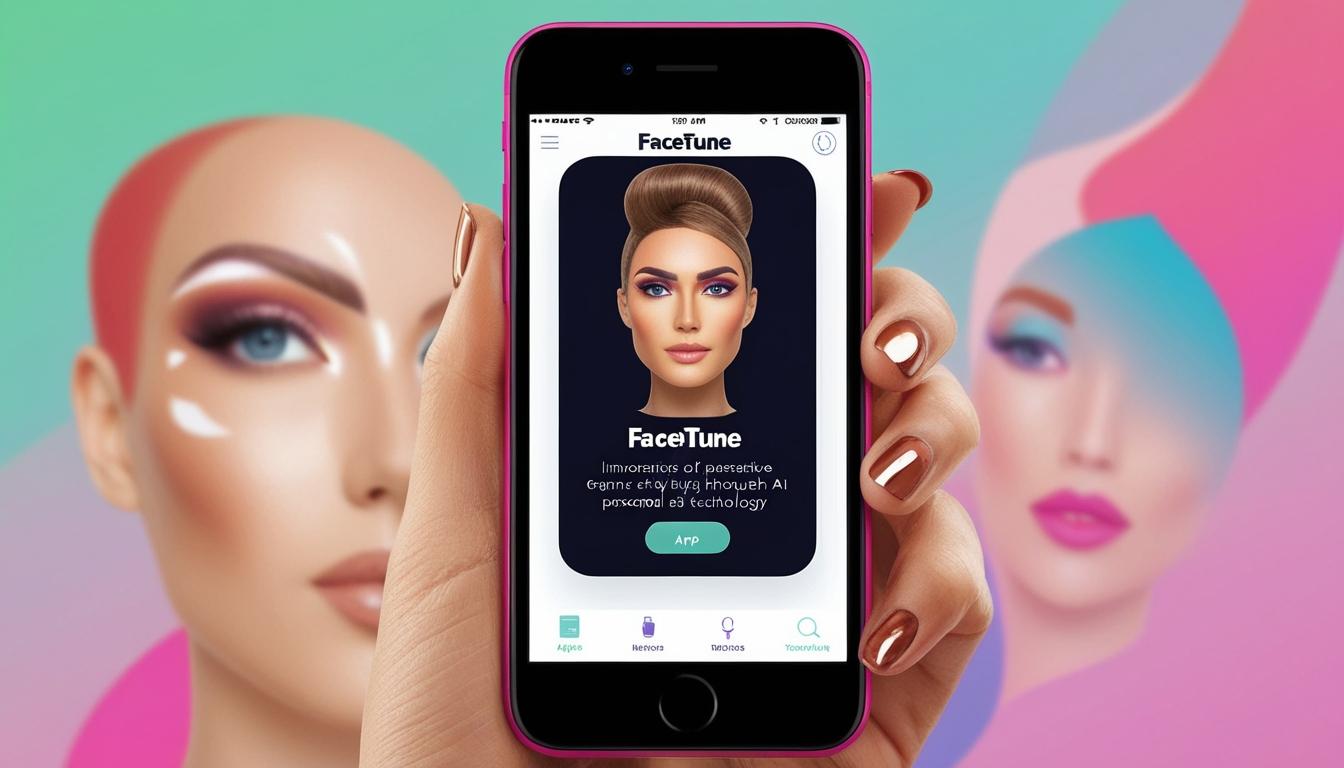
Exploring a New You: The Increasing Role of AI in Personal Styling with Facetune
Facetune, the innovative application by AI company Lightricks, has become a popular tool for individuals seeking to experiment with their look without the commitment, cost, or potential regret of a permanent change. Originally launched in 2013, Facetune has evolved into a versatile app that allows users to adjust hairstyles, makeup, outfit styles, skin tones, and even facial hair through its interface. Available in both free and premium versions, with a seven-day trial option, the app aims at serving as a "personal fashion stylist" at the user's fingertips.
In an era where beauty regimes can involve significant financial expenditures, such as the $400 plus tips spent on salon visits for a colour and cut, Facetune offers a digital alternative that might make for more informed decisions. This is especially relevant given the current economic conditions where luxury spends demand careful consideration.
Amanda Smith from CNET shared her personal experience using Facetune to test potential hair colour and styles prior to a salon appointment. Residing in New York but originally from Australia, Amanda noted that she always felt more herself with blonde hues, a shade she was keen to replicate despite New York's distinctly seasonal nature impacting her hair's natural highlights.
Upon downloading Facetune, Amanda was impressed by its user-friendly interface and the humorous touches embedded in its design, such as the option to have the AI assistant 'roast' her style. Granted access to her photo library, Amanda was able to test a variety of hair colours – settling on blonde, brunette, and an adventurous pink hue – and was pleased with the natural appearance of the results.
In her quest to further explore the app's styling options, Amanda experimented with the cutting tool which transformed her appearance to fit a vintage look reminiscent of a '60s housewife, albeit with some distortion anomalies affecting her hand in the edited photos. The app's capabilities extended to suggestions of hair styles, including bangs, though the visualisation borderline on the unrealistic when the tool struggled with certain prompts.
While Facetune may not perfectly mirror the precise tones a professional colourist might achieve, it provides a beneficial starting reference. It has the potential to save significant time and energy spent on trial and error scenarios at the salon. Users can benefit from experimenting with looks digitally, ensuring they can confidently walk into their hairdresser's with a clearer vision of what they desire.
For those reluctant to reveal their use of AI to their stylists, Facetune still enables users to develop a clearer idea of their preferred aesthetic, thereby aiding them in presenting reference images or style choices with greater confidence.
Although primarily used for hair and makeup alterations, Facetune also offers additional features for the triers of fashion, proposing various outfit styles to further extend its styling services. Despite offering modifications to eye or skin colour, those adjustments might be where users draw the line, as the uncanny valley of overly altered features can sometimes sit uncomfortably.
In summary, while there might be some hesitation around fully embracing digitally modified appearances, applications like Facetune represent a significant stride in personal styling. They offer a cost-effective and adaptable tool that empowers users with the information they need to make informed decisions about their looks, all within a matter of seconds. As the app continues to evolve, it is likely to play an increasingly pivotal role in beauty and fashion, offering a peek into what might be the future of personal style exploration.
Source: Noah Wire Services