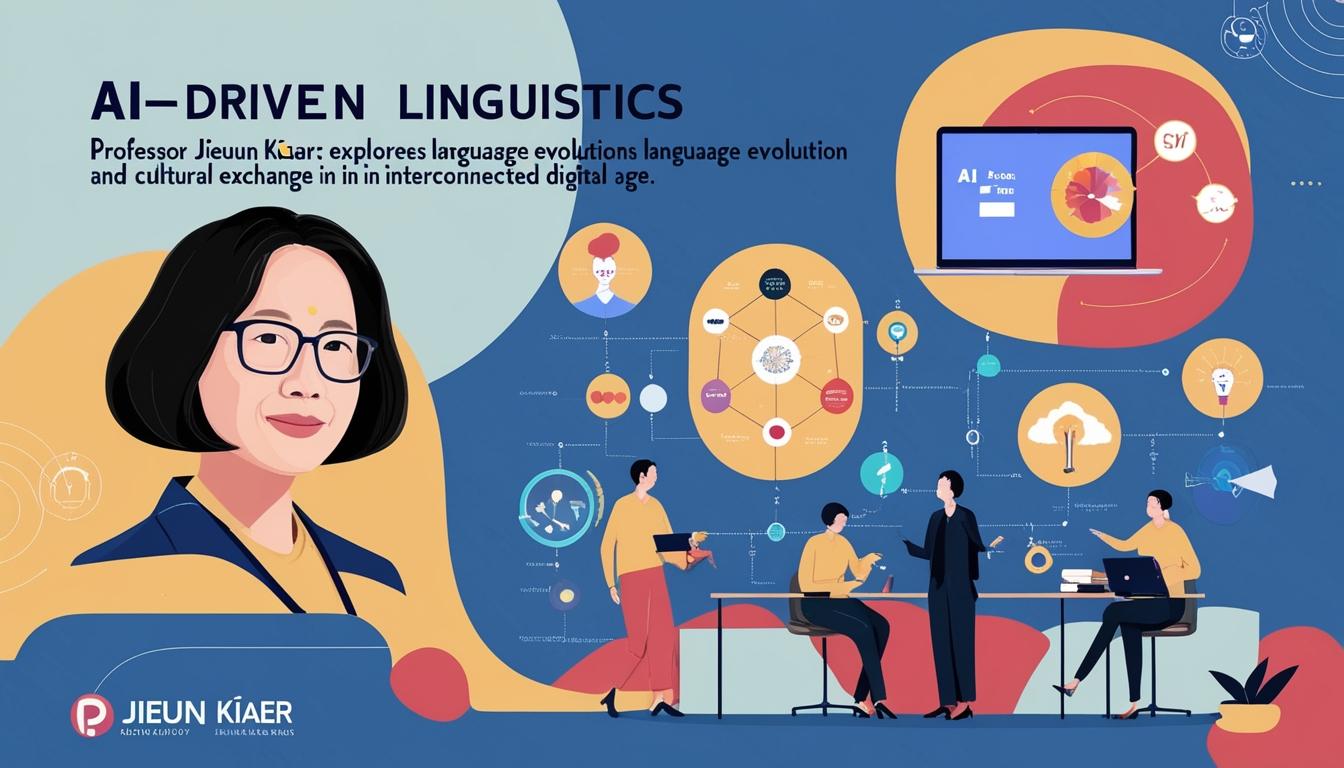
In a recent episode of the podcast series "Invisible Machines," hosts Robb and Josh engaged in an insightful conversation with Jieun Kiaer, a Professor of Korean Linguistics at the esteemed University of Oxford. The dialogue centred around the increasingly pivotal role of artificial intelligence (AI) in shaping linguistic understanding and communication, especially pertinent as the global community continues to integrate more advanced AI technologies into daily life.
Professor Kiaer's new book, "The Future of Syntax: Asian Perspectives in an AI Age," delves deeply into the intricate and fascinating structures of Chinese, Japanese, and Korean languages. Her work is renowned for providing fresh insights that often challenge the conventions of traditional formal syntax. By revisiting Marc Prensky’s concept of "digital natives," Kiaer introduces the notion of "AI natives" – individuals who have grown up amidst a landscape richly populated with intelligent conversational technologies.
Throughout the podcast, the discussion opened up various facets of generative content detection specifically in Asian languages. This technology, while offering substantial advantages and new opportunities for communication, also presents unique challenges. Kiaer's expertise provided listeners with a comprehensive understanding of these dynamics, particularly as they pertain to the rapid technological advancements influencing language evolution.
Another intriguing aspect of the conversation was Kiaer's research into the role of gestures and non-verbal communication in linguistics. This area of study unveils how physical expressions and cultural nuances contribute to the broader tapestry of human interaction and understanding.
Moreover, Kiaer shared her current investigations into Hallyu, the global Korean wave comprised of music, film, and television, which has become not only a cultural movement but a linguistic phenomenon transcending borders. Her insights shed light on how this cultural trend influences language use and cultural perceptions worldwide.
The podcast episode thus offered a compelling exploration of the complex intersection between language, culture, and technology in an AI-driven age. Jieun Kiaer's contributions highlighted the dynamic nature of language evolution, modified and enhanced by technological innovations. For those interested in the future of linguistics and cultural exchange, her work provides valuable perspectives for further exploration and understanding.
Source: Noah Wire Services