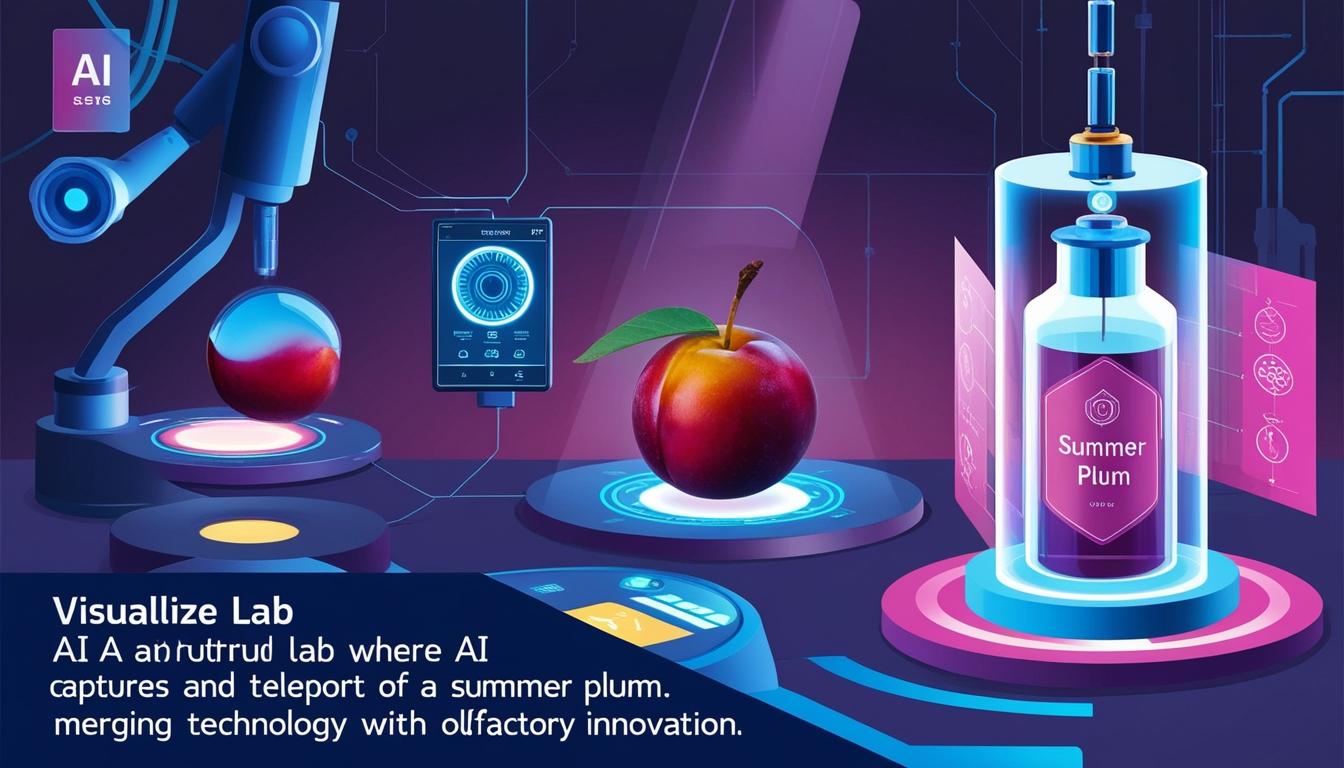
In a pioneering feat within the field of digital olfaction, Osmo, a company specialising in scent technology, has made a remarkable breakthrough in "Scent Teleportation" using artificial intelligence (AI). The firm has successfully demonstrated the ability to capture, digitize, and reproduce a scent in a different location without the need for human intervention. This achievement could revolutionise various industries by enabling the remote sharing and experiencing of scents.
The technological process starts with sensors that collect and analyse a scent using a Gas Chromatograph Mass Spectrometer (GC/MS). The data gathered is then sent to a molecular printer capable of synthesising and combining the chemicals needed to replicate the scent precisely. Previously, human assistance was necessary at every stage of the scent teleportation process, but this step has now been eliminated thanks to AI advancements.
Osmo utilises an AI model to map the analysed scent onto its Principal Odor Map (POM), a comprehensive database that predicts how specific molecular combinations translate into distinct smells. AI then communicates this molecular profile to a robotic system which recreates and mixes the aroma. Osmo’s CEO, Alex Wiltschko, highlighted the process by sharing a video demonstration of the technology.
On social media platform X, Wiltschko expressed excitement about the achievement, noting that the team successfully digitized and reproduced the scent of a fresh summer plum without human involvement. "I carry the plum scent with me a lot of places and smell it constantly. It makes me smile," he enthusiastically shared, reflecting the personal impact of this technological milestone.
This AI-driven scent technology offers promising applications across multiple sectors. In virtual reality (VR), it could enhance user experience by incorporating real-life scents into digital environments, such as enhancing the realism of VR culinary shows. The health sector could also benefit significantly, particularly in therapies for anosmia or conditions where a change in smell sensitivity is symptomatic. The capability to recreate scents could aid in diagnostic processes or through therapeutic measures.
However, while scent teleportation is a striking innovation, it may face challenges in certain industries. For instance, issues could arise regarding the replication of proprietary perfume scents, raising intellectual property concerns. Despite this, the technology opens the door to novel forms of communication, such as sending fragrances with a romantic message or using digitised scents in creative marketing strategies.
Osmo’s advancement represents a significant leap forward in the fusion of AI and olfaction, promising to transform how scents are experienced and shared across distances. The company, which also engages in creating novel scents for the fragrance industry using AI, appears to be at the forefront of this evolving field, sparking intrigue and anticipation regarding the potential applications and implications of its innovations.
Source: Noah Wire Services