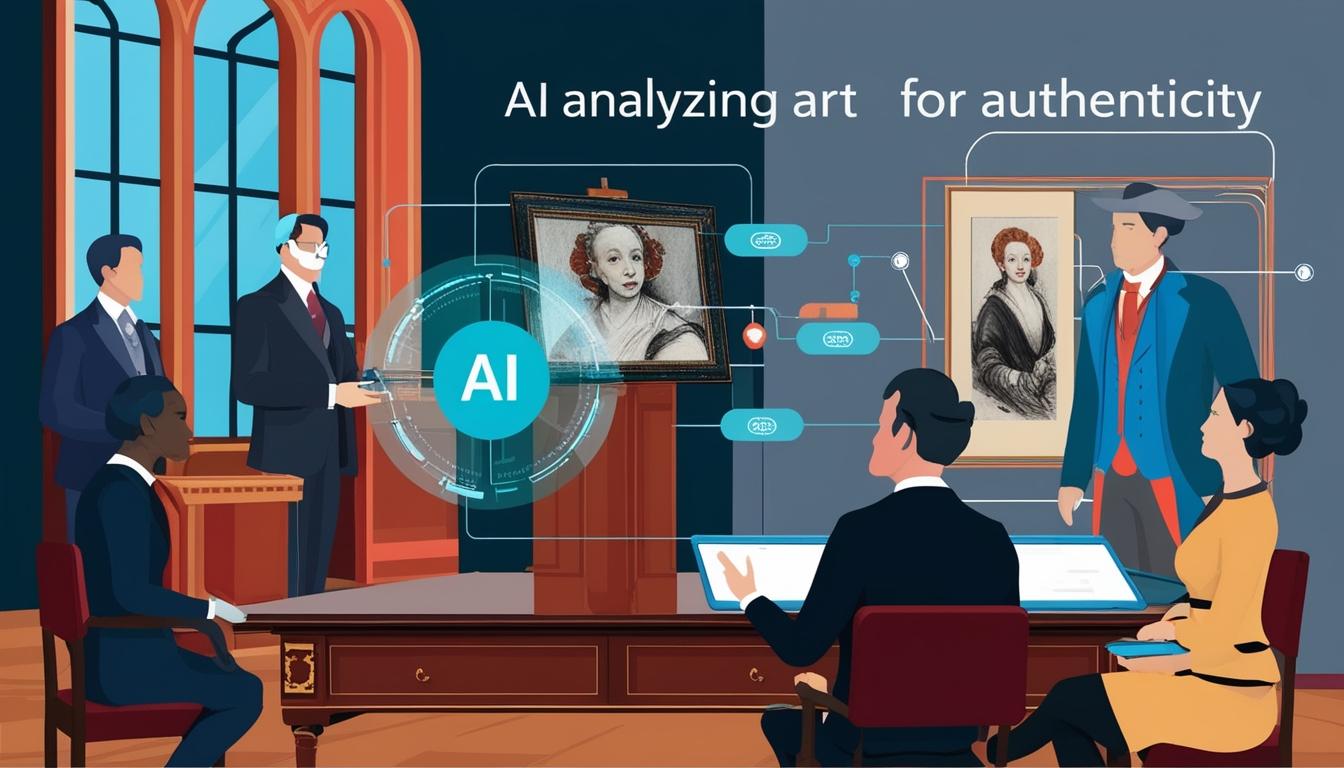
In a pioneering move, a Swiss auction house is set to introduce artificial intelligence into the art authentication process. The Germann auction house, located in Zürich, will auction three notable artworks from the collection of the late esteemed curator Martin Kunz, all of which have been authenticated by a Swiss AI company, Art Recognition. This groundbreaking sale, which is scheduled for 23 November, will feature artworks by celebrated artists Louise Bourgeois, Marianne von Werefkin, and Mimmo Paladino.
Art Recognition's AI authenticity certificates are being hailed as a potential game-changer for the art market. Carina Popovici, CEO of Art Recognition, expressed to The Art Newspaper, “This could mark a significant shift in the art market,” highlighting the transition from traditional authentication by human experts to technological involvement in art verification. The company's AI employs complex algorithms that are trained to differentiate between authentic pieces and imitations, using a comprehensive dataset that includes genuine works as well as known forgeries and imitations.
The artworks slated for the auction have varying estimates, reflecting their unique historical and artistic value. The 1945 artwork by Louise Bourgeois, a drawing, is anticipated to fetch between CHF 30,000 and 40,000 (£27,000-36,000). Meanwhile, Mimmo Paladino’s 'Lo Spirito della Foresta' from 1981 has an estimated value ranging from CHF 20,000 to 40,000 (£18,000-36,000), and the untitled watercolour by Marianne von Werefkin is expected to attract bids of CHF 5,000-8,000 (£4,000-7,000).
Fabio Sidler, a representative from Germann auction house, noted the enthusiasm surrounding the use of AI technology: "We are all strongly committed to this new technology, including our in-house specialists. We are convinced that this additional form of authentication will be an important element for more credibility in the market in general.”
An anonymous UK art collector commented on this technological advancement, recognising it as a “radical move that may require a real leap of faith,” indicating the transformative potential AI holds for the art world.
Art Recognition has used its AI system in significant previous analyses, such as the evaluation of a contested 1889 self-portrait by Vincent van Gogh at Norway’s National Museum. The AI process involves analysing images of genuine works alongside negative examples like forgeries and works from the artist's school or followers, helping distinguish between original masterpieces and imitations.
This innovative step in the art world aligns with broader technological trends influencing the industry, such as Christie's recent use of blockchain-backed ownership tools in their New York auction on 2 October, where each lot came with a digital certificate of ownership.
The late Martin Kunz's collection brings additional historical merit to the sale. Kunz, who passed away in 2021, was a notable figure in the art world, having held positions as director at several significant institutions including the Kunstmuseum Luzern and the Museo Comunale d’Arte Moderna in Ascona, Switzerland. His collection also includes works by prominent artists like Bruce Nauman and Lorna Simpson.
The upcoming auction on 23 November presents a unique intersection of art and technology, marking a potential new era in artwork authentication and sales.
Source: Noah Wire Services