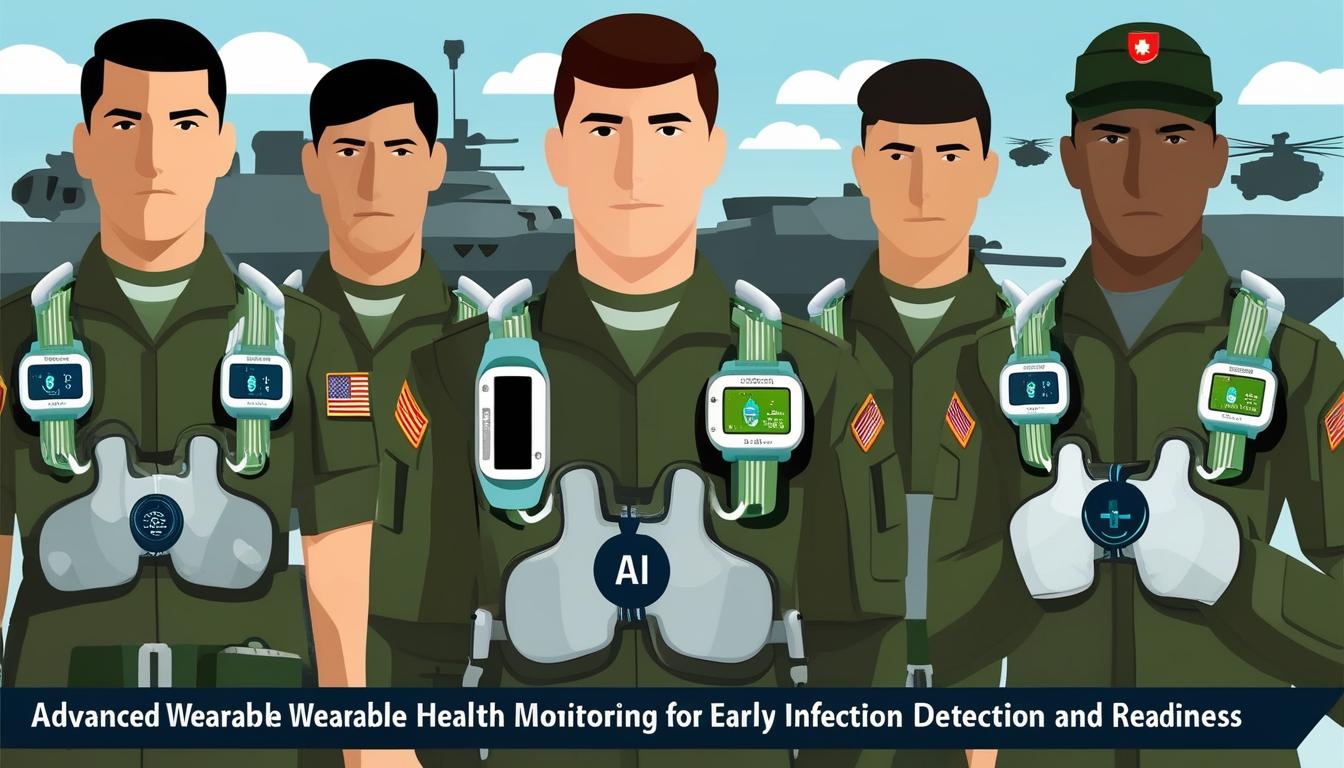
The US Department of Defense (DoD) is set to significantly broaden the use of innovative technology that utilises wearable devices to predict infections among military personnel. This expansion has been made possible through a $25 million contract awarded to Philips, a global leader in healthcare technology, to enhance the deployment of the Rapid Analysis of Threat Exposure (RATE) AI algorithm over the next four years.
The RATE algorithm is designed to improve the health monitoring and readiness of active-duty service members by identifying infections before symptoms appear. This predictive capability is expected to help in maintaining the readiness of troops by reducing their downtime through early intervention. The expansion of this technology within the DoD is intended to provide the armed forces with advanced tools to monitor individual health and quickly respond to potential health threats.
Developed initially in 2019, the RATE algorithm employs extensive data science and machine learning techniques. It was created based on a comprehensive dataset comprising over 36,000 cases of hospital-acquired infections. The algorithm assesses 163 different biomarkers, which include both vital signs and various laboratory measurements, to generate a risk score for infections. This risk assessment covers a range of infections, including prevalent respiratory illnesses such as pneumococcal pneumonia.
During the COVID-19 pandemic, the adaptability of the RATE algorithm was tested through wearable devices, allowing the early detection of viral infections by analysing biometric data collected from commercially available wearables. A study published in 2022 in Nature’s Scientific Reports demonstrated that this approach enabled the detection of COVID-19 infections in a cohort of 9,381 DoD personnel an average of 2.3 days ahead of symptom onset, with detections occurring up to six days prior.
Echoing the importance of this technological advancement, Lorenzo Hankla, the programme officer for the Joint Program Executive Office for Chemical, Biological, Radiological, and Nuclear Defense, stated that the mission to protect troops and rapidly detect illness is crucial to maintaining military effectiveness. Hankla highlighted the advantage of leveraging AI-trained wearables to allow service members to monitor their health passively and take swift action if an infection is detected.
Jeff DiLullo, Philips North America's Chief Region Leader and a US Army Veteran, also emphasised the significance of AI-enabled predictive technologies like RATE. DiLullo underlined their role in facilitating timely medical interventions and personalised care for military personnel, which in turn enhances overall operational readiness and reduces downtime not just for individual members but for entire units.
This initiative signifies a step forward in the incorporation of cutting-edge technology within the military, aimed at safeguarding the health and operational efficiency of service members. The ongoing deployment of the RATE algorithm promises to bolster military capabilities by ensuring personnel remain in peak condition, ready to fulfil their duties.
Source: Noah Wire Services