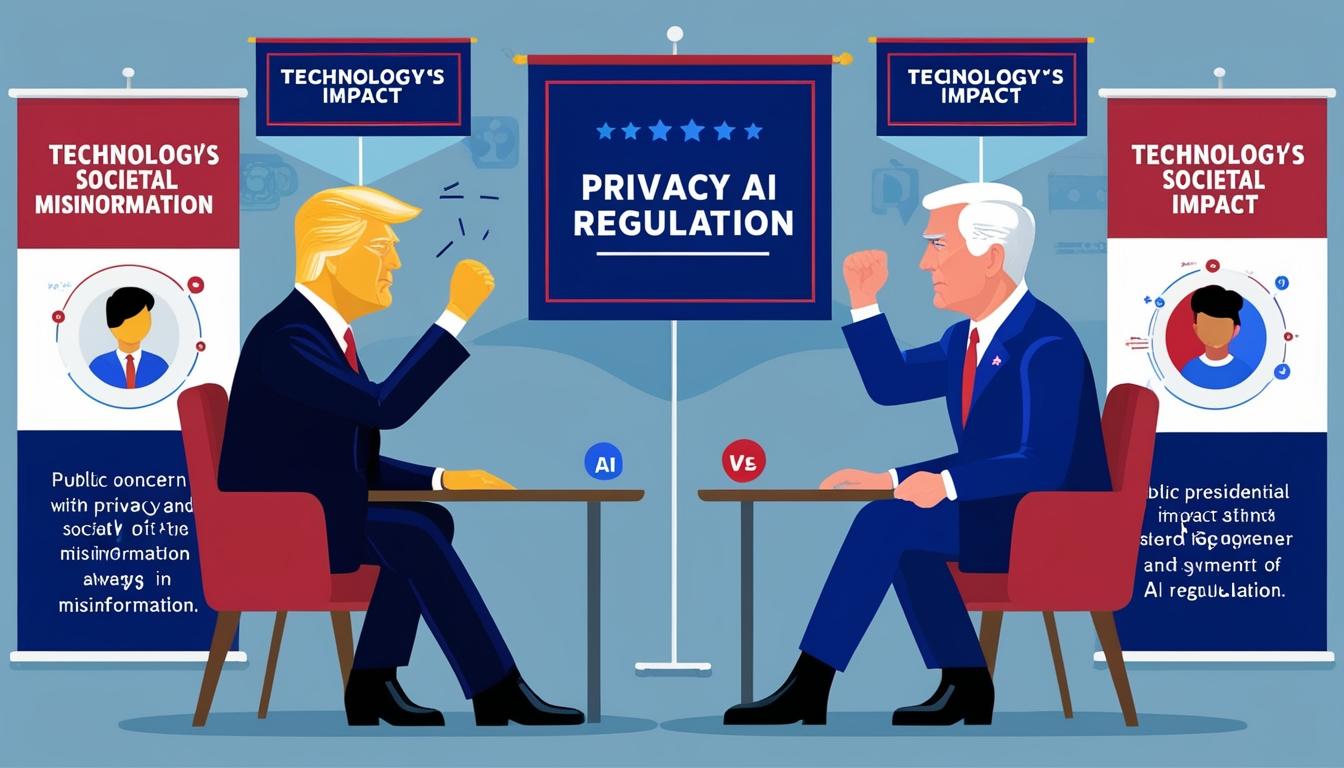
US Presidential Candidates' Stances on AI Unveiled Amid Public Concerns
In the lead-up to the upcoming presidential elections, artificial intelligence (AI) emerges as a significant, though largely unaddressed, topic of concern among the American populace. Notably, AI has not featured prominently in the campaign messaging of either Vice President Kamala Harris or former President Donald Trump, despite its growing importance and the public's increasing demand for regulation.
Recent polls indicate a bipartisan consensus among Americans, expressing concern over AI's potential impact on privacy, misinformation, and economic disruption. A considerable majority advocate for government oversight to address these issues. Consequently, state and federal bodies are already taking steps to regulate AI-enabled disinformation, privacy concerns, and innovation within the technology sector. This regulatory momentum positions the next US president uniquely to shape AI policy for the foreseeable future.
While the rhetoric surrounding AI by Harris and Trump has been sparse, when it does surface, it often frames AI within the context of broader cultural debates rather than as a standalone issue requiring nuanced policy discussion. Donald Trump has criticised the current administration's AI-related measures, including an executive order by President Joe Biden aimed at safeguarding consumer rights and fostering innovation. Trump has labelled these efforts as hindrances to progress, suggesting a bias towards "Radical Leftwing ideas." Additionally, he has vowed to overturn Biden's executive order immediately, should he be elected.
Conversely, Vice President Harris, although not vocal about AI on the campaign trail, is actively involved in current AI policy development as part of her vice-presidential duties, including supporting the commitments made in Biden's 2023 AI Executive Order.
Interestingly, despite the apparent partisan rhetoric, historical analysis reveals that both major parties share substantive views and have laid similar groundwork regarding AI policy. Trump's previous administration established federal funding for AI research, set safety standards, and aimed to prepare the workforce for technological changes—initiatives that align closely with those of his predecessor, Barack Obama, and successor, Biden. This continuity suggests a shared recognition of AI's importance across different administrations.
Trump's administration also furthered AI policy through executive orders and strategic plans, focusing on AI safety, innovation, and workforce preparation. This has led to a foundation on which the Biden administration has continued to build, endorsing initiatives such as the establishment of national AI-research institutes.
Nonetheless, while both presidential candidates have participated in shaping AI policy, their approaches to regulation may diverge significantly. Trump's administration favoured a "light touch" regulatory approach, reflecting broader Republican ideals of minimal federal intervention. In contrast, the Biden administration has pursued more comprehensive regulation, including the publication of an AI Bill of Rights that emphasises privacy and civil rights protections.
Despite the partisan differences, it appears that the urgency for effective AI regulation is driving a broader acceptance of these measures across the political spectrum. State-level advancements, like the AI Bill of Rights passed by Oklahoma's House of Representatives, show a willingness to engage with AI issues beyond federal politics.
As AI's societal impact continues to grow with advancements such as ChatGPT, both candidates may face increasing scrutiny over their AI policies. The public demands accountability and effective governance to ensure that AI technologies benefit society while mitigating potential risks. This heightened public awareness could compel either administration to uphold the bipartisan foundations laid in AI policy, regardless of campaign rhetoric.
Source: Noah Wire Services