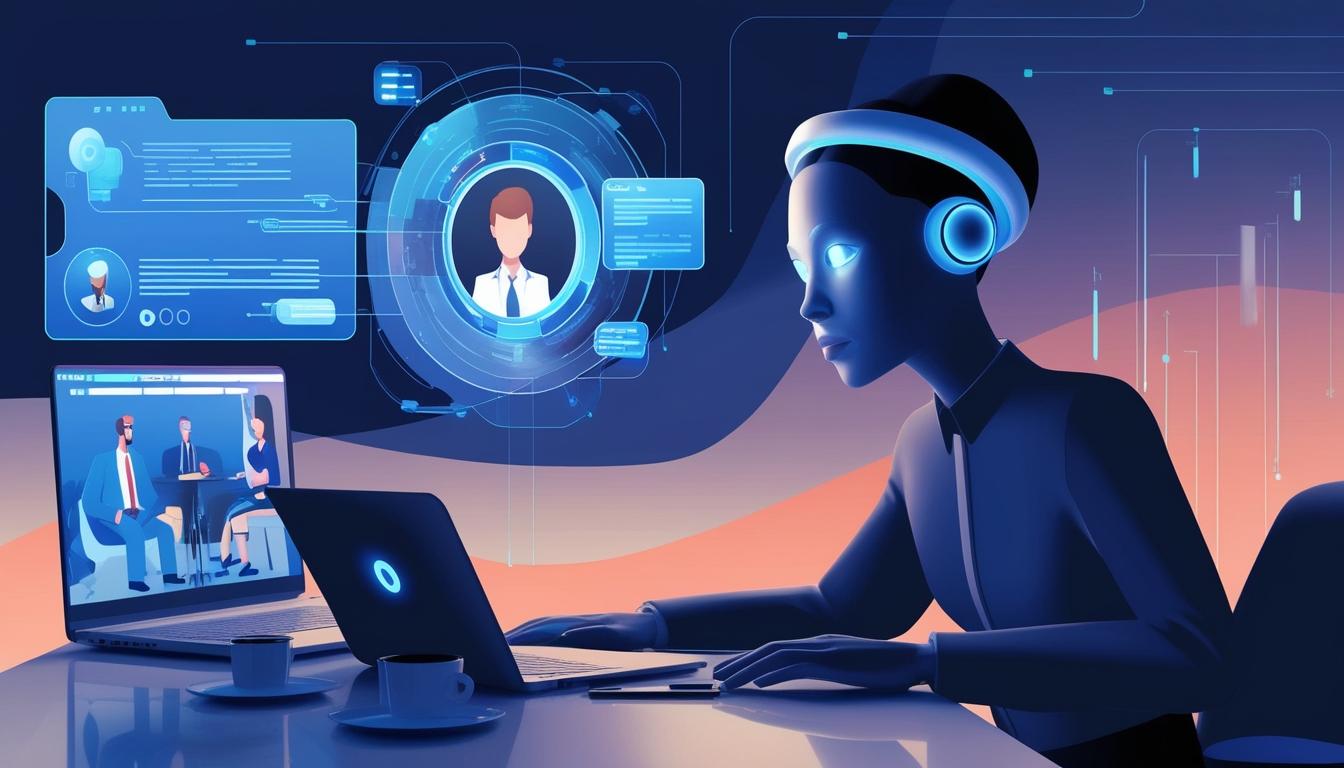
Title: AI Avatars in Unified Communications: Zoom and Others Pave the Way for a Digital Workforce Transformation
In recent years, the concept of AI avatars within Unified Communications (UC) has been steadily transforming from a novelty into a promising tool for efficiency and productivity in the workplace. Historically, avatars in video meetings served mainly as a means for users to maintain their presence without appearing on camera. However, advancements in artificial intelligence are now pushing the capabilities of these digital representations far beyond their original scope.
Key players in the technology sector, particularly Zoom, are actively exploring ways to integrate AI avatars more significantly into the hybrid work environment. These developments aim to enable digital twins to learn from their human counterparts and execute tasks on their behalf. Industry experts hypothesise that, in the future, AI avatars could autonomously participate in meetings, allow employees greater flexibility, and potentially enhance overall efficiency.
Eric Yuan, founder of Zoom, is at the forefront of this vision, consistently advocating for more AI integration within the workplace. During recent events such as Zoomtopia, and through various interviews, Yuan has shared insights into a future where AI avatars not only allow users to avoid unnecessary on-camera appearances but also manage meetings and tasks. Yuan envisions a scenario where AI systems schedule meetings, discern which require personal attention, and attend the rest autonomously. After these meetings, the AI would produce concise notes and suggest follow-up actions, thus transforming the way meetings are managed.
This transition is not unique to Zoom; several technology giants are investing in similar innovations. Asana has introduced AI teammates designed for flexible teams, capable of advising on task prioritisation and executing work. Microsoft and Google are also developing their AI "team members," with Microsoft's Team Copilot envisaged to engage in meetings, provide pertinent information, and curate task lists.
The potential benefits of AI avatars are multiple and varied. They promise reduced time spent in meetings without compromising on connectivity and insight. Moreover, highly customisable AI avatars could be tailored to compensate for individual weaknesses—such as aiding in negotiations or presentations—thereby enhancing individual performance. According to a recent survey, a significant portion of professionals expressed willingness to utilize AI avatars for administrative and some decision-making tasks.
Despite these promising developments, the increasing presence of AI in workplaces raises several concerns. A primary issue is the potential for job displacement, as AI takes over roles traditionally held by humans. Many professionals fear an over-reliance on technology could render human contributions obsolete. Furthermore, there are concerns about AI avatars' ability to accurately represent individuals, given the propensity for generative AI to exhibit errors and bias.
Additional risks include the potential misuse of AI technology, such as deepfakes, which could exploit realistic digital avatars to spread misinformation or damage reputations. Protecting these digital assets from criminal activities remains a critical challenge for the industry.
As AI continues to evolve, the implications for UC tools and workplace dynamics remain uncertain. While there is promise for a future where AI enhances work-life balance and contributes to innovative working patterns such as the four-day work week, the broader impact on jobs and human interaction is yet to be fully understood. Industry leaders are thus tasked with navigating these advancements carefully, ensuring AI acts as an augmentation tool rather than a replacement for human effort.
Source: Noah Wire Services