The technological landscape of online search is witnessing significant upheaval as artificial intelligence (AI) continues to assert its influence, with recent developments from OpenAI and Perplexity highlighting the strides being made in AI-powered search.
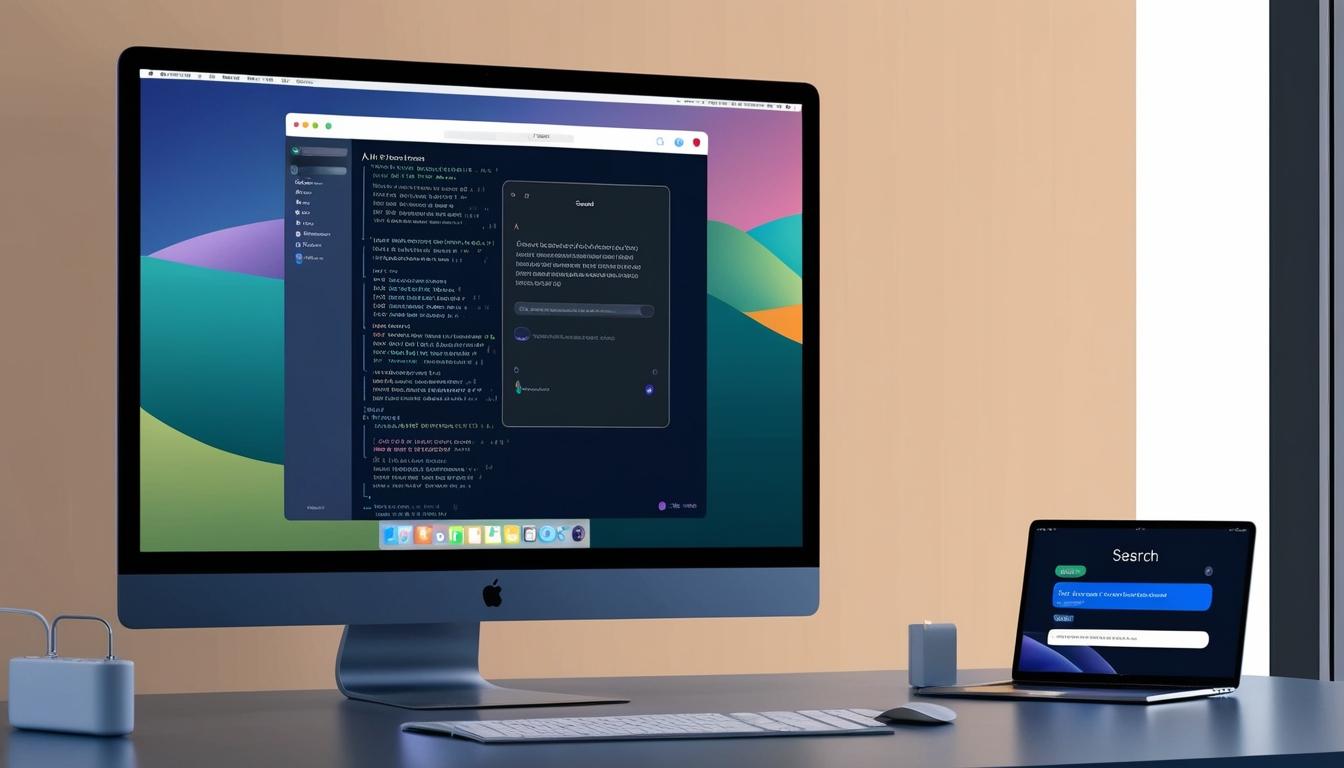
Just a day after OpenAI integrated search capabilities into its ChatGPT service, Perplexity has launched a dedicated desktop application for macOS, enhancing user access to its highly regarded conversational search engine. Perplexity, which has been in operation since the same year as ChatGPT, is broadening its presence by allowing Mac users to utilise its advanced search engine directly from their desktops. This comes a week after the app launched on the macOS platform.
Perplexity offers a conversational search experience, enabling users to conduct queries using natural language, much like authentic human conversation. Users can choose between a free 'Standard' tier, which supports unlimited 'Quick' searches for swift, basic responses, or a 'Pro' tier. The Pro tier, available for $20 monthly or $200 annually, supports 600 detailed searches per day, utilising various AI models, including OpenAI's GPT-4o and Athropic's Claude-3, and features such as analysing PDFs and spreadsheets.
The macOS application incorporates features like voice-assisted Pro searches and real-time answer generation with cited sources, thus allowing users to verify the information. Another notable feature is its threaded conversation capability, which maintains the context of original queries for a more seamless dialogue. Additionally, users can save past searches and customise shortcuts in its library feature.
As these advancements unfold, observers note a potential shift in how search engines traditionally dominate online query handling. According to Gartner's predictions, the emergence of Generative AI (GenAI) solutions as "substitute answer engines" could cut down traditional search engine volume by 25% by 2026. These AI-powered tools are poised to replace conventional search queries, prompting companies to rethink their marketing strategies.
In an effort to keep pace, Google has announced an enhancement to its AI capabilities by integrating real-time search functions into its Gemini AI platform through a feature called "Grounding with Google Search." This enhancement permits its conversational models to draw current, verified information from the web, intending to improve the accuracy and relevance of responses.
Meanwhile, OpenAI has been positioning itself as a frontrunner in AI search innovations, exemplified by the launch of "ChatGPT Search." This tool builds upon the capabilities of their recently enhanced GPT-4o model, allowing users to handle queries with real-time data integration. This development aligns OpenAI as a direct competitor to established search leaders like Google and Microsoft, as evidenced by their collaboration with content providers such as The Associated Press and Vox Media, aiming to address content usage concerns.
The integration of AI in search engines promises a quicker and more tailored search experience but presents challenges surrounding the accuracy and reliability of AI-generated content. The competitive dynamics between Google, Microsoft, and OpenAI highlight the transformative effects AI may have on traditional search paradigms.
As of now, Google maintains a commanding share of roughly 90% of the global search traffic. However, the ongoing innovations and integrations in AI search technologies may soon influence this landscape, potentially redefining how users engage with online information and how businesses strategize in the digital age.
Source: Noah Wire Services