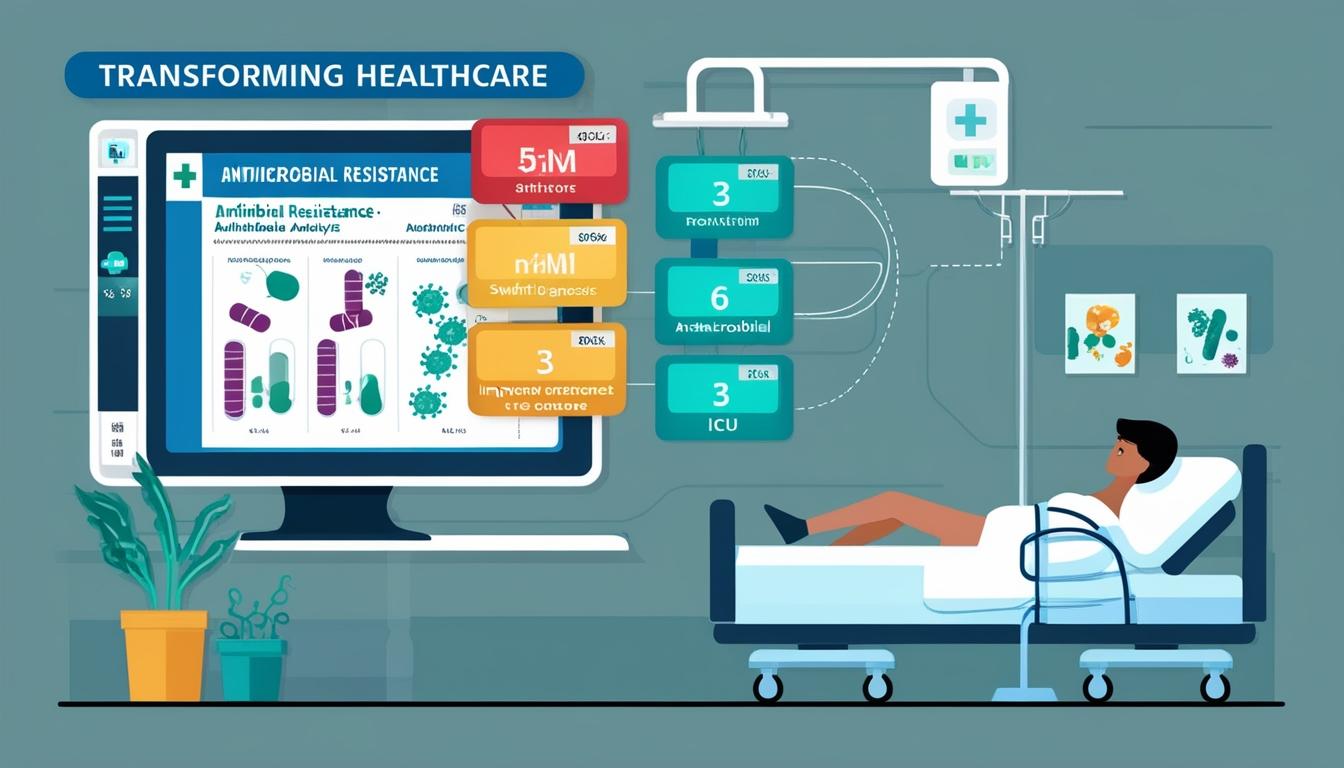
In a groundbreaking development, researchers from King's College London and clinicians from Guy's and St Thomas' NHS Foundation Trust have unveiled a new study demonstrating the potential for artificial intelligence (AI) to revolutionise the assessment of antimicrobial resistance in intensive care units (ICUs). The study, published in PLOS Digital Health in 2024, offers promising insights into how AI can provide same-day assessments to tackle the critical threat of life-threatening sepsis, a leading cause of mortality linked to antimicrobial resistance.
Antimicrobial resistance occurs when bacteria and other microorganisms evolve resistance to the treatments meant to eliminate them. This phenomenon is a significant global health challenge, contributing to an estimated 1.2 million deaths worldwide per year and costing the NHS in the UK approximately £180 million annually. Bloodstream infections, which can escalate into sepsis, pose a dire threat, often leading to organ failure, shock, or death without swift intervention.
Traditional assessments in ICUs require bacteria to be cultured in a laboratory setting, a process that can take up to five days—an eternity in the realm of sepsis care. This timeframe can significantly impact the care outcomes for patients who are in critical condition. However, the integration of AI and machine learning techniques as explored in this study represents a significant step forward, providing a cost-effective solution capable of offering same-day triaging for ICU patients.
The interdisciplinary efforts have yielded a system that utilises data from electronic health records to predict bloodstream infections and antimicrobial resistance, allowing for quicker, more informed clinical decisions. The study analysed data from 1,142 patients and suggested a robust potential for scalability and widespread implementation using more comprehensive datasets.
Davide Ferrari, a first author from King's College London, describes the study as evidence of AI's transformative potential in healthcare, particularly amidst a critical period where the NHS is enhancing data sharing for collaborative patient care. This technology, he states, can assist clinicians in making vital decisions regarding antibiotic usage, improving patient outcomes by prescribing the appropriate treatment swiftly.
Dr. Lindsey Edwards, a microbiology expert at King's, emphasised that the rapid diagnostic capabilities facilitated by AI could not only improve patient survival rates but also help preserve the efficacy of existing antibiotics. Current practices often lead clinicians to prescribe broad-spectrum antibiotics in a blind attempt to combat drug-resistant infections, inadvertently potentially promoting antibiotic resilience among pathogens.
The study's promising results extend beyond immediate clinical implications. Researchers believe that the scalability and simplicity of this technology could offer a robust solution to address healthcare challenges on a larger scale. Professor Yanzhong Wang, an expert in population health, highlighted the potential of federated machine learning to operate across multi-hospital settings, fulfilling regulatory standards and pointing towards a future of widespread adoption in NHS hospitals.
The ongoing research, which aims to incorporate data from over 20,000 individuals, seeks to refine and validate these AI methods further, paving the way for their potential deployment in NHS frontlines to aid in early detection and more effective treatment of antimicrobial resistance-related infections.
Source: Noah Wire Services