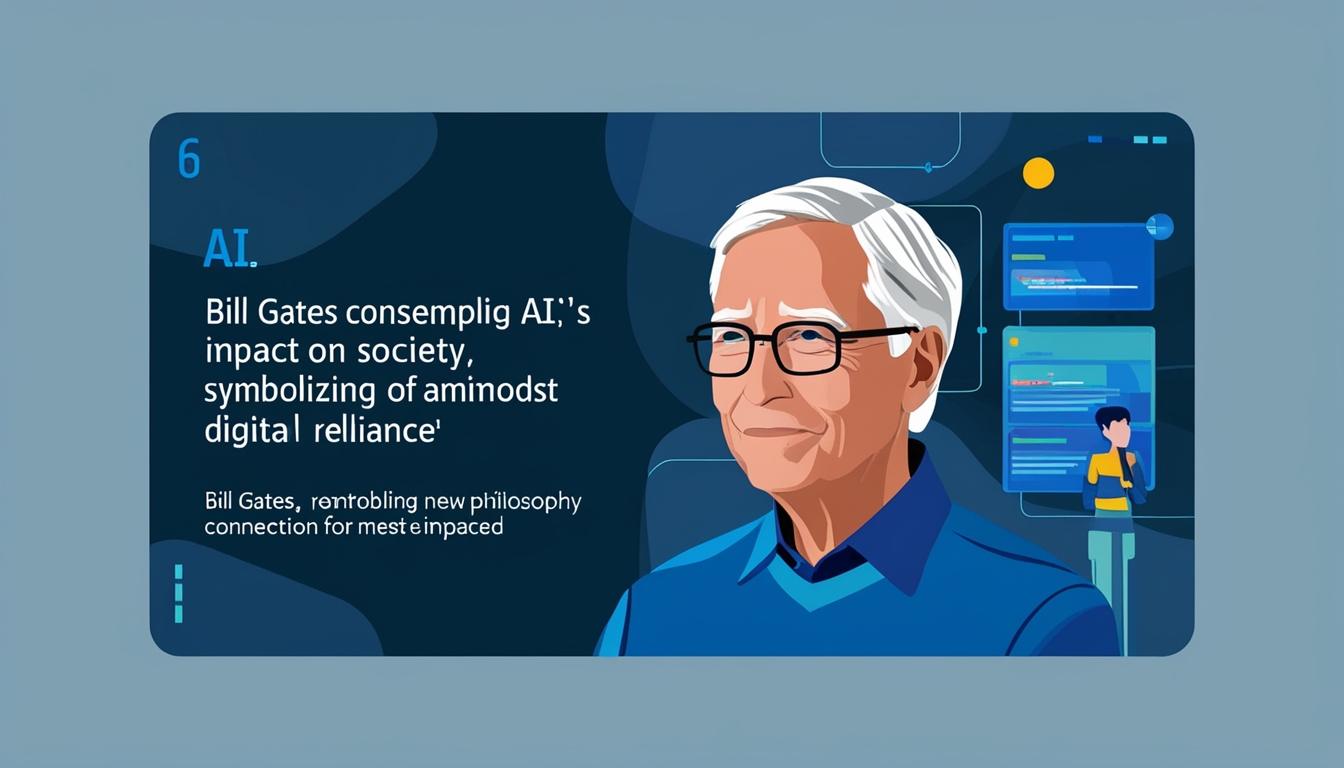
In a recent podcast appearance, Microsoft co-founder Bill Gates discussed the potential implications of artificial intelligence (AI) on society, suggesting that humanity might benefit from a new philosophical or spiritual framework to navigate the evolving landscape. This conversation took place on the "Possible" podcast, co-hosted by Reid Hoffman, another influential figure in the tech industry.
During the discussion, Gates highlighted the transformative impact that AI is likely to have across different spheres of life. These include significant sectors such as healthcare, education, entertainment, and employment. Gates pointed out that while AI holds great promise in addressing several global challenges, including diseases, hunger, and climate change, it also introduces complex ethical and societal questions.
A significant concern raised by Gates is the potential for individuals to become overly reliant on or addicted to AI technologies. He warned that an increase in engagement with virtual environments might detract from real-world social interactions and connections. To address this, Gates proposed the establishment of a new "religion" or philosophy designed to maintain humanity's focus and prevent an overemphasis on digital experiences. He stated, “You know, you can almost call it a new religion or a new philosophy of how we stay connected with each other, not addicted to these things that’ll make video games look like nothing in terms of the attractiveness of spending time on them."
The dialogue took place against a backdrop where the integration of AI in everyday life is expanding rapidly, prompting widespread reflection on its long-term impacts. Gates’s comments underscore the ongoing conversations among technology leaders about how best to guide and manage AI’s integration into society.
In parallel discussions, concerns have also been raised about political and social dynamics involving other prominent figures like Elon Musk. Reportedly, Musk has suggested that both Gates and Reid Hoffman harbour concerns about certain sensitive issues, particularly in the context of potential political developments in the U.S. Several reports have hypothesised that these concerns are linked to the possibility of a political shift following the next U.S. presidential election.
Bill Gates’s reflections on these issues provide a glimpse into the broader discourse on the intersection of technology, society, and politics, emphasising the importance of proactive engagement with the ethical dimensions of technological advancement.
Source: Noah Wire Services