Debate on AI Creativity: John Hartley Proposes a 'Tolkien Test' for Evaluation
In the evolving sphere of artificial intelligence, discussions frequently gravitate towards the Turing Test, developed by Alan Turing, which challenges AI to exhibit intelligent behaviour indistinguishable from that of a human. However, a new perspective has emerged from John Hartley, a contributor to 3 Quarks Daily, who suggests that a more fitting benchmark for today's sophisticated AI, particularly Large Language Models, would be a 'Tolkien test', inspired by the legendary author and academic, J.R.R. Tolkien.
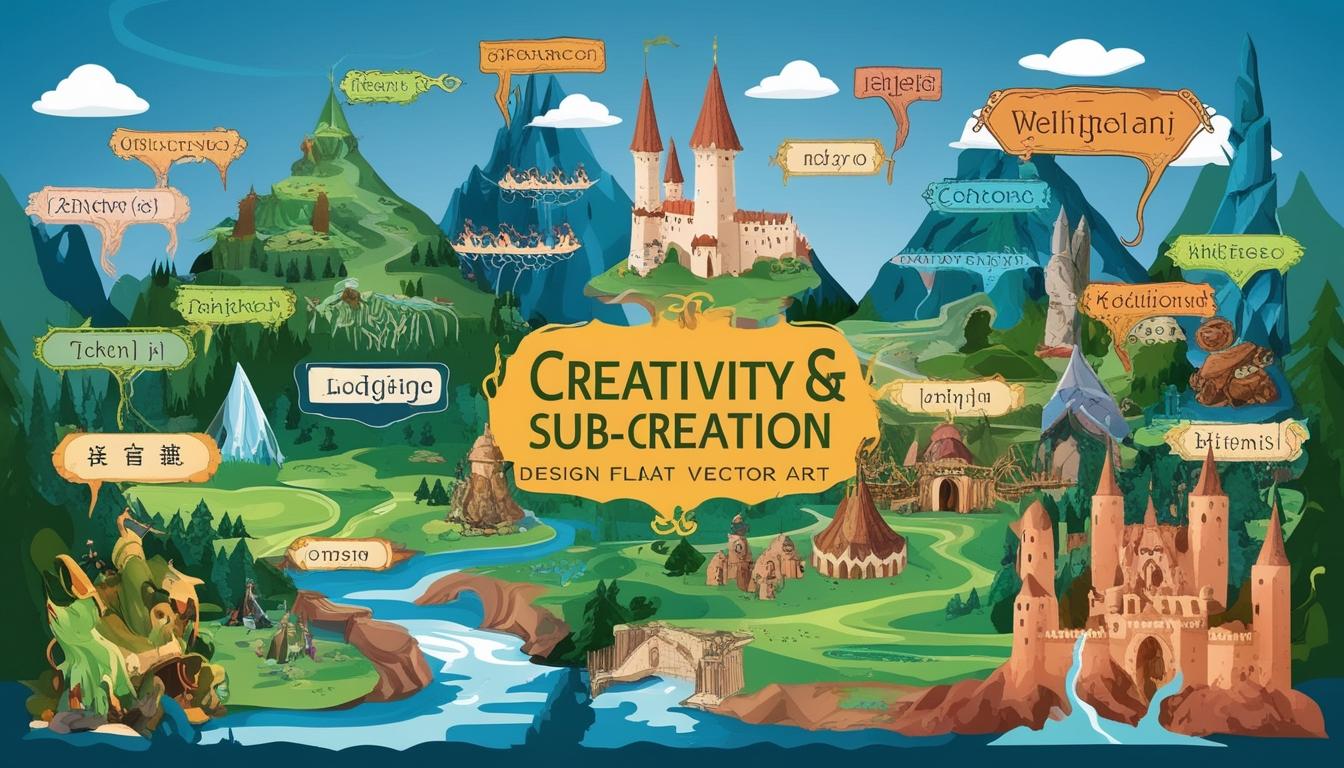
Tolkien, an Oxford professor renowned for his seminal work, "The Lord of the Rings", dedicated much of his professional life to the creation of elaborate and cohesive imaginary worlds. His essay “On Fairy Stories” offers a unique insight into his perspective on human creativity. Tolkien introduces the concept of humans as “sub-creators”, a title granted due to our inherent ability to craft creations inspired by a divine creator, reflecting our intrinsic creative nature through art, architecture, and other human endeavours.
Hartley posits that the applicability of this 'Tolkien test' rests on AI's capability to invent truly original works that echo this depth of creativity—akin to Tolkien's development of Middle-earth. He suggests that AI would need to generate an entirely new set of languages and civilizations within a wholly original world, crafted without direct analogues to human creations. Yet, Hartley notes the likelihood of AI achieving this creative prowess is somewhat dim.
He argues that, as a creation of humans—who are themselves "sub-creators"—AI is "twice-removed" from the ability to engage in the genuine act of creation. Hartley points out, "AI is a sub-creation of the sub-creator and so is twice-removed from the divine origins of creative work," suggesting that AI can mimic and reflect but falls short in generating substantive and meaningful content independently.
Hartley further contends that genuine intelligence, and by extension creativity, is intertwined with having a soulful experience that transcends the physical world—a quality that AI fundamentally lacks. While AI systems are adept at processing and recombining existing data, Hartley argues they do so without the sentient and relational aspects inherent in human creativity. This distinction draws from the intellectual and emotional faculties that allow humans to transcend mere data manipulation and engage in the subjective and nuanced creation of art and literature, as evidenced in monumental creations from novels to cityscapes.
The discourse around the qualitative difference between human creativity and AI-generated content forms part of a broader discussion on the potential and limitations of AI. While Hartley raises critical questions about AI's ability to achieve true creative autonomy akin to human innovators like Tolkien, it highlights an ongoing exploration into how AI might evolve and what role it will play in future creative processes.
Source: Noah Wire Services