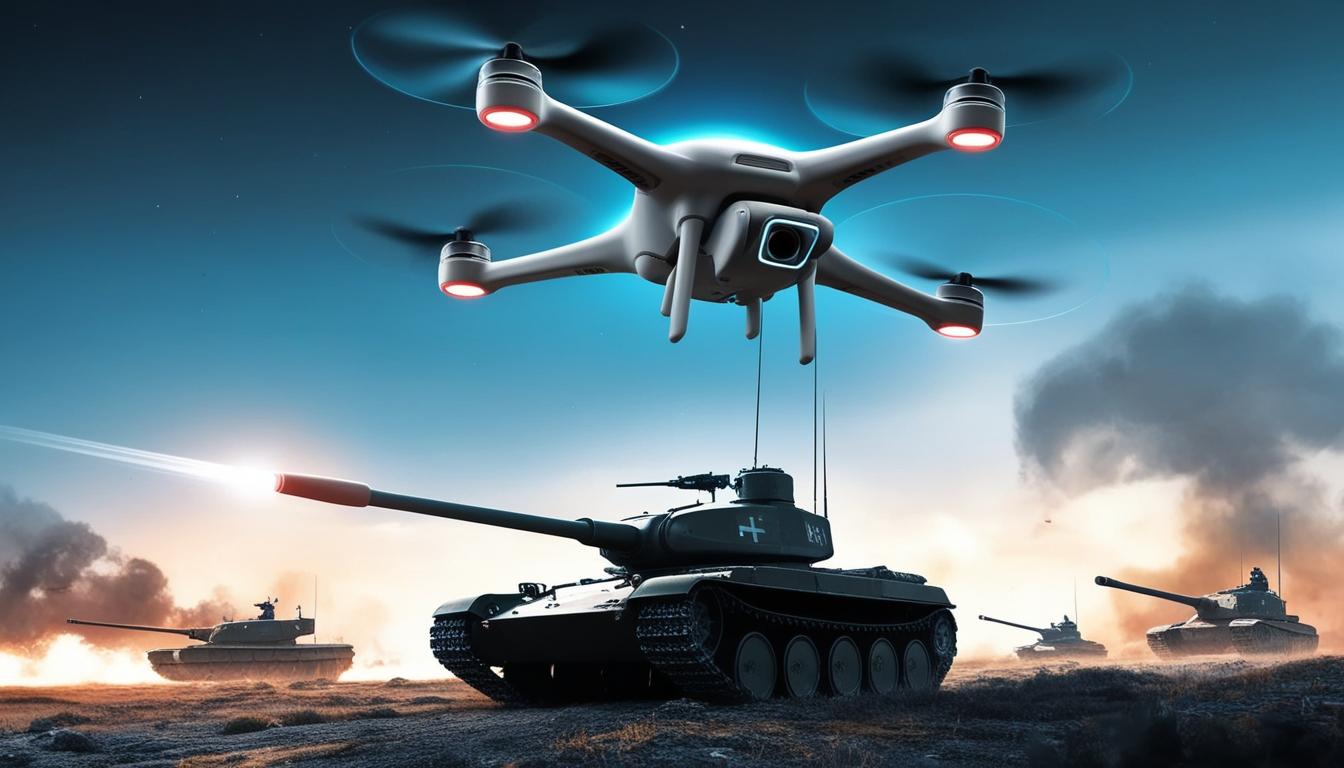
Eric Schmidt, former CEO of Google and a prominent figure in the tech industry, has stirred debate with his recent proposition at the Future Investment Initiative in Riyadh, Saudi Arabia. Speaking at this global forum, Schmidt put forward the idea that the United States Army should consider replacing its traditional tank fleets with AI-powered drones. This proposal stems from his observations regarding the evolving nature of warfare and the emerging effectiveness of drone technology in recent conflicts, notably the ongoing war in Ukraine.
Schmidt, who founded a defense technology startup named White Stork, has highlighted the apparent obsolescence of conventional tank warfare in the face of modern drone capabilities. His company aims to develop sophisticated, low-cost drones with the ability to identify and strike targets autonomously, potentially transforming military strategy by reducing reliance on human operators and overcoming obstacles like GPS jamming.
The premise behind Schmidt's argument is drawn from the dynamic landscape of modern combat as evidenced in Ukraine, where drones have played a significant role. Even consumer-grade drones have demonstrated their capability to inflict substantial damage on much more costly and traditionally resilient tanks, a development that has not gone unnoticed by military analysts worldwide.
Despite Schmidt's enthusiastic endorsement of drones, his perspective may be influenced by his vested interests, given his association with White Stork and its focus on advancing drone technology. Critics suggest that his position reflects not only a belief in technological innovation but also potential benefit to his business ventures.
Nevertheless, the discussion about drones versus tanks reflects a broader rethink in military strategy. While Russia and Ukraine have suffered significant tank losses in their ongoing conflict, both nations continue to incorporate tanks into their military arsenals. This dual approach is mirrored elsewhere; the United Kingdom, for instance, is investing in the upgrade of its Challenger 2 tanks to more advanced Challenger 3 models, suggesting an ongoing commitment to maintaining a robust armoured capability alongside new technology developments.
The modern battlefield also sees tanks equipped with advanced defensive systems. Active Protection Systems (APS), such as the Trophy system, provide tanks with an additional layer of security against incoming threats, heightening their defence against aerial attacks. In addition, laser-based countermeasures are reportedly in development to protect tanks from drone-based assaults, further complicating the decision matrix when evaluating the efficacy of drones versus tanks.
Experts in military strategy generally agree that while drones are increasingly indispensable, they are unlikely to fully replace tanks in the foreseeable future. Instead, the U.S. Army is expected to adopt a more integrated approach, leveraging both drones and tanks to complement each other in combat scenarios. This hybrid setup is anticipated to address the diverse challenges of modern warfare, ensuring that the military remains versatile and comprehensive in its capabilities.
Schmidt's remarks have certainly sparked conversation within military and technological circles, presenting an opportunity to re-evaluate existing military strategies in light of rapid technological advancements. As military operations continue to evolve, finding the optimal balance between legacy systems and emerging technologies will likely dominate strategic discussions in the coming years.
Source: Noah Wire Services