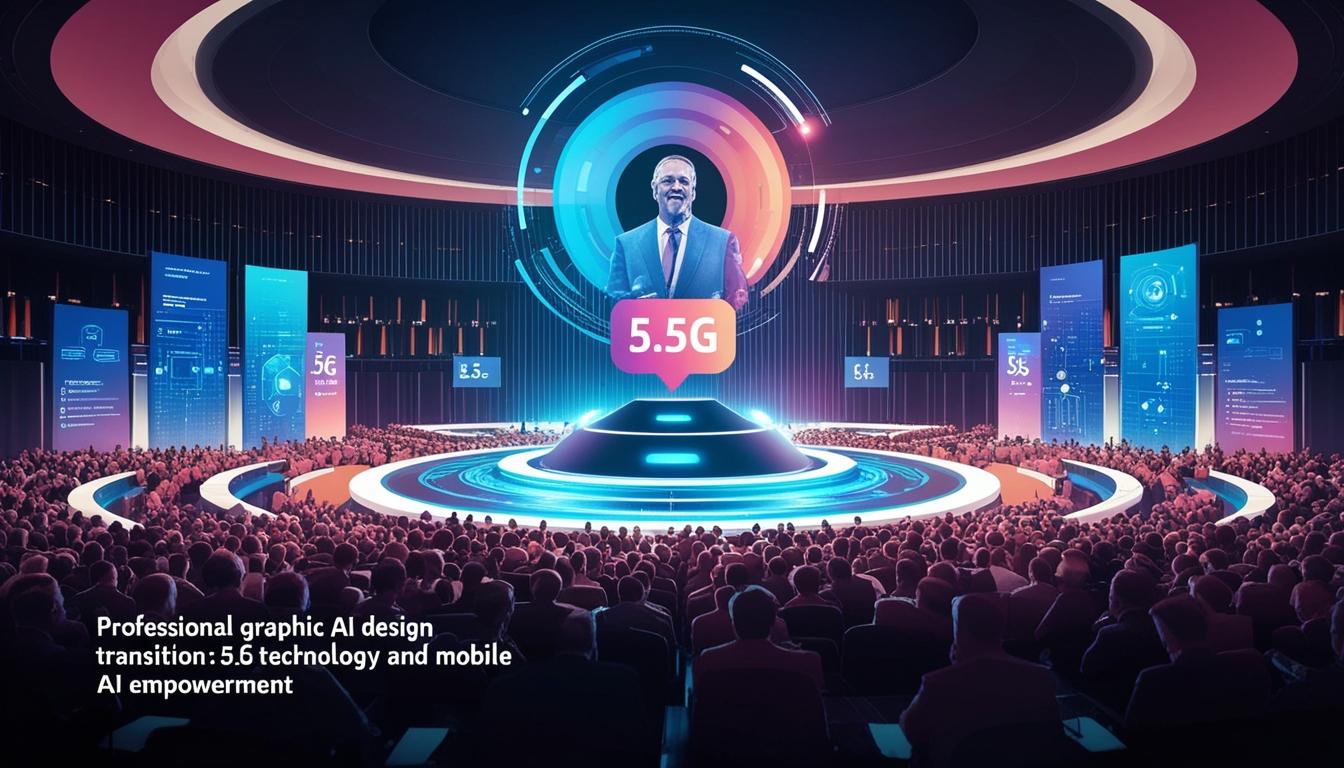
Huawei hosted the 15th Global Mobile Broadband Forum 2024 in Istanbul, Türkiye, with notable contributions from industry partners GSMA and GTI. The event offered a platform for discussions focusing on the evolution of mobile broadband technology, particularly the transition towards 5.5G and its role in ushering in the "era of mobile AI". Themed "5.5G Leads Mobile AI Era," the forum attracted a diverse array of industry stakeholders, including operators and vertical industry leaders, who converged to share insights and explore new opportunities for growth and innovation.
A highlight of the forum was a keynote speech delivered by Yang Chaobin, Huawei’s Board Member and President of ICT Products and Solutions. Yang emphasised the transformative potential of 5.5G technology, projecting it as pivotal in unlocking the capabilities of mobile artificial intelligence. "The upcoming mobile AI era will create huge opportunities for the mobile industry and profoundly shape the decade to come," Yang stated, advocating for a collaborative approach within the industry to evolve 5.5G and establish a robust foundation for mobile AI advancements.
Yang delineated two emerging trends in the evolving landscape of mobile and AI technologies. The first trend, "Mobile going AI," involves the transformation of mobile internet services through innovative service and business models. The second, "AI going Mobile," refers to the plethora of business opportunities emerging from new services, such as smart vehicles and robots. These trends, according to Yang, present fresh momentum and opportunities for both society and the mobile industry.
Huawei predicts these trends will have significant impacts on the ICT industry in three specific ways:
AI Agents for Individuals: This development posits the reshaping of mobile internet services around personal smart assistants, necessitating AI agent networks that support real-time services.
Smart Driving and Mobility: Vehicles are expected to transform into flexible smart spaces, requiring smart vehicle networks with high uplink speeds to support these innovations.
Embodied Intelligence: The proliferation of AI in various scenarios is anticipated to enhance productivity significantly and generate a potential 10 billion-unit AI-robot market, demanding networks with enhanced capabilities.
Yang elaborated on how 5.5G networks are poised to meet the demands of these emerging requirements through innovation in five key areas:
Diversified Experience: 5.5G is expected to deliver high-bandwidth networks tailored to support a wide array of user experiences. By integrating sub-100 GHz bands on demand, these networks promise to deliver superior multifactor experiences with outstanding energy efficiency, employing "0 Bit 0 Watt" technology.
Optimizing Device TCO: 5.5G offers the capability to integrate various IoT connections into a single network, reducing the cost of IoT devices and increasing connectivity.
Unified Portals for Differentiated Services: This aspect of 5.5G supports service differentiation and monetisation, equipping carriers to handle diverse service requirements through user-, service-, and network-awareness capabilities.
Affordable Mobile AI Services: Through unified service portals, 5.5G enables more affordable mobile AI services by providing a native AI service portal that facilitates third-party network capability sharing.
Telecom Foundation Model: This model promotes network autonomy through high-level intelligence, outlining a vision of “0 Touch, 0 Wait, 0 Fault” and harnessing applications such as copilots and agents alongside digital experts.
During the forum, industry stakeholders engaged in discussions on realising 5.5G business success and building on the accomplishments of 5G to attain greater milestones. The evolution towards 5.5G thus appears set to redefine the mobile industry landscape, fostering collaborations and innovations on a global scale.
Source: Noah Wire Services