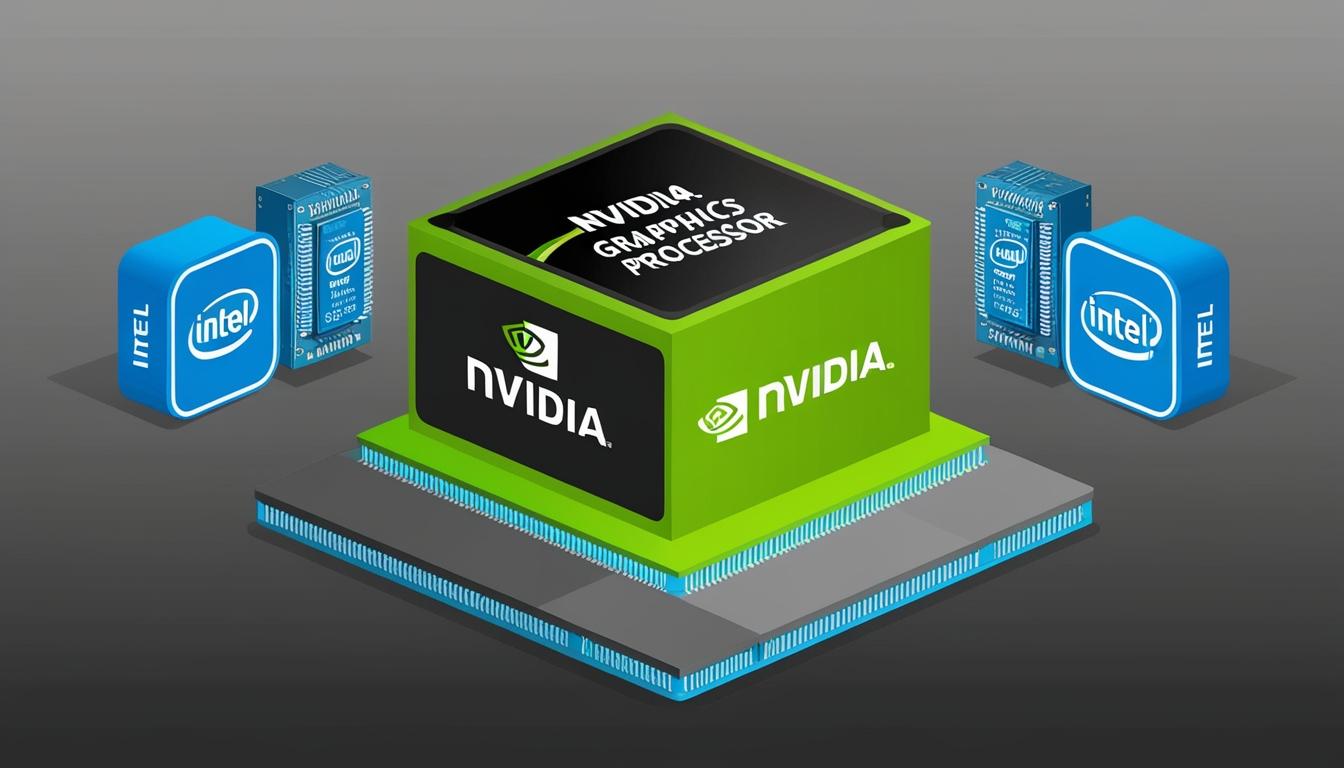
Intel Corporation, a stalwart of the semiconductor industry, is set to exit the Dow Jones Industrial Average after a quarter of a century, making way for Nvidia, a rapidly growing competitor in the chipmaking market. This change, announced by S&P Dow Jones Indices on Friday, reflects a significant shift in the semiconductor landscape, highlighting Nvidia's ascendancy in the industry, particularly due to its pivotal role in powering generative artificial intelligence technologies.
Intel's departure from the Dow Jones index comes after several challenges that the company has faced in recent years. Despite its historic role in shaping the personal computing industry with its processors, Intel has been losing ground to rivals such as Taiwan Semiconductor Manufacturing Company (TSMC). The company has also struggled with strategic decisions, including missing out on early investments in artificial intelligence pioneers like OpenAI, the organisation behind ChatGPT. Consequently, Intel's shares have plummeted by 54% in 2023, marking it as the worst performer on the index and leading to its exclusion.
This exclusion also means Intel will no longer benefit from its stock being included in exchange-traded funds (ETFs) that track the Dow Jones index, potentially further impacting its share price. In the wake of this announcement, Intel's shares saw a 1.6% decline in after-hours trading on Friday.
On the other hand, Nvidia's inclusion in the Dow signifies its growing influence in the semiconductor sector. The company's graphics processors, once primarily sought after by gamers, have now become crucial components in the burgeoning field of artificial intelligence. Nvidia's stock has experienced a remarkable rise, increasing seven-fold over the past two years, with a notable more-than-twofold increase in 2023 alone. This surge has positioned Nvidia as the world's second most valuable company with a staggering market valuation of $3.32 trillion.
In tandem with Nvidia's rise, other parts of the U.S. stock market displayed fluctuations as well. Amazon.com, Inc. experienced a notable uplift in its share price after reporting stronger-than-expected quarterly profits, pushing the S&P 500 up 0.4%, while the Dow Jones and Nasdaq indices rose by 0.7% and 0.8% respectively. Additionally, Amazon Web Services reported impressive sales growth, further bolstering market confidence.
Amid these developments, a weak jobs report added complexity to the economic outlook, influencing Treasury yields. The mixed economic indicators have underpinned expectations of potential interest rate cuts by the Federal Reserve in the near future.
Meanwhile, other major companies such as Apple and Super Micro Computer, Inc. (SMCI) faced downturns. Apple's shares declined following a third-quarter earnings report that highlighted a slowdown in Chinese sales, and SMCI saw a significant drop in shares after its accounting firm, Ernst & Young, withdrew its association amidst scrutiny over financial statements.
Overall, the reshuffling of the Dow Jones Industrial Average underscores an evolving narrative in the technology sector, with Nvidia's rise reflecting the increasing significance of AI technologies and the contrasting struggles of longstanding players like Intel amid rapid industry changes.
Source: Noah Wire Services