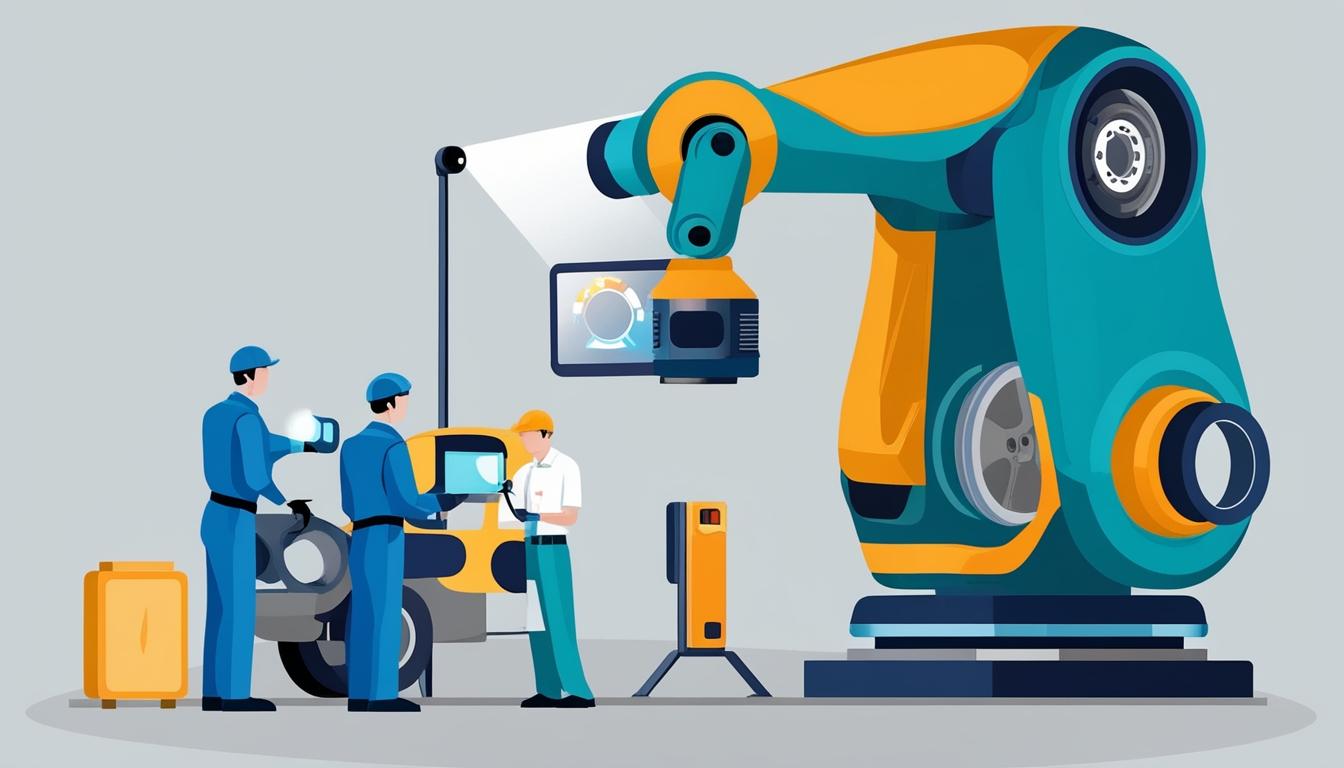
Magna International, a prominent Tier 1 supplier and contract manufacturer, is pioneering the integration of artificial intelligence (AI) to refine the inspection process in automotive manufacturing, as discussed by Todd Deaville, the company's Vice President for Advanced Manufacturing Innovation. The change comes as an answer to the intricate demands of quality control in a sector that often grapples with variability and precision challenges.
Automotive manufacturing entails rigorous inspection processes to uphold quality standards, and human inspectors play a critical role in identifying flaws. However, the meticulous focus required for spotting such defects can wane during long shifts, compromising efficiency. Deaville highlighted that AI systems could augment this process by maintaining consistent vigilance where human attention might falter. AI can efficiently identify whether parts are present in an assembly line, a relatively straightforward task due to its binary nature, making AI systems particularly valuable in this context.
Despite the advantages AI offers, its implementation in more subjective areas like assessing painted Class A surfaces or detecting minor imperfections on parts poses greater challenges. Painting assessments, for instance, are inherently subjective, making it difficult for AI models to eliminate false positives and negatives during inspections. Similarly, evaluating precision in tiny features remains a domain where AI is yet to match the accuracy of traditional laser systems, though Magna's research and development department sees potential for AI advancements within a few years.
AI's potential is particularly notable in the inspection of electric vehicle (EV) batteries, which are sensitive to minuscule assembly deviations. These inspections aim to not only identify defective parts but also to provide feedback, enabling factories to either reduce the occurrence of these flaws or prevent them altogether. Precision in this area is vital due to the high value and risk associated with battery components, and tracing defects to their origins enhances traceability, a crucial factor that car manufacturers rely on to avoid broad vehicle recalls.
The AI systems employed by Magna International often consist of cameras linked to computers, or in some cases, cameras with embedded intelligence capable of identifying discrepancies in patterns. According to Deaville, these setups could be as basic as a camera connected to a PC or advanced enough to allow the software to operate directly through an embedded processor.
One intriguing aspect of AI's role in inspections is its ability to encode human expertise that might otherwise be undocumented. Experienced operators often perform their duties with unconscious proficiency, and by observing and learning from these operators, AI systems can capture subtle professional nuances that might not be recorded in traditional documentation.
As Magna International continues to develop these AI systems, it is setting a precedent for the automotive industry by potentially enhancing quality control and precision through these technological advancements. Such initiatives could eventually transform the global manufacturing landscape, ensuring higher standards and reducing the need for extensive manual inspections while also opening new avenues for productivity and consistency in vehicle assembly.
Source: Noah Wire Services