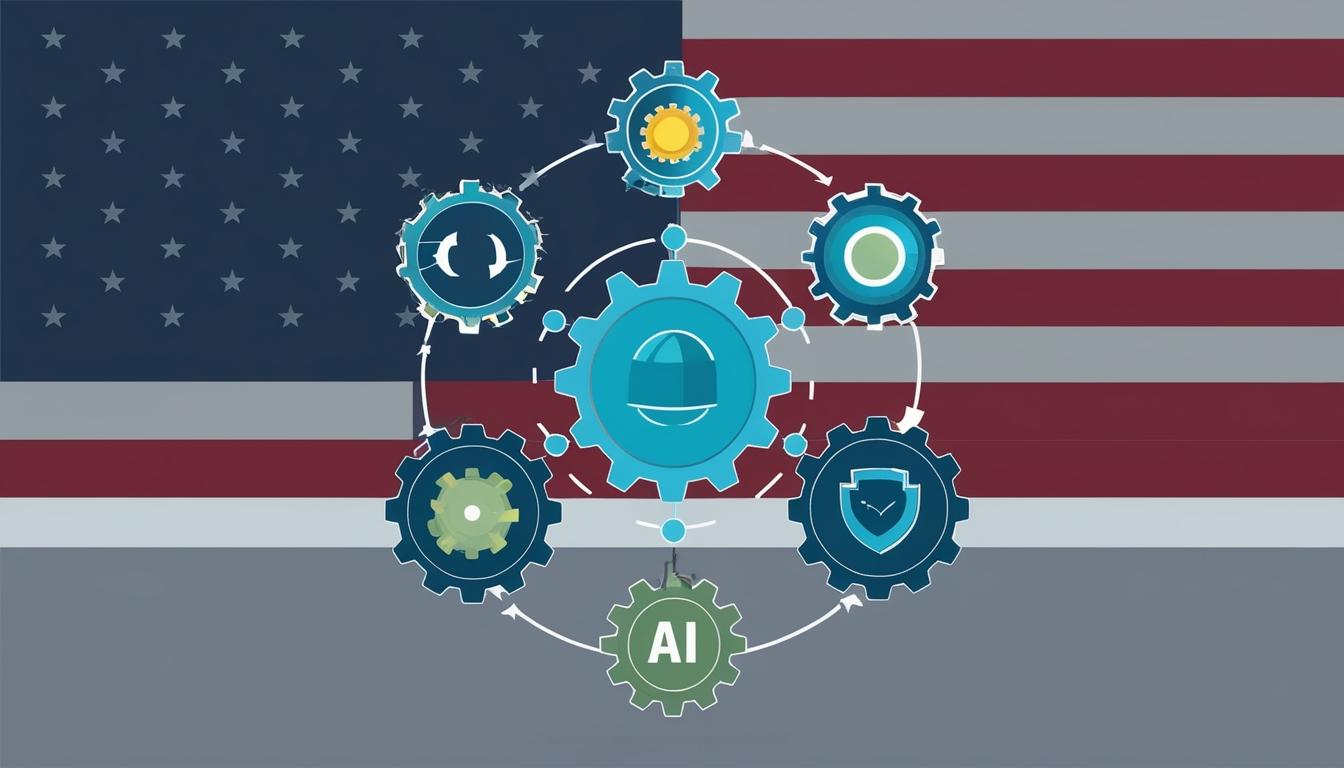
The United States Department of Defense is spearheading an expansive initiative under President Joe Biden's administration to advance the responsible development and deployment of Artificial Intelligence (AI) technologies. This effort is part of a broader global campaign to promote "Responsible Artificial Intelligence," which strives to ensure AI's safe and ethical adoption across various sectors.
The Pentagon's Director for Responsible AI Implementation, Matthew K. Johnson, recently elaborated on these efforts, particularly highlighting the department's commitment to fostering American values in AI development. Speaking at the Responsible AI in Defense conference held by the Pentagon's Chief Digital & AI Office, Johnson underscored the significance of the initiative, describing it as an extensive soft-power outreach to set a standard contrasted with less regulation-conscious adversaries like China.
Central to this initiative is the development of a comprehensive library of interactive digital guides, known as the Responsible AI Toolkit. Initially launched in November of the previous year, this toolkit serves as a valuable resource for Pentagon program managers and other defense officials. It provides them with an interactive checklist covering laws, regulations, ethics, and best practices in AI development. The toolkit is publicly available online, emphasizing transparency and wide accessibility.
In the latest expansions of this initiative, the Pentagon has collaborated with NATO to adapt the toolkit for the alliance's unique principles and frameworks. While this NATO-specific version remains confidential, Johnson revealed efforts to extend similar adaptations to other global allies and partners, as well as across various sectors within the U.S. intelligence community. The long-term goal is to enhance the interconnectedness and operability of allied nations' systems in combined operations, such as the Combined Joint All-Domain Command & Control (CJADC2).
Johnson also emphasized the significance of streamlined assurance processes, noting that aligned certification models among allied countries could facilitate smoother and quicker integration, bypassing extensive duplication in approvals. This initiative aims to build confidence amongst partner nations, ensuring robust and safe collaborative networks.
In addition to international efforts, the United States is developing versions of the toolkit for domestic use across various government agencies. This development comes in response to the 2023 Executive Order, which mandates government agencies to adhere to specific AI risk requirements. The Pentagon's RAI team is tasked with creating the recommended processes for these agencies, aligning with the National Security Memorandum on AI released by President Biden.
Feedback from prominent U.S. agencies, including the White House Office of Science & Technology Policy (OSTP) and the National Institute of Standards & Technology (NIST), has been instrumental in shaping a forthcoming second version of the toolkit. The updated version will be distributed to interagency partners in the coming weeks.
One of the most significant advancements in this toolkit is its adaptation to encompass guidance on rapidly evolving and potentially contentious AI technologies, such as generative artificial intelligence and Large Language Models. These AI forms have garnered significant attention due to their advanced capabilities and the risk of errors or "hallucinations" in outputs. The Pentagon's RAI division has already formulated the department's policy concerning generative AI and is in the process of developing toolkit versions specifically for these advanced technologies.
By systematically expanding and refining this toolkit, the Pentagon seeks to ensure that AI advancements proceed ethically, efficiently, and with concerted coordination among national and international entities. Through these efforts, the United States is positioning itself as a leader in the responsible development and application of AI, balancing innovation with safeguards.
Source: Noah Wire Services