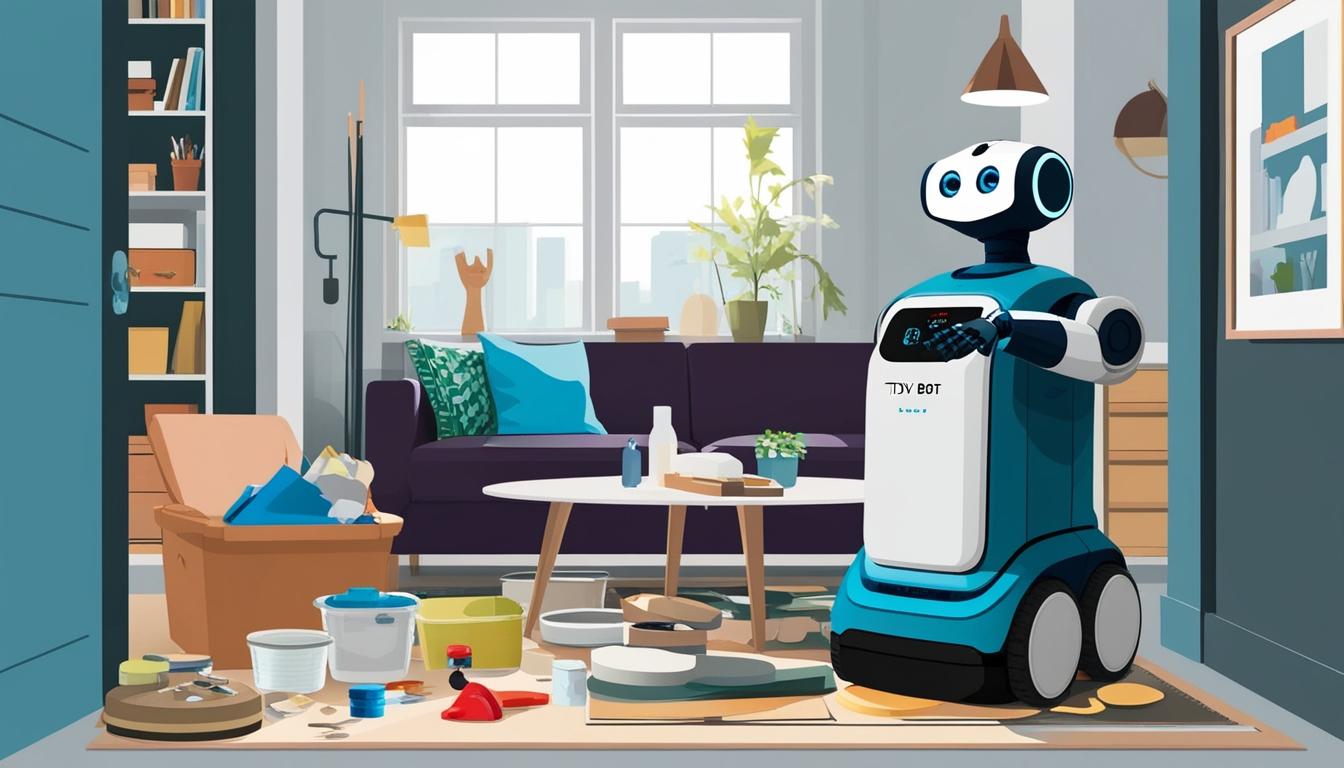
Stanford University's Robotics Center is at the forefront of developing cutting-edge technologies that may soon revolutionise household chores. Researchers and students are working on a versatile range of artificial intelligence (AI)-powered robots designed to perform tasks ranging from simple clean-ups to more complex domestic duties.
One of the prominent projects drawing attention is the Tidy Bot, a robotic innovation aimed at streamlining the often overwhelming task of home organisation. This advanced robot boasts a rolling mechanism and a gripper arm, allowing it to efficiently identify and pick up household items. Unlike traditional robots that merely follow pre-programmed routes, Tidy Bot uses an array of ceiling-mounted cameras and its own onboard cameras to navigate spaces and recognise objects. By employing a sophisticated large language model, the robot learns from user demonstrations about where items should be placed, whether they belong in bins, drawers, or on shelves. Interestingly, Tidy Bot can also determine which items are durable enough to be tossed, further accelerating the tidying process.
However, bringing Tidy Bot into everyday homes faces some significant hurdles. The cost of current designs is prohibitive, with just the robot's arm priced at $40,000. Nevertheless, the research team at Stanford suggests that with the involvement of consumer product companies using more economical hardware, the costs could be substantially reduced.
Meanwhile, another fascinating development at the Stanford Robotics Center is Mobile Aloha. This robot goes beyond simply clearing away clutter; it performs a range of kitchen-related tasks. Mobile Aloha is equipped to store pots and pans, clean kitchen surfaces, load dishwashers, and even prepare simple meals like sautéed shrimp. The robot learns through imitation by capturing images, movement, and manipulation data while being manually operated by human trainers. These training sessions, involving hundreds of repetitions, allow Mobile Aloha to refine its skills autonomously.
The ultimate goal for Mobile Aloha is to be more adaptable, possibly capable of navigating stairs and operating outdoors in the future. Researchers hope that advancements in natural language processing and computer vision will enable robots like Mobile Aloha to complete tasks with minimal human intervention.
Aside from household chores, the research centre at Stanford is also pioneering studies into human movement to create robots that can safely interact with humans in shared environments. A focus area is developing robots that assist with mobility and prevent falls, particularly important for supporting the ageing population. As it stands, current mobile robots can manoeuvre around people without physical contact. The next challenge is to create a generation of robots that can help people maintain independence and safety at home with features that are gentle and robust.
These innovations mark a shift in the perception of household robots. Rather than replacing human efforts entirely, these robots are designed to address gaps in workforce capacity, particularly in caregiving for the ageing population. By advancing robotics in this way, the researchers at Stanford are helping to solve pressing societal challenges, aiming to enhance human life without substituting human roles altogether.
Source: Noah Wire Services