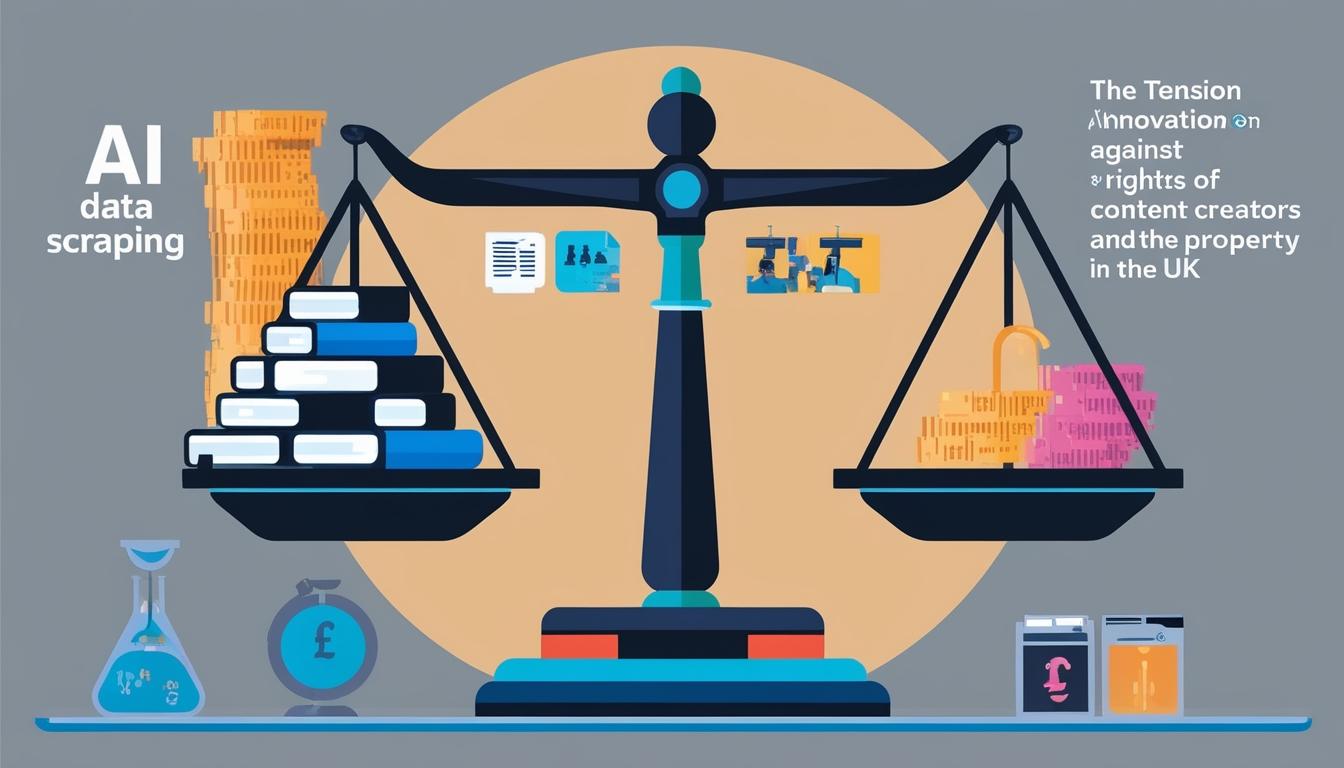
The United Kingdom is currently embroiled in a significant debate over a proposed policy shift involving artificial intelligence (AI) companies and their ability to scrape online content. The UK government's proposal advocates for allowing AI firms to freely collect online data unless expressly blocked by publishers—a modification that is being met with substantial resistance, particularly from prominent media entities such as the BBC. This controversy is drawing global attention, as its outcome could significantly impact AI policy standards in other advanced economies.
The proposal comes at a time when Britain is making significant strides towards bolstering its technology sector, recently securing data centre investments valued at £25 billion. Proponents among tech giants argue that the UK needs to relax content access restrictions to maintain its competitive edge internationally. However, the plan’s detractors, including small-scale publishers and content creators, express grave concerns over its feasibility. They warn against assuming that smaller entities possess the resources to effectively monitor and manage AI scraping activities, likening it to requiring homeowners to display proactive “do not rob” warnings to deter theft.
The resistance in the UK mirrors similar disputes unfolding across the globe. In the United States, major tech companies such as Adobe, Meta, and Microsoft are under scrutiny for utilising user-generated content in AI applications, often without explicit user consent. Pressure from creatives recently led Adobe to redefine their terms of service to clarify usage of submitted work for AI training. Likewise, Meta's intentions to use data from platforms like Facebook and Instagram have triggered privacy concerns, particularly across Europe.
Bill Werde, an expert in the music industry and director of the Bandier music-business program at Syracuse University, underscores the potential for innovative business models stemming from AI’s evolving capabilities. He envisions scenarios where AI technology could resurrect past music legends, allowing users to witness new, virtual performances by artists like Prince, David Bowie, or even Beethoven, directly in their living rooms.
Despite these futuristic possibilities, concerns regarding the distribution of benefits between major and minor stakeholders in the digital publishing realm remain prominent. Paul DeMott, Chief Technology Officer at Helium SEO, warns that the move towards default content scraping could exacerbate the disparity between large and small digital publishers. While larger media entities may have the leverage to secure lucrative data-sharing agreements, smaller players often lack the capability to effectively protect or monetise their output. This imbalance, DeMott suggests, could undermine the economic sustainability of smaller businesses whose content might extend broad reach without corresponding revenue from traffic or interactions.
In response, industry experts propose that smaller publishers and businesses may need to adopt novel strategies to guard against content scraping impacts. These strategies could involve developing more secure, exclusive digital offerings, such as subscription-based content or specialised customer portals. Marketing expert Anthony May advocates for content creators to innovate their value propositions, suggesting immersive, user-driven experiences that are challenging for AI to replicate. This could include live events, exclusive newsletters, interactive platforms like podcasts, or community-based forums designed to foster robust user engagement.
The developments in the UK highlight the complex dynamics at play as AI technologies continue to intersect with intellectual property rights and digital publishing landscapes. As these discussions unfold, the implications for how content is controlled and monetised in the digital age remain at the forefront of international focus.
Source: Noah Wire Services